Indian Badminton History: Pune to Global Glory
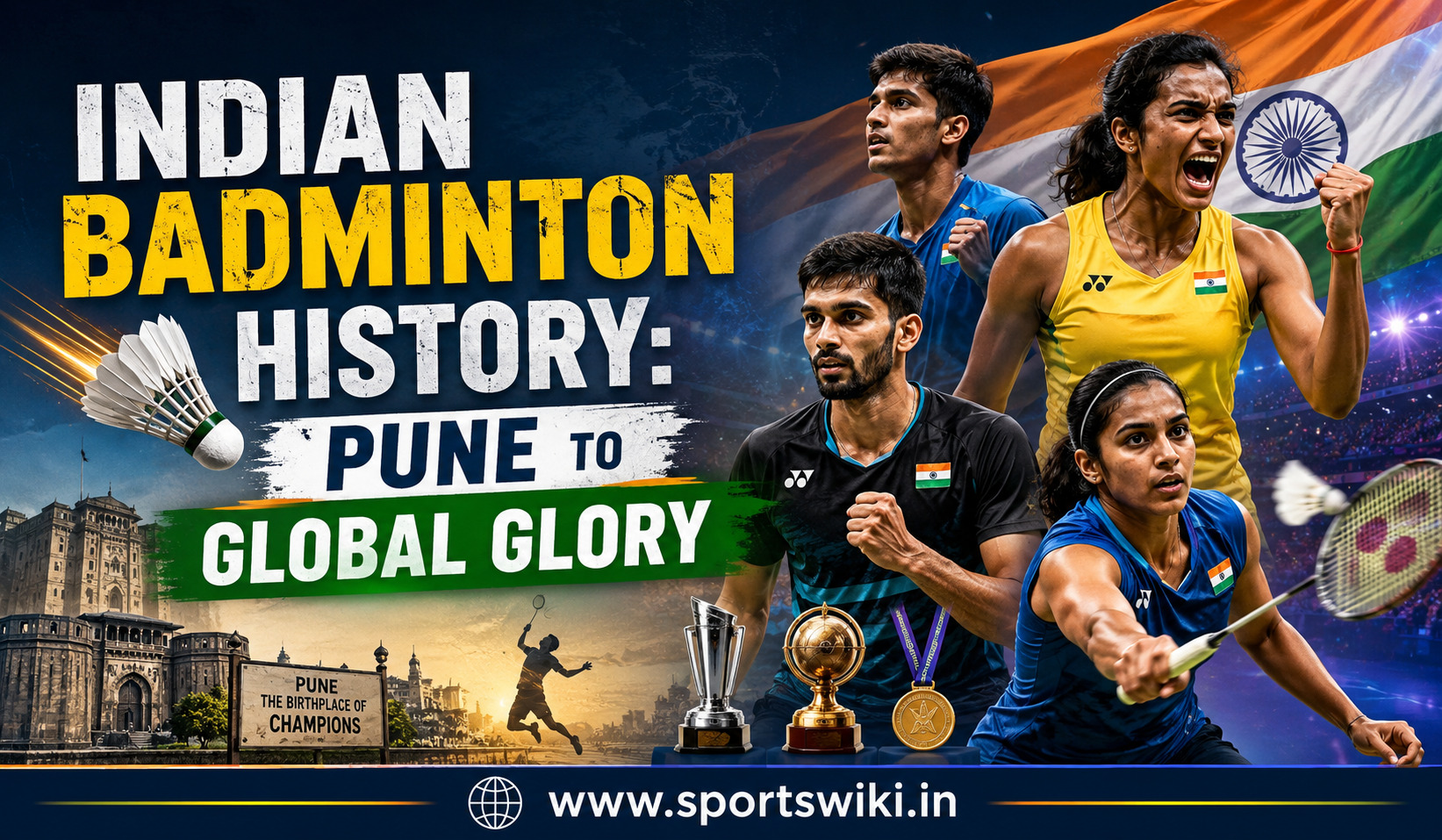
Before badminton had a name, a net, or a single official rule, it was a backyard game played by tired British army officers in Khadki, near Pune, in 1867. They called it Poona, after the city then known as Poona, and had no idea they were inventing what would eventually become an Olympic sport. That single fact makes Indian badminton history unlike almost any other sport’s origin story: the country did not just adopt the game late and catch up, it was there at the very beginning.
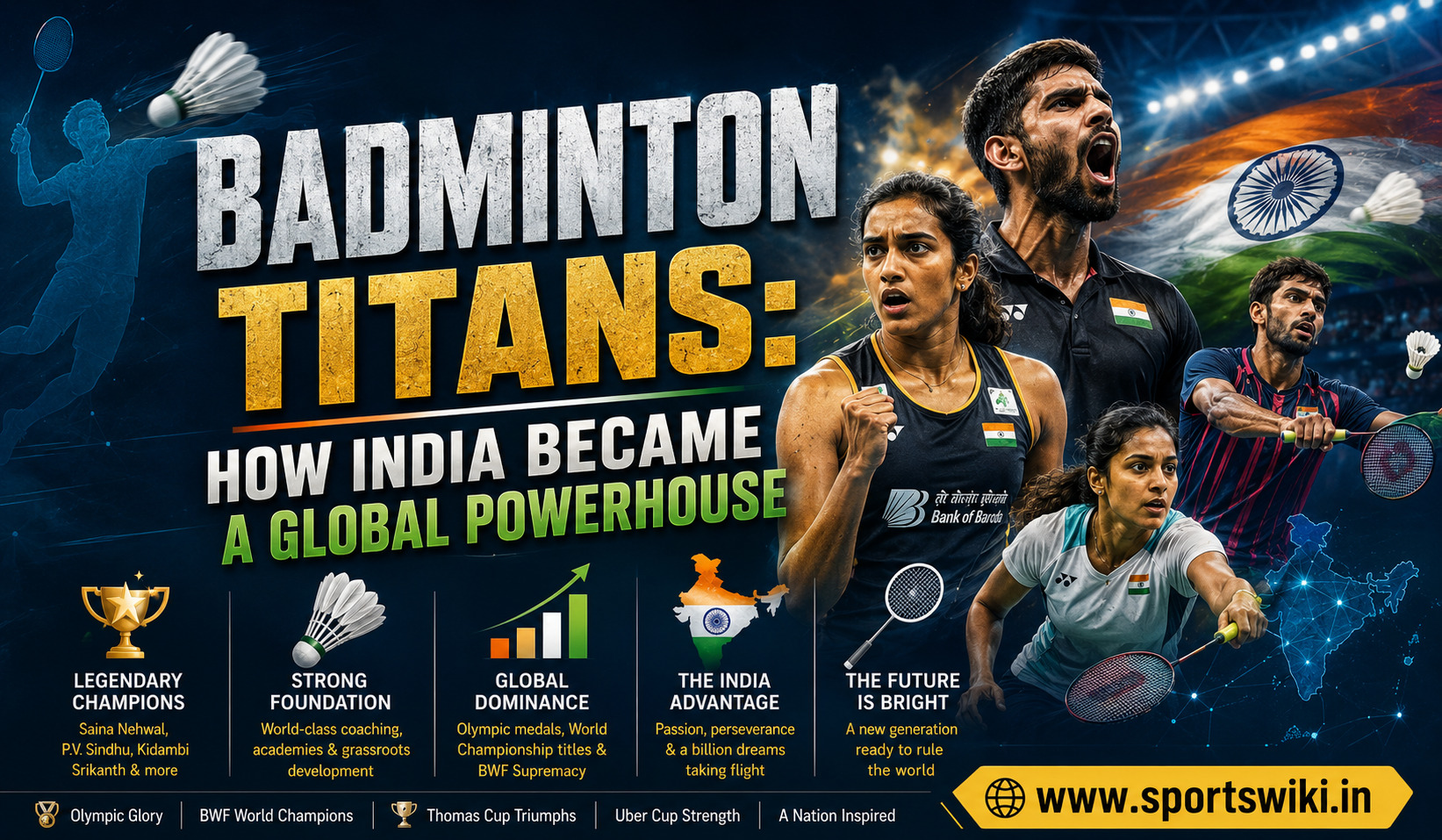
More than 150 years later, India has gone from the sport’s forgotten birthplace to one of its most competitive nations, producing Olympic medalists, World Champions, and a historic Thomas Cup title. Here is the full arc of Indian badminton history, from a colonial-era backyard game to genuine global dominance.
The Real Origins of Badminton in Poona
In the mid-19th century, British army officers stationed in Poona encountered a local net-based version of battledore and shuttlecock, an ancient game already played across India, China, and Greece for centuries. The officers modified it by adding a net and a simple set of rules, playing the sharpened version in the open backyards of their bungalows near the Ammunition Factory on what is now Khadki, close to present-day Pune.
How Poona Became a British Party Game
The officers named their creation simply Poona, after the city where they discovered and refined it. When they returned home to England, they brought the game, and its name, with them. For a while, Poona remained a niche pastime known mostly to those who had served in India.
From Badminton House to a Global Sport
Everything changed in 1873, when the Duke of Beaufort introduced the game to British high society at a garden party held at his country estate, Badminton House, in Gloucestershire. The name Badminton stuck instantly, eventually replacing Poona entirely in the public consciousness. The Bath Badminton Club formed in 1877 and helped standardize the rules, and the Badminton Association of England followed in 1893, with the first All England Open Championships held in 1899, often considered the sport’s first true tournament.
Badminton’s Deep Roots in Indian Sporting Culture
India never fully lost its connection to the sport it helped invent. The Badminton Association of India formed in 1899, only six years after its English counterpart, making it one of the oldest badminton governing bodies anywhere in the world. India joined the International Badminton Federation in 1936, just two years after the global body’s founding, cementing the country’s early and continuous involvement in organized badminton even decades before it became a major competitive force.
The Pioneers Who Put India on the Map
For most of the 20th century, Indian badminton remained a domestic passion without much international hardware to show for it. That began changing with two players who set the standard for everyone who followed.
Prakash Padukone’s All England Breakthrough
Prakash Padukone became the first Indian to win the All England Open Championships in 1980, defeating Indonesia’s Liem Swie King in the final. At a time when Indonesian and Chinese players dominated the sport, Padukone’s win proved an Indian player could beat the very best on the biggest stage available at the time, and it remains one of the defining moments in Indian badminton history.
Pullela Gopichand’s 2001 Triumph and Coaching Legacy
Twenty-one years after Padukone’s win, Pullela Gopichand became the second Indian to capture the All England Open title in 2001, overcoming a career threatened by knee injuries to do it. Gopichand’s greater legacy may actually be what came after his playing career. He founded a badminton academy in Hyderabad that became the training ground for nearly every major Indian star of the following two decades, effectively building the infrastructure that turned isolated individual success into a sustained national program.
The Golden Generation of Indian Badminton
The 2010s marked the moment Indian badminton stopped producing occasional standout players and started producing sustained, world-class dominance.
Saina Nehwal’s Olympic Breakthrough
Saina Nehwal won bronze at the 2012 London Olympics, becoming the first Indian badminton player to medal at the Games. She later became the first Indian woman to reach the world number one ranking in 2015, opening the door for the wave of success that followed her.
PV Sindhu’s World and Olympic Dominance
PV Sindhu took that foundation and built something even bigger. She won silver at the 2016 Rio Olympics and bronze at the 2020 Tokyo Olympics, becoming the first Indian woman to medal at consecutive Olympic Games. In 2019, she went a step further, winning the BWF World Championships, the first Indian to ever claim a World Championship gold medal in badminton. Sindhu remains active on tour in 2026, competing at events like the Singapore Open, where she has continued to test herself against the sport’s current best, including world number one An Se-young.
Thomas Cup 2022: India’s Historic Team Triumph
If any single moment symbolizes how far Indian badminton has come, it is the 2022 Thomas Cup. India won the men’s team world championship for the first time in the tournament’s history, defeating 14-time champion Indonesia in the final. It was a full team effort, built on Lakshya Sen’s singles heroics and Satwiksairaj Rankireddy and Chirag Shetty’s doubles dominance, and it announced to the rest of the badminton world that India’s depth now extended well beyond one or two headline stars.
Today’s Rising Stars Carrying the Torch
The current generation has kept the momentum going, even through the normal ups and downs of a demanding international schedule.
Satwiksairaj Rankireddy and Chirag Shetty
The doubles pair became the first Indian team to reach the world number one ranking in men’s doubles, backed by an Asian Games gold medal and a Thomas Cup title. Injuries have interrupted their 2026 season, including a shoulder issue that forced a retirement at the Indonesia Open, but the duo remains ranked inside the world’s top five and continues to be considered India’s strongest medal hope at any major tournament they enter healthy.
Lakshya Sen and the Next Wave
Lakshya Sen returned to the world’s top 10 in men’s singles in 2026 after more than 400 days outside that bracket, a resurgence that has coincided with strong results at events like the Singapore Open. Alongside him, a younger group including Ayush Shetty and Tanvi Sharma has begun pushing into major draws, suggesting the pipeline Gopichand’s academy helped build is still producing fresh talent well behind the established stars.
Why Indian Badminton’s Rise Still Matters
A few threads tie this entire story together, from the backyards of Poona to today’s world rankings:
- An unbroken historical connection, since India has been organizationally involved in the sport since 1899, decades before its modern success arrived
- A coaching infrastructure built by former champions, with Gopichand’s academy turning individual talent into a repeatable national system
- Depth across singles and doubles, proven by the 2022 Thomas Cup win that required contributions from multiple players rather than one star
- Sustained results across generations, from Padukone in 1980 through Sindhu, Satwik-Chirag, and Lakshya Sen today
From a Backyard Game to a Global Power
Few nations can claim to have literally invented the sport they now compete at the highest level in, but Indian badminton history makes exactly that case. From officers batting a shuttlecock across a makeshift net in Khadki to Sindhu lifting a World Championship trophy and a Thomas Cup celebration in Bangkok, the throughline is remarkable. With a deep young talent pool still emerging behind the current stars, there is little reason to think India’s run at the top of world badminton is anywhere near finished.
Frequently Asked Questions
Where did badminton originate?
Badminton’s modern form originated in Poona, present-day Pune, India, where British army officers added a net and formal rules to a traditional battledore and shuttlecock game in the 1860s before bringing it back to England.
Who was the first Indian to win a major badminton title?
Prakash Padukone became the first Indian to win the All England Open Championships in 1980, a breakthrough that set the stage for future Indian success on the international stage.
Has India ever won an Olympic medal in badminton?
Yes, Saina Nehwal won bronze at the 2012 London Olympics, and PV Sindhu won silver in 2016 and bronze in 2020, making her the first Indian woman to medal at consecutive Olympic Games.
When did India win its first Thomas Cup?
India won its first-ever Thomas Cup men’s team title in 2022, defeating 14-time champion Indonesia in the final.