Future of Indian Badminton: Young Stars to Watch
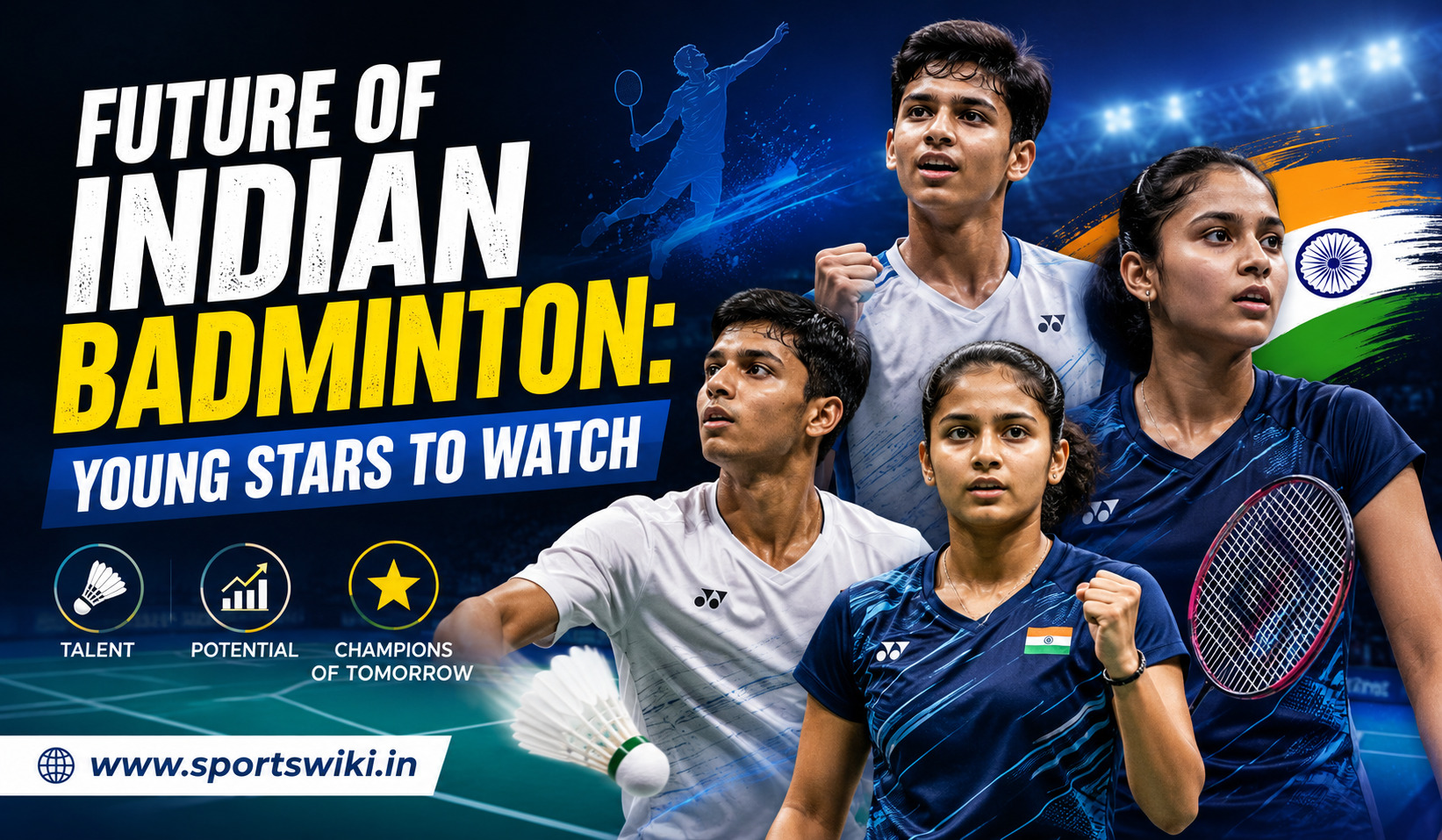
A 17 year old beating a former world champion. A 20 year old becoming India’s first men’s singles finalist at the Badminton Asia Championships since 1965. These are not hypothetical scenarios, they already happened in 2026, and they explain exactly why the future of Indian badminton looks brighter right now than it has in years.
This post runs through the young players driving that optimism, what they have already achieved, and why the depth behind India’s established stars matters more than any single result.
A Generational Handover in Progress
Indian badminton has spent the last decade and a half riding the success of a golden generation, led by Saina Nehwal and PV Sindhu on the women’s side and later Lakshya Sen, Kidambi Srikanth, and Satwiksairaj Rankireddy-Chirag Shetty on the men’s. With Saina Nehwal having retired and Sindhu now in the later stages of her career, the pressure has shifted onto a new group of players to keep the momentum going. Based on what has already unfolded through 2026, that handover looks to be in good hands.
Ayush Shetty: The Standout Men’s Singles Prospect
No young Indian shuttler has made a bigger leap in 2026 than Ayush Shetty. He became the first Indian men’s singles finalist at the Badminton Asia Championships since 1965, a gap of decades that puts his achievement into perspective. He backed that up during India’s Thomas Cup 2026 campaign, remaining unbeaten through the group stage and stunning reigning All England champion Lin Chun-Yi in the quarterfinals.
PV Sindhu herself called Shetty a generational talent after that win, which is about as strong an endorsement as a young player can get from a two-time Olympic medalist. Add in his 2025 US Open Super 300 title and a current world ranking inside the top 20, and Shetty looks like the closest thing India has to a ready-made successor for the men’s singles spotlight.
Unnati Hooda: Redefining Early Breakthroughs
Unnati Hooda has been rewriting record books since her early teens. She became the youngest Indian to win a BWF title when she claimed the Odisha Open Super 100 at just 14 years old back in 2022. Since then, she has continued climbing, reaching a career-high world ranking in the low 20s and winning the Polish Open in 2026.
Perhaps her most eye-catching result came when she beat former world champion PV Sindhu, a result that doubles as both a personal milestone and a signal that the gap between India’s established stars and its rising talent is closing fast. At just 17, Hooda already carries herself like a player who belongs on the sport’s biggest stages, and her selection for the BWF World Championships on home soil in New Delhi only adds to that narrative.
The Wider Talent Pool Coming Through
Shetty and Hooda are the two names generating the most headlines, but the depth behind them is what makes this moment feel different from previous cycles. A few more players worth tracking:
- Tanvi Sharma: A BWF World Junior Championships individual silver medallist who has already earned selection to India’s senior Asian Games squad, showing rapid progress from junior to senior level competition.
- Rounak Chouhan: Praised directly by Badminton Association of India general secretary Sanjay Mishra after beating a top ten ranked opponent at the US Open, a signal that India’s men’s singles pipeline runs deeper than just one or two names.
- Simran Singhi and Kavipriya Selvam: A women’s doubles pairing that has climbed to a career-high world ranking around the high 30s and earned a BWF World Championships debut, addressing a category where India has historically lacked depth.
- Devika Sihag: Claimed a Thailand Masters Super 300 women’s singles title in 2026, adding another young singles option behind Hooda and Sindhu.
Why This Wave Feels Different
Every generation of Indian badminton has produced at least one standout talent. What separates the current wave is the spread across categories. Men’s singles, women’s singles, and women’s doubles all have credible young players pushing through at the same time, something India has rarely managed simultaneously in the past.
Think of it like a cricket team that used to rely on one star batter carrying the middle order and now suddenly has three or four players capable of scoring a century on any given day. That kind of depth is far harder for opponents to plan around, and it reduces the risk of Indian badminton stalling if any single player hits a rough patch or steps back from the sport.
The Role of Established Stars in This Transition
None of this rise has happened in isolation. Lakshya Sen, PV Sindhu, and Satwik-Chirag have all played a direct role in mentoring or sharing courts with these younger players during major team events like the Thomas Cup, Uber Cup, and Badminton Asia Team Championships. Sindhu’s public praise for Ayush Shetty is one example, but the pattern extends to training environments at academies across the country, where senior players regularly practice alongside the juniors chasing their spots.
This mirrors how Saina Nehwal’s early breakthroughs shaped Sindhu’s own development inside the same training system years earlier. The future of Indian badminton is being built the same way it always has been, through direct exposure to players who have already walked the path these newcomers are now on.
What to Watch as These Players Progress
A few storylines will shape how quickly this young talent pool translates into consistent podium results at the top level.
- Performances at the BWF World Championships in New Delhi, where Shetty, Hooda, and the doubles pairing of Singhi-Selvam make their debuts on home soil.
- How the Asian Games 2026 squad selections translate into results, given the mix of established and emerging names named to India’s contingent.
- Whether India’s women’s doubles depth continues improving, historically the weakest category in the country’s overall badminton program.
- The next wave of junior talent behind this current group, since sustained success requires more than one generation stepping up at a time.
Frequently Asked Questions
Who is the most promising young player in Indian badminton right now?
Ayush Shetty and Unnati Hooda are currently the two most talked about prospects, with Shetty leading men’s singles and Hooda emerging as a genuine threat in women’s singles at just 17 years old.
Has Unnati Hooda beaten a top Indian player before?
Yes, Hooda has defeated former world champion PV Sindhu, one of the standout results behind her rapid rise up the world rankings.
What tournament will showcase India’s young badminton talent in 2026?
The BWF World Championships, being held in New Delhi for the first time in 17 years, will feature debut appearances from Ayush Shetty, Unnati Hooda, and the women’s doubles pair of Simran Singhi and Kavipriya Selvam.
Is India’s badminton depth improving across all categories?
Largely yes, though women’s doubles remains the category with the most ground still to make up compared to men’s singles, women’s singles, and men’s doubles.