Indian Football Youth Development: Can Young Players Close the Gap?
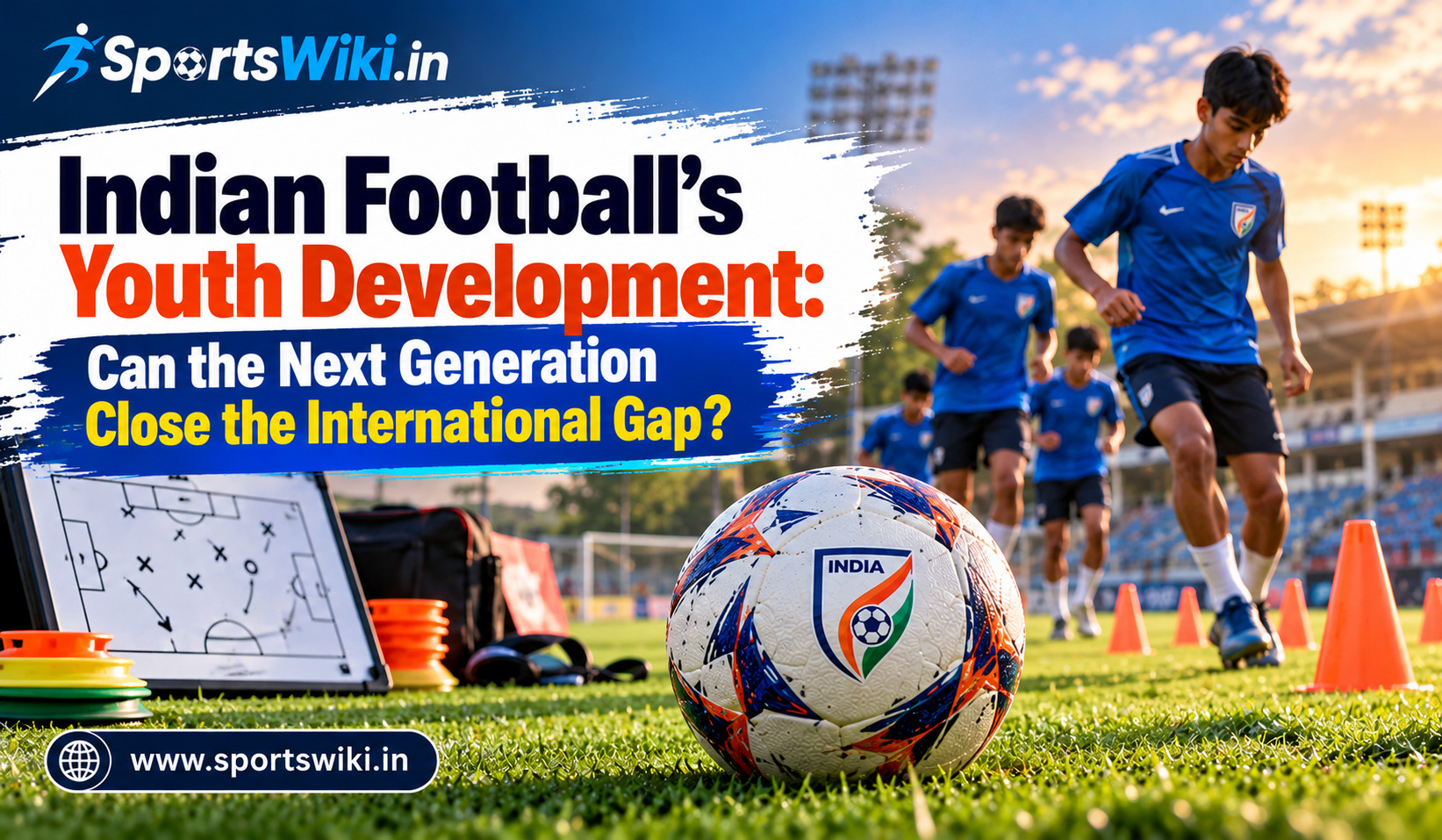
India has a large population of young sports enthusiasts, but converting that potential into international football success remains a major challenge. While Indian football has produced talented players over the years, the national team continues to face difficulties competing consistently against stronger Asian and international opponents.
Youth development could be the key to changing this situation. From grassroots football programmes and professional academies to AIFF youth leagues and FIFA-supported talent identification initiatives, several efforts are creating opportunities for the next generation of Indian footballers.
The development of young players is particularly important because international success cannot be achieved through short-term squad changes alone. Countries with established football systems invest years in coaching, competitive exposure, sports science and professional development.
India has started building similar foundations, but can these initiatives help close the international gap? Let’s explore the current youth football ecosystem, its challenges and what needs to change for India to develop internationally competitive players.
Why Youth Development Matters for Indian Football
Youth development is the foundation of a successful national football team. Countries such as Japan, South Korea, Spain and Germany have invested heavily in identifying talented children and providing them with structured training from an early age.
These systems focus on technical ability, tactical understanding, physical development and decision-making. Players gradually progress through age-group competitions before entering professional football.
India needs a similar long-term approach. Relying heavily on experienced senior players without developing replacements can create problems for the national team.
A stronger youth system can help India build a continuous supply of technically skilled defenders, creative midfielders, attacking players and goalkeepers. It can also improve competition for places in professional clubs and national teams.
Most importantly, young players need opportunities to compete regularly against quality opposition rather than depending entirely on occasional training camps.
AIFF’s Grassroots Football Initiatives
The All India Football Federation (AIFF) has introduced several initiatives to increase participation and create a foundation for future talent.
One of its important programmes is Blue Cubs, which focuses on introducing football to children between four and twelve years of age.
The programme encourages age-appropriate football formats rather than immediately placing young children into full-sized competitive matches. Smaller-sided games allow children to develop ball control, movement, passing and decision-making.
The initiative also aims to involve schools, clubs, parents, volunteers and local football organisations in grassroots development.
AIFF’s long-term Vision 2047 includes an ambitious target of engaging 100 million children in football by 2047, with an initial target of 35 million children by 2026.
These objectives highlight the importance of expanding football participation beyond established football centres. However, the real challenge will be converting participation into consistent training, quality coaching and competitive opportunities.
FIFA Talent Development Scheme: A New Opportunity for Young Players
International support is also becoming an important part of India’s youth football development.
Through the FIFA Talent Development Scheme, India has been working to identify promising footballers and provide them with better development opportunities.
In October 2026, FIFA reported that AIFF had assessed more than 12,000 players during a two-year talent identification initiative. A network of 60 scouts across different regions helped monitor players through youth competitions, school tournaments and academy matches.
The programme focuses particularly on identifying talented players in the under-14 and under-15 age groups.
Two FIFA Talent Academies are supporting this development process. One is located in Bhubaneswar, Odisha, while another was inaugurated in Hyderabad, Telangana, in June 2026.
These academies provide selected players with opportunities for structured training and professional assessment.
The initiative is important because identifying talent is only the first step. Young footballers also need access to qualified coaches, proper facilities, regular competition and long-term support to reach their potential.
AIFF Junior Leagues and Professional Football Academies
Grassroots participation must be supported by regular competitive football. This is where AIFF’s youth leagues and academy accreditation system become important.
The AIFF Junior League provides opportunities for young players to compete against teams from different academies and football organisations. Regional competitions also help identify players who can progress to higher levels.
Professional clubs are increasingly investing in youth development structures. Academies associated with Bengaluru FC, Punjab FC, Reliance Foundation Young Champs, Minerva Academy, FC Goa and other organisations provide pathways for aspiring footballers.
AIFF’s academy accreditation system also establishes standards for youth development. It considers coaching qualifications, training facilities, age-group teams, competition opportunities, medical support and player progression.
This approach can improve the quality of football education and encourage academies to focus on long-term development instead of short-term tournament results.
Dream Sports Foundation Partnership: Strengthening the Talent Pipeline
A significant development in Indian youth football came in March 2026, when AIFF appointed Dream Sports Foundation as its official Youth Development Partner.
The partnership focuses on strengthening under-16 football and connecting existing youth competitions with a more structured national development pathway.
The Dream Sports Championship has already produced encouraging results. According to AIFF, 14 alumni have represented Indian youth national teams, nine were part of the India U19 squad that won the SAFF Championship in 2025, and three players progressed to make their Indian Super League debuts.
This partnership demonstrates how cooperation between football organisations and private sports foundations can support talent identification and development.
Such collaborations could become increasingly important as Indian football looks to expand its academy network and create more opportunities for young players across different states.
The Biggest Challenges Facing Youth Football in India
Despite these developments, several problems continue to affect the growth of young Indian footballers.
Limited Access to Quality Coaching
Good coaching is essential for developing technical ability and tactical awareness. However, access to qualified youth coaches remains uneven across India.
Major football centres may have established academies, but children in smaller towns and rural areas often have fewer opportunities to receive professional training.
India needs more licensed coaches who understand modern youth development methods and can identify individual player strengths.
Inadequate Football Infrastructure
Training facilities play an important role in player development. Poor-quality playing surfaces, limited equipment and a shortage of accessible football grounds can affect regular practice.
Young players need safe facilities where they can train throughout the year. Developing more community football grounds and school-based facilities would help increase participation.
Lack of Regular Competitive Exposure
Training alone cannot prepare players for professional football. Young footballers need regular matches against opponents with different playing styles and skill levels.
A stronger network of school competitions, district leagues, state tournaments and national youth championships can help players improve their match awareness.
Financial and Educational Pressure
Many talented children cannot afford academy fees, travel expenses or accommodation away from home. Families may also prefer traditional academic and career options because professional football offers an uncertain future.
Scholarships, residential academies and educational support can help reduce these barriers.
Limited Opportunities for Girls
Women’s football also needs sustained investment in grassroots participation, qualified coaches, competitions and professional pathways.
Developing girls’ football alongside boys’ football will increase the overall talent pool and strengthen India’s future international teams.
What Can India Learn From Successful Football Nations?
India can learn valuable lessons from countries that have developed strong football systems.
Japan has invested in school competitions, professional club academies and structured youth development. Its players receive regular opportunities to improve technical skills and tactical understanding.
South Korea has developed a strong football culture through school programmes, university competitions and professional club structures.
Germany has also established systematic talent identification and academy development processes. Young players receive professional coaching and support as they progress towards senior football.
India does not need to copy these systems completely. Instead, it should adapt successful practices to its own geographical, economic and sporting environment.
A stronger connection between schools, local academies, professional clubs and national teams would make the development pathway more effective.
How Can the Next Generation Close India’s International Football Gap?
India’s young footballers have the potential to compete at a higher international level, but that potential needs consistent support.
First, talent identification must reach beyond established football cities. Regional scouting networks can help discover players from states and communities that have traditionally received less attention.
Second, coaching standards should improve at every development level. Young players need training that focuses on ball control, passing accuracy, decision-making, movement and tactical awareness.
Third, Indian academies should provide more international exposure. Friendly matches, overseas tournaments and training exchanges can help young footballers understand the speed and intensity of international competition.
Sports science should also become an important part of academy training. Nutrition, fitness assessments, injury prevention, recovery and psychological preparation can help players develop professionally.
Fans interested in understanding how sporting achievements are measured can also explore Grand Slam records in tennis. Comparing major tournament victories and career records offers another perspective on how sustained performance and long-term development contribute to sporting success.
Can India’s Youth Football System Produce International Stars?
There are reasons for optimism. The FIFA-supported talent academies, AIFF grassroots programmes, Junior League competitions and private-sector partnerships are helping create a more organised development structure.
However, the success of these initiatives should not be measured only through participation numbers or the number of academies established.
The real indicators will be how many young players progress into professional clubs, earn national-team selections and become consistent performers against strong international opposition.
India also needs patience. Building an internationally competitive generation takes years of investment and coordinated planning. A single successful youth tournament cannot solve every structural problem.
The focus should remain on producing technically strong, tactically intelligent and physically prepared players who can compete consistently at senior international level.
Final Thoughts
Indian football’s youth development system is moving towards a more structured approach, with grassroots programmes, professional academies, national youth competitions and FIFA-supported initiatives creating new opportunities.
The next generation has the potential to narrow India’s international football gap, but long-term progress will depend on quality coaching, accessible infrastructure, regular competition and stronger connections between youth academies and professional clubs.
India has the young population and growing football interest needed to build a stronger talent pipeline. The priority now is to ensure that promising players receive the right support throughout their development journey.
If these efforts continue consistently, the next generation could become an important part of India’s journey towards greater success in Asian and international football.