India’s Men’s and Women’s Kabaddi Gold at Asian Games 2026 Analysis
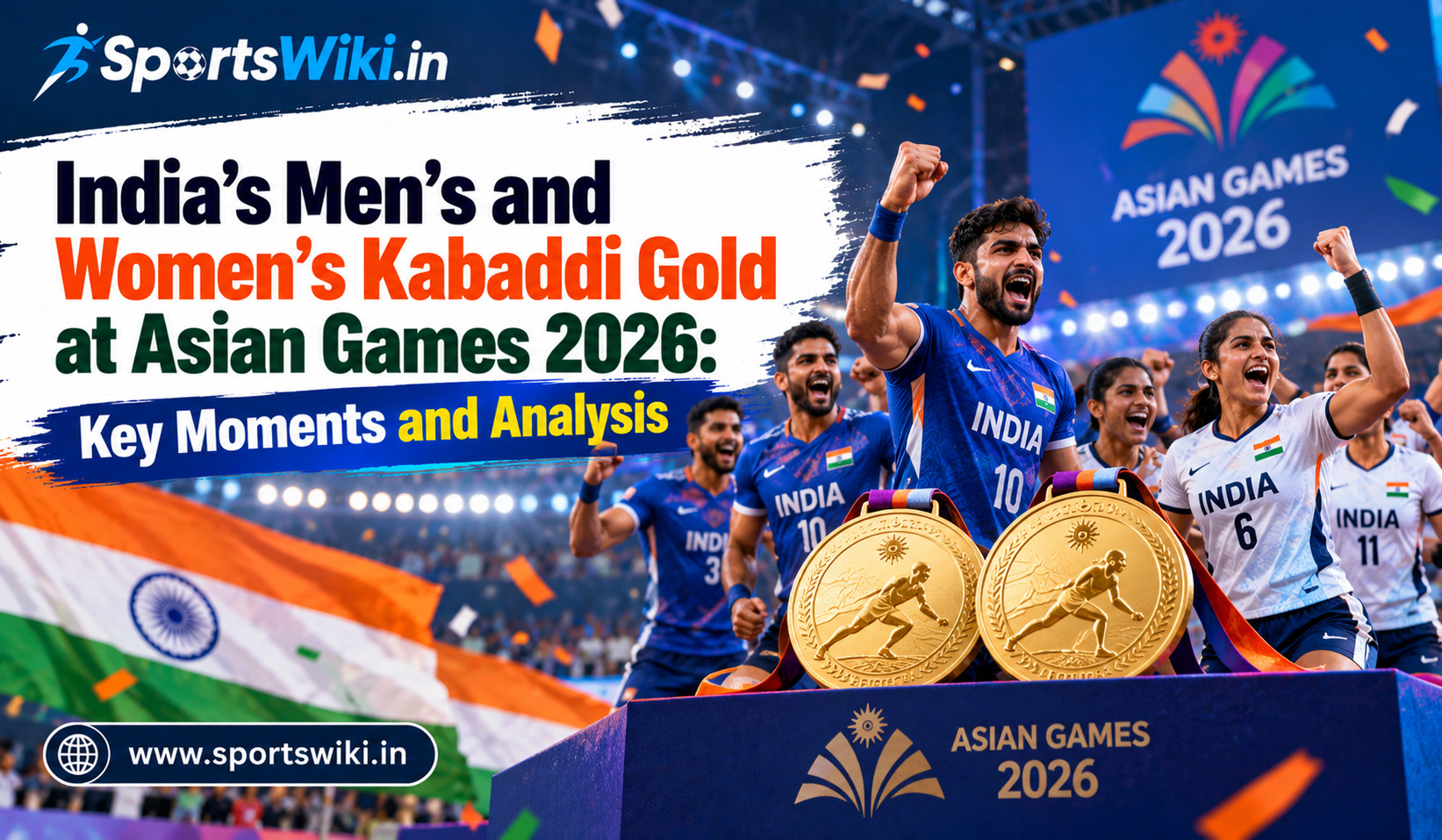
India delivered a memorable performance at the 2026 Asian Games in Aichi-Nagoya, Japan, by winning gold medals in both men’s and women’s kabaddi. The double triumph came on September 26, when the Indian teams defeated Iran in two closely contested finals.
The women’s team secured a 37–34 victory, while the men’s side won 40–34 after recovering from a first-half deficit. Both results highlighted India’s strength in kabaddi, but they also showed how much composure, teamwork and tactical discipline matter when facing a strong opponent.
India Women’s Kabaddi Team Wins Gold Against Iran
The Indian women’s team started the final with confidence and took a 22–16 lead into half-time. Its raiders created scoring opportunities through successful touches, while the defenders worked together to restrict Iran’s attacks.
However, Iran returned with a strong performance after the break. The team reduced India’s advantage and brought the score to 27–26, putting pressure on the defending champions. The match became increasingly competitive as both sides fought for every point.
Sanju Devi produced an important super raid that helped India regain momentum. Captain Pushpa Rana also played a decisive role, leading an All-Out that gave India some breathing room. Pooja contributed to the attacking effort as the Indian team maintained its advantage.
Iran continued to fight until the final moments, but India held its nerve to finish with a 37–34 victory. The result secured another Asian Games gold medal for the women’s team and demonstrated its ability to handle pressure in a high-stakes final.
Men’s Team Defeats Iran to Retain the Title
The men’s final was equally exciting, with India facing a determined Iranian side. Iran started strongly and managed to take an 18–17 lead at half-time. The Indian players had to adjust their approach to overcome the opposition’s defensive pressure.
Arjun Deshwal and Devank Dalal were important in India’s attacking strategy. Their raids helped the team collect crucial points and put pressure on Iran’s defence. Captain Sunil Kumar also contributed with his defensive leadership, while Sumit and Jaideep Dahiya delivered important interventions.
India improved its performance in the second half and gradually took control of the match. A stronger defensive effort and effective raids helped the team build a 34–27 advantage. Iran attempted to close the gap, but India maintained its composure and extended the lead.
The final score of 40–34 confirmed India’s victory and another men’s kabaddi gold medal. The win also marked India’s second consecutive men’s kabaddi title after the triumph at the 2022 Hangzhou Asian Games.
Key Players Behind India’s Golden Double
Several players made important contributions to India’s success. In the men’s competition, Arjun Deshwal and Devank Dalal provided attacking strength. Their ability to find scoring opportunities helped India respond when Iran threatened to take control.
Sunil Kumar’s leadership was equally valuable. His defensive experience helped organise the team during difficult moments. Sumit and Jaideep Dahiya also played important roles in strengthening India’s defence, particularly during the second half.
For the women’s team, Sanju Devi’s super raid changed the momentum at a crucial stage. Pushpa Rana’s leadership and important scoring contribution helped India protect its advantage. The collective performance of the raiders and defenders was essential to securing the final result.
These victories were not the result of individual brilliance alone. Both teams demonstrated the importance of communication, match awareness and coordinated play.
What Made India’s Performance Special?
One of the biggest positives was India’s ability to respond under pressure. The men’s team entered half-time behind Iran, while the women’s side faced a strong comeback after building an early advantage. Both teams avoided panic and followed their strategies when the matches became difficult.
Defensive coordination was another major factor. Kabaddi finals can change quickly because a successful raid or All-Out can shift momentum. India’s defenders supported the raiders by limiting Iran’s scoring opportunities and creating chances to recover points.
The teams also benefited from experience gained through domestic and international competitions. The Pro Kabaddi League has provided Indian men’s players with regular exposure to high-pressure matches, while international tournaments and domestic competitions continue to support the development of women’s kabaddi.
The double gold also underlined India’s ability to compete in both categories. Winning two finals against the same opponent on the same day made the achievement even more significant.
India’s Kabaddi Record at the Asian Games
Kabaddi has been an important part of India’s Asian Games history since the sport was introduced in 1990. The women’s event became part of the competition in 2010. India has traditionally been one of the strongest nations, although Iran has emerged as a major challenger over the years.
The 2026 victories added two more gold medals to India’s impressive record. The men’s team successfully defended its title, while the women’s team also retained its championship after winning gold in Hangzhou in 2022.
Iran’s performances in both finals showed that the competition is becoming increasingly challenging. The narrow margins also indicate that India cannot rely only on its historical reputation. Consistent preparation, fitness and tactical improvements will remain necessary to maintain its position.
What These Wins Mean for Indian Kabaddi
The golden double is an encouraging achievement for Indian kabaddi. It provides recognition to players, coaches and support staff who work to improve the sport at different levels.
Success at a major multi-sport event can also encourage more young athletes to consider kabaddi professionally. Better coaching facilities, grassroots competitions and opportunities for women players can help strengthen the country’s talent pipeline.
India’s wider sporting progress is also worth following. Readers interested in the country’s para-sports achievements can explore the Asian Para Games 2026 medal tally, winners and highlights for related coverage of Indian athletes and their international performances.
For kabaddi, the next challenge will be to maintain this standard beyond the Asian Games. Other countries are investing in the sport, and teams such as Iran are becoming stronger. India’s players will need to keep improving their raiding techniques, defensive combinations and match management.
Conclusion
India’s men’s and women’s kabaddi gold medals at the Asian Games 2026 created a memorable moment for Indian sport. The women’s team defeated Iran 37–34, while the men’s team secured a 40–34 victory after a strong second-half comeback.
The results reflected the importance of teamwork, experienced leadership and the ability to perform under pressure. With both teams successfully defending their titles, India once again demonstrated its strength in Asian kabaddi. The challenge now is to build on this success and continue developing players who can keep the country competitive at future international tournaments.