Indian Esports in 2026: Competitive Gaming, Asian Games Lessons and Future Opportunities
Indian esports has reached an important stage in 2026. Competitive gaming is attracting wider attention, professional teams are becoming more organised, and international tournaments are creating new opportunities for Indian players. However, the country’s journey towards becoming a consistent esports powerhouse still has challenges, particularly in international performance, tournament access, infrastructure and talent development.
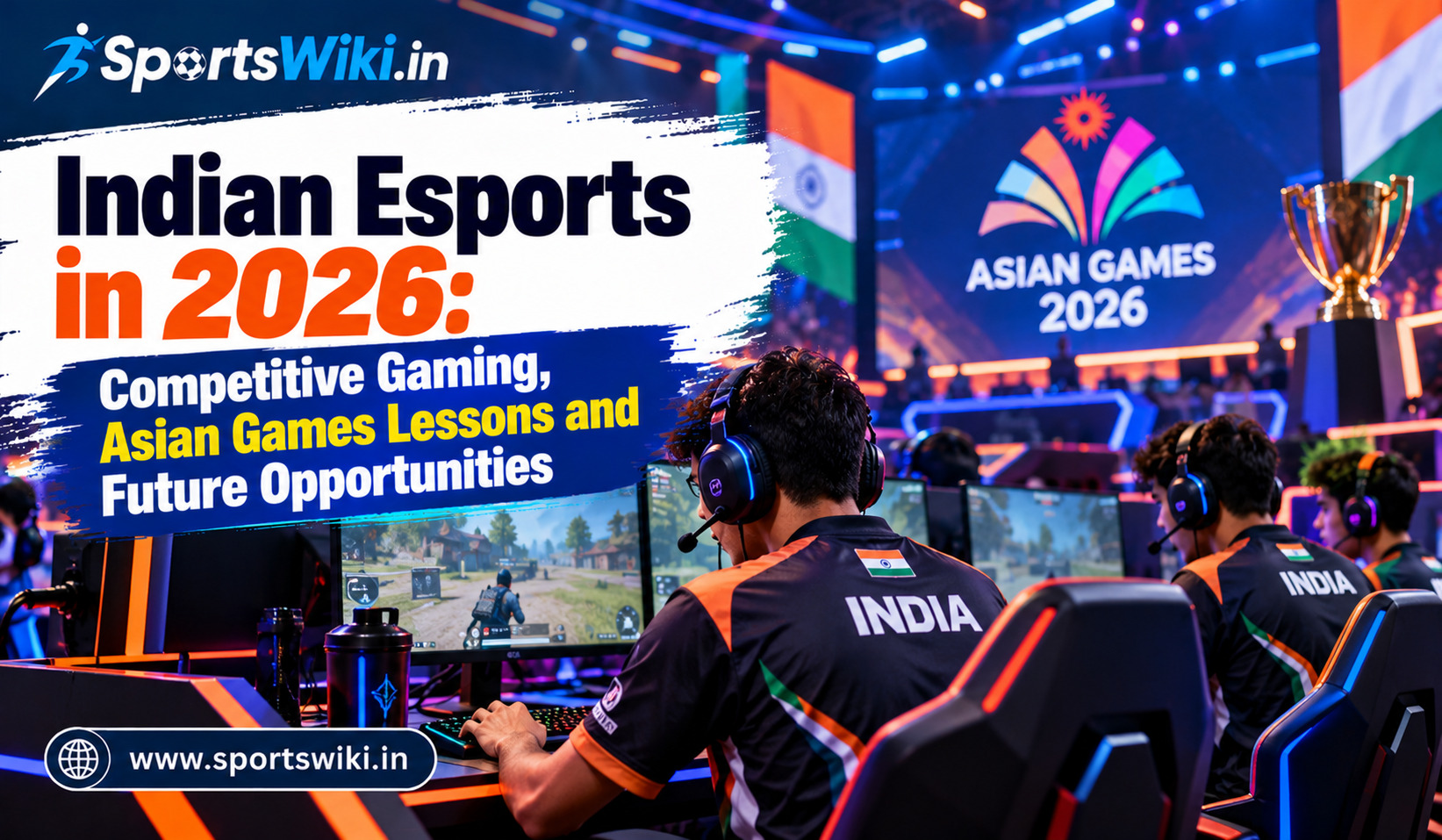
The 2026 Asian Games in Aichi-Nagoya, Japan, offered an important opportunity to evaluate India’s progress. Esports featured as an official medal sport, with 11 medal events across 13 game titles. India participated in four events but finished without an esports medal. This result highlighted the difference between having a large gaming community and building an internationally competitive esports system.
As the industry develops, 2026 could become a significant year for Indian competitive gaming, with opportunities extending beyond professional players to coaching, broadcasting, tournament management, technology and content creation.
Indian Esports in 2026: A Growing Competitive Ecosystem
India has a large gaming audience, supported by affordable smartphones, expanding internet access and the popularity of multiplayer games. Competitive titles such as Battlegrounds Mobile India (BGMI), Free Fire, Valorant, Pokémon UNITE and various PC-based games have helped create communities around organised gaming.
The industry is gradually moving beyond occasional tournaments and online competitions. Professional organisations are investing in players, coaches, content teams and brand partnerships. Gaming events are also becoming more structured, giving aspiring competitors opportunities to demonstrate their abilities.
According to industry leaders interviewed by Outlook Respawn, the next stage of Indian esports growth depends on moving from event-based activity towards a complete ecosystem. This includes year-round tournaments, stronger grassroots competitions, wider game selection and better opportunities for players outside major cities.
This shift is important because talented players need consistent competition to improve. A single successful tournament may bring attention, but a structured competitive calendar can help players build long-term careers.
Asian Games 2026: An Important Test for Indian Esports
The Aichi-Nagoya Asian Games 2026 provided one of the biggest international platforms for competitive gaming in Asia. The esports programme included League of Legends, PUBG Mobile, Mobile Legends: Bang Bang, Pokémon UNITE, eFootball, Gran Turismo 7, Puyo Puyo Champions and other titles.
India sent a 15-member esports contingent across four events: League of Legends, Pokémon UNITE, eFootball and Puyo Puyo Champions. The team included players from established competitive organisations and individuals who had earned their places through selection and qualification pathways.
India’s campaign produced mixed results. The eFootball players exited during the group stage, while the Pokémon UNITE team also failed to progress. Paritosh reached the Puyo Puyo Champions quarter-finals but lost to South Korea’s Kang Dongshin. India’s League of Legends team, led by Akshaj Shenoy, also finished its campaign without reaching the medal rounds.
The country therefore ended the Asian Games esports competition without a medal. This was disappointing, but the experience provided valuable exposure to international competition and highlighted areas requiring improvement.
What India Can Learn From the Asian Games
One important lesson is that domestic popularity does not automatically translate into international success. India has a particularly strong mobile gaming audience, but international esports competitions include different titles, formats and competitive environments. Developing players across multiple games can reduce dependence on a limited number of popular titles.
The PUBG Mobile situation also highlighted a gap between India’s domestic gaming ecosystem and international competition. BGMI has a substantial competitive community in India, but the Asian Games featured PUBG Mobile as a separate title. India did not enter that event, demonstrating why game availability, regulatory considerations and international selection requirements must be addressed well before major competitions.
Another lesson concerns preparation. International teams require more than individually talented players. They need experienced coaches, analysts, communication systems, performance support and opportunities to practise against strong opponents. National selection programmes should provide enough time for teams to develop coordination before major events.
India can also learn from countries that have established successful esports structures. South Korea’s League of Legends team won the title at Aichi-Nagoya 2026, while China topped the overall esports medal table with three gold medals. Their performances demonstrate the value of long-term investment and organised competition.
The Role of Gaming Tournaments and Professional Teams
Domestic tournaments remain essential to India’s esports future. Competitions such as BGMI leagues, national championships and organised PC gaming events allow players to gain experience and attract the attention of professional organisations.
Established esports teams can support this development by offering structured training, coaching, team management and performance analysis. They can also help players understand sponsorship responsibilities, public communication and the professional expectations associated with competitive gaming.
However, the industry needs more accessible entry-level competitions. Players from smaller cities should have opportunities to participate without relocating immediately to major gaming hubs. College tournaments, state-level competitions and online qualifiers can help identify new talent.
A stronger tournament structure would also benefit audiences. Regular competitions create consistent viewing opportunities, helping teams build fan communities and attract sponsors throughout the year.
Future Career Opportunities in Indian Esports
Professional gaming is only one part of the esports industry. As tournaments and organisations expand, several other career paths are becoming increasingly relevant.
Coaching and performance analysis are important because professional teams need people who understand game strategy, player behaviour and opponent tactics. Tournament organisers also require event managers, production coordinators, administrators and competition officials to manage large-scale events.
Broadcasting and content production offer another opportunity. Esports tournaments need commentators, presenters, video editors, graphic designers, social media managers and livestreaming specialists. These roles can appeal to people with media, communication and creative skills, even if they are not professional gamers.
Technology also has a growing role. Game developers, software engineers, data analysts, streaming specialists and cybersecurity professionals can contribute to the gaming ecosystem. Marketing and sponsorship management are equally important because esports organisations need to connect with brands, audiences and commercial partners.
This variety makes esports relevant to students and professionals from different educational backgrounds. It is not necessary for everyone interested in gaming to become a competitive player.
Government Regulation and the Future of Esports
Regulatory clarity will influence how India’s esports industry develops. The Promotion and Regulation of Online Gaming Act, 2025 and the associated Online Gaming Rules, 2026 introduced a framework that distinguishes esports and online social games from prohibited online money games.
According to the Ministry of Electronics and Information Technology, the rules establish a process for classifying games, provide for an Online Gaming Authority of India and introduce a registration framework for esports and notified categories of online social games. The rules came into force on May 1, 2026.
This distinction matters because esports is based on organised competitive participation, whereas online money games raise separate concerns involving financial stakes and user protection. Clear implementation can help legitimate esports organisations understand their responsibilities and plan their activities.
The industry will also need to prioritise player welfare, transparent contracts, fair selection processes, age-appropriate safeguards and responsible sponsorship practices. Sustainable development requires trust from players, parents, brands and audiences.
The Wider Asian Sporting Calendar and Inclusion
India’s esports development is part of a wider sporting conversation across Asia. The Asian Games and Asian Para Games provide important platforms for athletes to represent their countries and compete at continental level.
The Asian Para Games 2026 in Aichi-Nagoya featured 18 sports across 19 venues, bringing together para-athletes from across the region. Readers following the wider sporting calendar can explore the Asian Para Games 2026 schedule, sports list and venues to understand the scale of the event and India’s participation.
Although the Asian Para Games and esports competitions are separate programmes, both highlight the importance of accessible sporting opportunities, structured preparation and international exposure.
What Lies Ahead for Indian Esports?
India’s next challenge is to turn its large gaming audience into a stronger competitive system. More international exposure, professional coaching, diverse game development and regular national competitions can help close the gap with established esports countries.
The country also needs to support titles beyond its most popular mobile games. Fighting games, football simulations, strategy games and PC esports deserve consistent investment if India wants to compete across a wider range of international events.
The Asian Games 2026 results should be treated as a learning opportunity rather than a final assessment of India’s potential. With better preparation, stronger institutions and clear development pathways, Indian players can aim for improved performances at future Asian and global competitions.
Conclusion
Indian esports in 2026 is developing beyond casual gaming into a broader professional industry. The Asian Games exposed weaknesses in international competitiveness, but they also showed where investment and preparation are needed. Opportunities now extend across playing, coaching, tournament operations, broadcasting, technology and marketing.
India’s long-term success will depend on building a sustainable ecosystem rather than relying only on popular games or individual tournament victories. With consistent support and better international preparation, the country has the potential to become a stronger force in competitive gaming.