BWF World Tour Success: Why Indian Shuttlers Dominate Singles
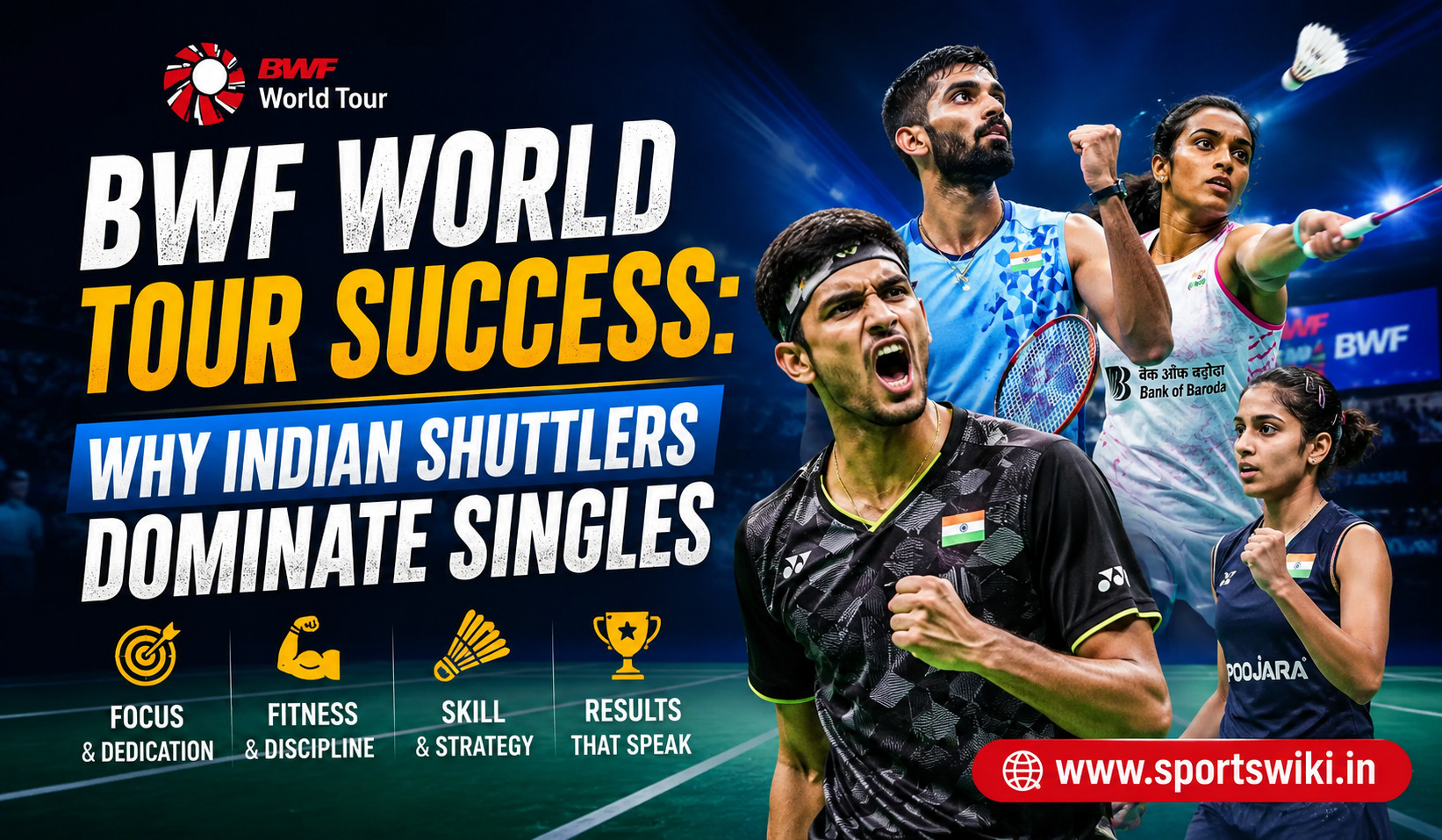
Ten years ago, an Indian shuttler winning a Superseries title made headlines for weeks. Now it barely raises an eyebrow, because it happens so often. That shift alone tells you something changed at the core of how India approaches the BWF World Tour, and it did not happen by accident.
From Occasional Upsets to Consistent Contenders
For most of badminton’s modern history, an Indian player winning a major international title was treated as an isolated event, something to celebrate as an exception rather than expect as a pattern. Prakash Padukone’s 1980 All England win and Gopichand’s repeat in 2001 stood alone for decades, separated by twenty-one years with almost no comparable results in between.
That pattern broke somewhere around the early 2010s. Saina Nehwal’s rise to World No. 1 in 2015 and her Olympic bronze in 2012 showed Indian singles players could compete week to week, not just peak once every few years. Since then, the depth on tour has kept expanding rather than resetting after each star’s peak, which is the real marker of a system working.
Men’s Singles: Building a Genuine Bench
Men’s singles is the clearest example of India moving from one standout player to a genuine competitive bench on the BWF World Tour.
Srikanth’s Breakout Season
Kidambi Srikanth’s 2017 season remains a benchmark. He won four Superseries-level titles that year, a run that included beating some of the sport’s top-ranked players across different tournaments. It was not one lucky bracket. It was a full season of consistent results against varied opposition, which is a much harder thing to sustain than a single tournament win.
Sen and Prannoy Extending the Streak
Lakshya Sen picked up the momentum a few years later, reaching the All England final in 2022 and winning Commonwealth Games gold that same year in Birmingham. HS Prannoy, whose career had plenty of near misses earlier on, finally broke through with a World Championship bronze in 2023, a result that came relatively late in his career and reflected years of steady improvement rather than a sudden leap. Having three or four men capable of reaching deep tournament rounds at once, instead of one player carrying the entire country’s hopes, is exactly what separates a wave from a fluke.
Women’s Singles: A Legacy That Kept Compounding
Women’s singles tells a slightly different story, one built more around sustained individual dominance than sheer numbers, though that is starting to shift too.
Sindhu’s Extraordinary Run
PV Sindhu’s résumé is difficult to match anywhere in the sport’s recent history. She won silver at Rio 2016, bronze at Tokyo 2020, and gold at the 2019 World Championships in Basel, along with multiple World Championship silvers and bronzes in the years before that breakthrough. She was not just winning occasionally at the top level. She was reaching finals and semifinals with a consistency that kept India in contention at nearly every major event for close to a decade.
The Next Generation Is Already Testing Itself
Players like Malvika Bansod and Anmol Kharb are now getting regular exposure on tour, facing higher-ranked opponents earlier in their careers than previous generations typically did. That early exposure matters. A player who faces top-20 opposition at nineteen instead of twenty-five builds tournament composure much faster, simply because there is no substitute for match experience against players who do not give away easy points.
What Is Actually Driving the Dominance
It is worth breaking down the specific factors behind this shift, since “better training” on its own is too vague to explain much.
- Higher sparring density. Elite academies now house multiple top-ranked players training together daily, raising the baseline standard for everyone in the building.
- Integrated sports science. Strength, conditioning, and injury prevention support has become standard rather than occasional, extending careers and reducing lost training time.
- Better tournament scheduling and exposure. Players now get more regular international match time earlier in their careers, closing the experience gap against established stars.
- Mental conditioning as routine preparation. Structured pressure training and sports psychology support help players close out tight matches instead of collapsing under it.
- A deeper domestic competitive pool. More players pushing each other at the national level raises the floor, not just the ceiling, of Indian singles badminton.
Comparing India’s Rise to Rival Nations
China, Indonesia, and Japan have historically dominated singles badminton, and they still produce elite players consistently. What has changed is that India is no longer a clear step below that tier. Where an Indian player reaching a Superseries semifinal once felt like an achievement worth celebrating on its own, it is now treated as a baseline expectation, with the real story being whether they can go on to win the title. That shift in expectation is itself evidence of how far the depth has come, even before counting the actual medal totals.
FAQ: Indian Singles Players on the BWF World Tour
Who is India’s most successful singles player in BWF history?
PV Sindhu holds that distinction overall, with an Olympic silver, an Olympic bronze, and a World Championship gold, making her the most decorated Indian badminton player across major international events.
Why did Kidambi Srikanth’s 2017 season matter so much?
He won four Superseries-level titles in a single season, a level of consistency that had rarely been seen from an Indian men’s singles player, and it showed the depth building behind Saina Nehwal’s earlier breakthroughs.
Is India’s singles success limited to a couple of standout players?
Not anymore. Multiple players across both men’s and women’s singles are regularly reaching deep tournament rounds, which reflects broader depth rather than dependence on one or two individuals.
What role does sports science play in this success?
Integrated physiotherapy, strength and conditioning, and injury prevention support have become standard parts of training, helping players stay competitive for longer and recover faster between tournaments.