Indian Badminton Academy: Inside the Champion Pipeline
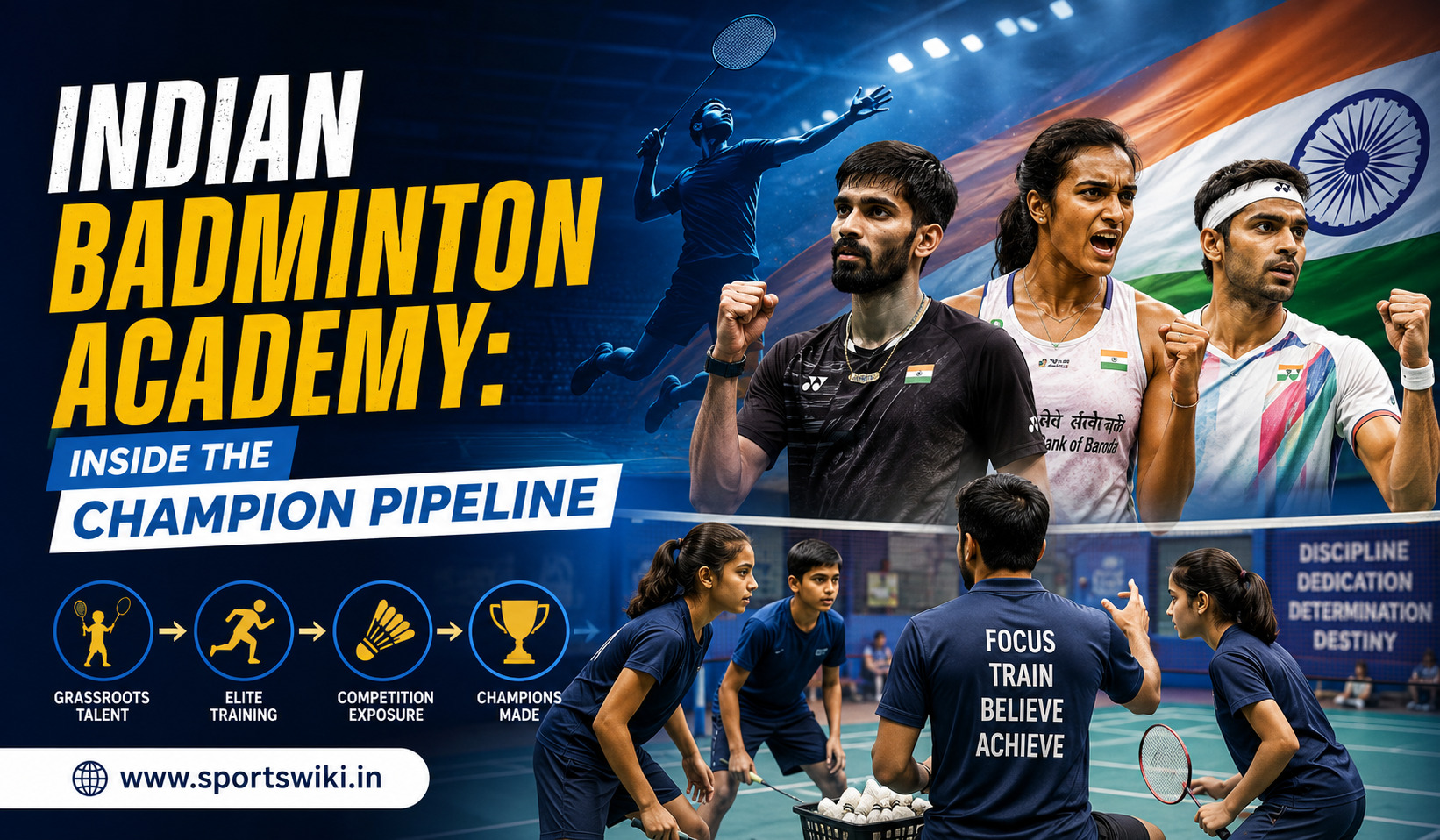
One building in Hyderabad has produced an Olympic silver medalist, an Olympic bronze medalist, a World Champion, and a string of Superseries winners, all from the same daily routine. That is not a coincidence, and it is not magic either. It is the result of a deliberate system built inside an Indian badminton academy that most fans only hear about when a medal gets won.
Why the Gopichand Academy Exists in the First Place
Pullela Gopichand won the All England Open in 2001, becoming only the second Indian man to do it after Prakash Padukone in 1980. He came back from that win expecting doors to open. Instead, he found the same problem every promising Indian player before him had run into: no consistent coaching structure, no proper sparring depth, and almost no sports science support once a player left the junior circuit.
So he mortgaged property and poured his own resources into building a training center from scratch in Hyderabad. What started as a modest facility eventually grew into the Pullela Gopichand Badminton Academy, now recognized as one of the most productive badminton training grounds in the world. The point was never to build one great player. The point was to build a repeatable process that could keep producing them.
Inside a Normal Training Day
Most outsiders assume elite training means longer hours of the same drills amateurs already do. That is not really how it works at this level.
Early Mornings and Split Sessions
Training typically begins before 5 a.m., long before Hyderabad traffic even picks up. The morning block usually centers on footwork correction, multi-shuttle drills, and technical stroke work, since players are fresher and coaches want clean mechanics without fatigue interfering. A second session later in the day shifts toward match simulation, tactical rehearsal, and conditioning. Splitting the day this way keeps intensity high without burning players out during a single marathon block.
Sparring Depth Matters More Than People Realize
One underrated part of the academy’s success is simply having enough high-level players in one place to spar against. A junior training alone against weaker partners plateaus fast. A junior training daily against national-level shuttlers, and occasionally against seniors like Sindhu or Srikanth during shared sessions, develops much faster because every rally forces a higher standard. It is similar to how a young footballer improves faster training with a strong first team squad than practicing drills alone in an empty park.
The Alumni Who Prove the Pipeline Works
Numbers convince skeptics faster than philosophy does, so here is what the academy has actually produced on the biggest stages in the sport.
- Saina Nehwal became the first Indian woman to win an Olympic medal in badminton, taking bronze at London 2012, after years of training under this system.
- PV Sindhu won silver at Rio 2016, bronze at Tokyo 2020, and gold at the 2019 World Championships in Basel, becoming the most decorated Indian badminton player in history.
- Kidambi Srikanth put together a dominant 2017 season with four Superseries-level titles, a stretch still regarded as one of the best single-season runs by an Indian men’s singles player.
- Parupalli Kashyap reached a career-high world ranking inside the top ten and won Commonwealth Games gold in 2014.
What stands out is not just the medals themselves. It is that these are four completely different playing styles, developed under the same roof, which suggests the academy is coaching principles rather than cloning one template.
What the Champion Pipeline Actually Builds
A champion pipeline is not just about court time. It is about everything surrounding that court time.
Sports Science Integration
Modern academies now run alongside physiotherapists, strength and conditioning coaches, and recovery specialists, not as occasional visitors but as part of the daily setup. Biomechanical screening helps catch small technical flaws in a smash or a lunge before they turn into chronic injuries. This is a significant shift from a generation ago, when Indian players often trained hard but recovered poorly, cutting careers shorter than they needed to be.
Mental Conditioning as a Core Subject
Elite badminton is decided in short bursts of pressure, a mistimed cross-court shot at 19-19, a hesitant net return on match point. Academies now build in structured mental training, including visualization work and simulated pressure drills, rather than leaving composure to chance. Sindhu has spoken about working with sports psychologists ahead of major finals, and that kind of support is treated as standard preparation now, not a luxury.
A Feeder System From Grassroots to Elite
The academy does not just wait for finished talent to walk through the door. It works alongside district-level coaching, school tournaments, and government programs like Khelo India to identify promising juniors early, then absorbs the strongest of them once their game is ready for elite-level training. Lakshya Sen is a good example of this handoff, moving from a family-run academy in Almora to bigger training centers as his results demanded a higher level of competition.
Where the Model Still Faces Challenges
No system is perfect, and it is worth being honest about the friction points.
- Capacity limits. One flagship academy cannot train every promising junior in a country of India’s size, which is why regional centers matter more than ever.
- Cost barriers. High-level training, travel for international tournaments, and equipment remain expensive, even with scholarship support for talented juniors from modest backgrounds.
- Coach retention. Experienced coaches are in high demand globally, and keeping enough quality coaching depth as the player pool grows is an ongoing balancing act.
FAQ: Gopichand Academy and the Champion Pipeline
Who founded the academy and when?
Pullela Gopichand, a former All England Open champion, founded the academy in Hyderabad after struggling to find proper training infrastructure himself as a player.
What age do players usually join?
Many players join as juniors, often in their early teens, though the exact entry age varies depending on individual talent assessment and prior training background.
Is the academy only for elite players?
No, it runs programs across different skill levels, but the elite training track is reserved for players who show the competitive results to justify that level of investment and coaching attention.
What sets this academy apart from other badminton training centers?
Its combination of high-density sparring, integrated sports science, and structured mental conditioning has produced multiple Olympic medalists and World Championship medalists from a single training base, which is rare anywhere in the sport.