Olympic Weightlifting Rules: Snatch and Clean & Jerk Explained
A lifter walks to the platform, grips the bar, and has about a minute to move a weight that looks impossible. Three referees watch every inch. Two white lights mean success, and two red lights mean the lift is gone. That’s the pressure behind the Olympic weightlifting rules, and it’s why every attempt feels like a small drama. This guide explains the rules in simple words, so you can follow each lift with confidence.
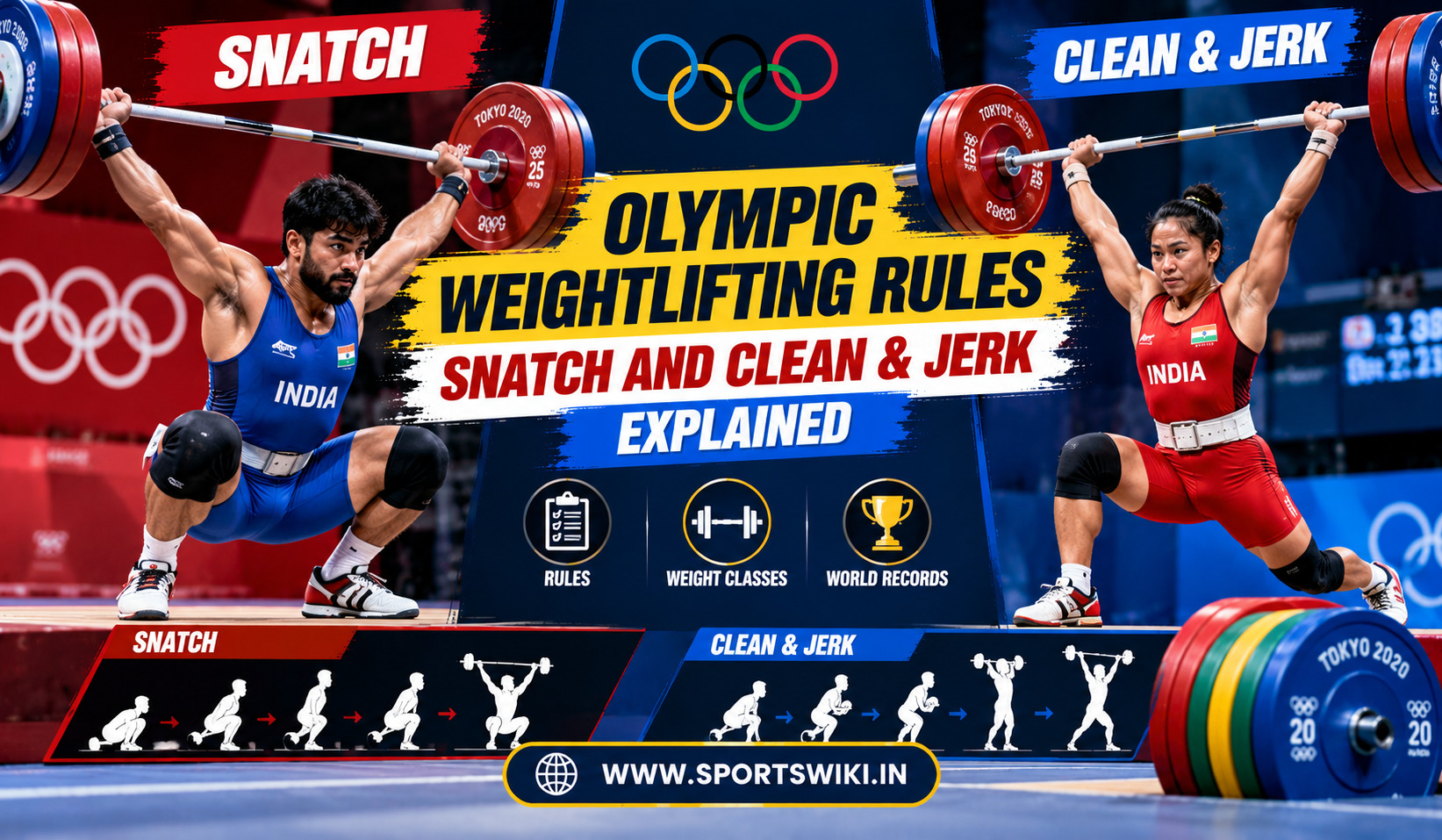
Olympic weightlifting has only two lifts: the snatch and the clean and jerk. Both ask the lifter to take a bar from the floor to overhead. Still, they do it in very different ways. Here’s how each lift works, how attempts are counted, and what referees look for when they decide whether a lift is good.
The Basics of Olympic Weightlifting
Weightlifting is one of the oldest Olympic sports. Men have competed at the Games since 1896, though the sport skipped a few editions early on. Women joined the Olympic program in 2000. Today, men and women compete in separate weight categories, and each lifter tries to post the biggest total possible.
The format is simple. Every lifter gets three attempts in the snatch, followed by three attempts in the clean and jerk. Lifters pick their own starting weights and choose heavier loads as the session goes on. The bar itself weighs 20 kilograms for men and 15 kilograms for women. So every lift starts with that base weight before plates are added.
Why Only Two Lifts?
Both lifts test strength, speed, and timing together. A lifter can’t grind through them slowly. The bar must move fast, and the body must drop under it at the right moment. That blend of power and skill is why weightlifting is often called the most technical of the strength sports.
The Snatch Explained
The snatch is the first lift of the competition. The lifter grips the bar wide, pulls it from the floor, and moves it overhead in one smooth motion. There’s no pause at the chest or shoulders. Because of this, the lift demands huge speed and balance.
How the Snatch Works Step by Step
The bar starts on the floor, in front of the lifter’s shins. The lifter pulls upward, extends the hips and knees, and then drops quickly under the bar. Many lifters catch the weight in a deep squat with straight arms. Others catch it in a split position, with one leg forward and one back. After the catch, the lifter stands up and holds the bar still overhead, with arms and legs fully straight. Only then can the referee signal that the lift is complete.
The Clean and Jerk Explained
The clean and jerk is the second lift, and lifters can usually move more weight here than in the snatch. It’s a two-part lift. First comes the clean, where the bar goes from the floor to the shoulders. Then comes the jerk, where the lifter drives the bar overhead.
The Clean
In the clean, the lifter pulls the bar from the floor and catches it on the shoulders, usually in a deep squat. Then the lifter stands up with the bar resting at the collarbone. A short pause is allowed before the next phase. During that moment, the lifter gathers balance and breath.
The Jerk
The jerk starts with a quick dip of the knees, followed by a powerful drive upward. As the bar rises, the lifter drops into a split stance, with feet staggered front and back. The arms lock out overhead, and the lifter brings the feet back in line. Finally, the lifter holds the bar still until the referee gives the signal. Because the jerk is fast, timing matters even more than raw strength.
Attempts and the Total
Each lifter has three attempts per lift. The best successful snatch and the best successful clean and jerk are added together. That sum is called the total, and the highest total wins the competition. This means a lifter doesn’t need every attempt to be perfect. One strong lift in each category can be enough.
What Happens If a Lifter Misses Everything?
A lifter who fails all three snatch attempts can still try the clean and jerk. However, without a successful snatch, no total can be recorded. In that case, the lifter finishes without a placing. That outcome is known as a bomb out, and it’s one of the most painful moments in the sport. In short, a lifter must land at least one good lift in each category.
Choosing Weights Smartly
Lifters and coaches plan attempts carefully. A common approach is to start with a safe weight, then add more on the second and third tries. Weight increases must follow set rules, and the bar can’t go backward from a successful attempt. So lifters often take a calm opener, build confidence, and then reach for a personal best.
How Referees Judge a Lift
Three referees sit around the platform. Each one presses a white or red light. A lift counts if at least two of the three show white. Referees look for several things, including a full lockout of the arms, straight legs, and a steady hold. The lifter must also wait for a clear signal before lowering the bar.
Common Reasons for a No Lift
Many failed lifts come from small mistakes. Here are the most common ones.
- Bent elbows: the arms aren’t fully locked when the lift finishes.
- Pressing out: the lifter pushes the bar overhead instead of catching it.
- Lost balance: the lifter steps outside the platform or moves the feet during the hold.
- Early drop: the bar is dropped before the referee’s signal.
These rules keep the sport fair and safe. If you’d like a deeper look at how the classes work, our guide to weightlifting weight categories explained for men’s and women’s classes breaks them down clearly.
The Platform, the Bar, and the Clock
Every lift takes place on a raised platform, and lifters must stay inside it. Stepping out during an attempt can cause a no lift. Lifters wear a tight singlet, lifting shoes, and often a belt. Chalk on the hands helps with grip, and wrist wraps add support. Still, none of this gear lifts the weight for them.
Time also matters. Once a lifter’s name is called, the clock starts. A lifter has about one minute to begin the attempt, and the rule gives extra time only when the same lifter must go twice in a row. So lifters learn to stay calm, breathe, and walk to the bar with a clear plan. In other words, composure is part of the skill.
Ties and Tie-Breaks
Sometimes two lifters finish with the same total. In that case, the lighter lifter by bodyweight wins. That’s because moving the same weight at a smaller size is harder. If bodyweights match too, the lifter who reached the total first takes the higher place. As a result, timing within a session can decide medals.
Olympic Weightlifting Rules Compared with Other Strength Sports
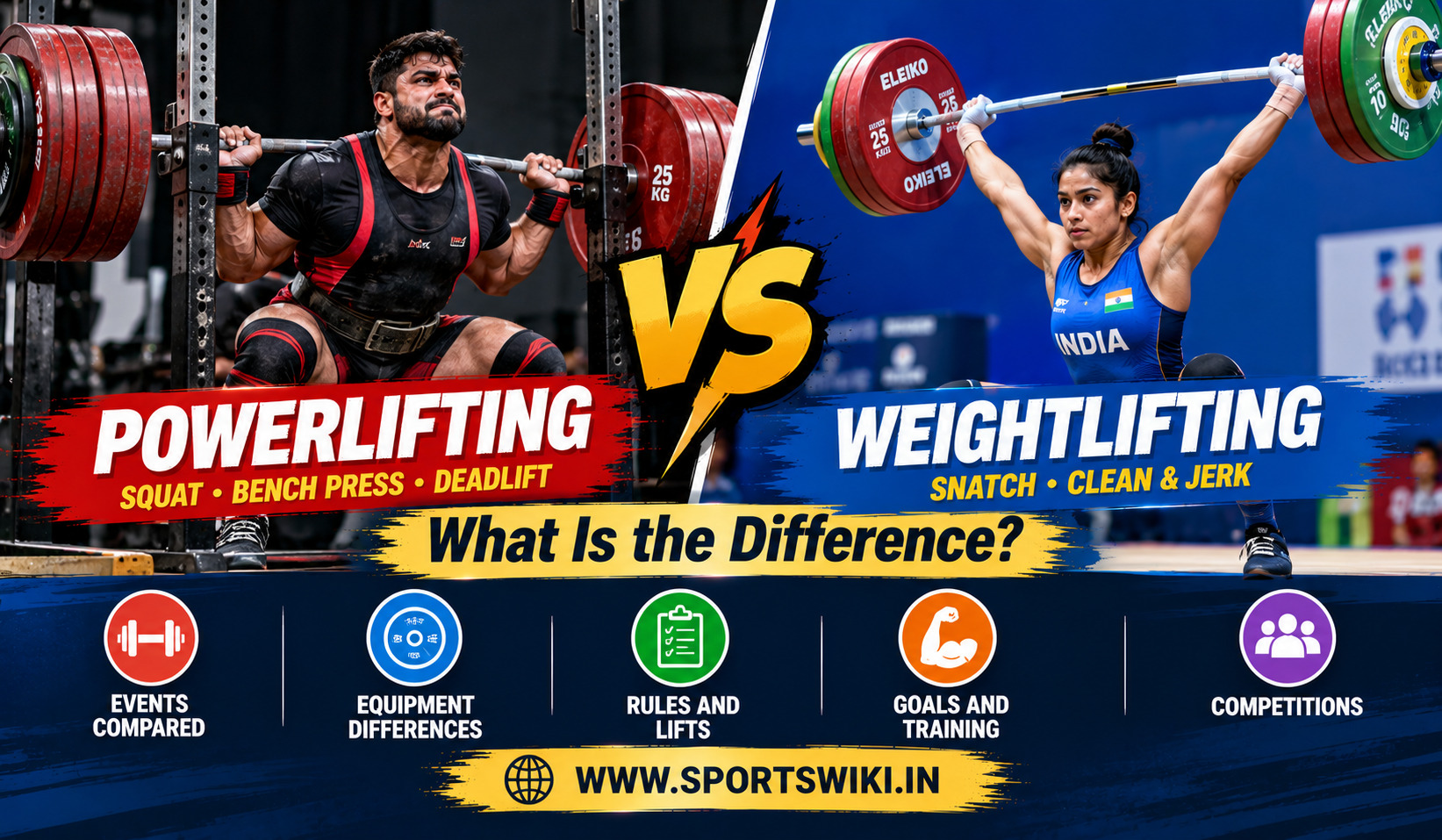
Many fans confuse weightlifting with powerlifting. Yet the two sports use different lifts and different skills. Weightlifting focuses on speed and technique overhead, while powerlifting focuses on slow, maximum strength. For a full comparison, read our explainer on powerlifting vs weightlifting and what the difference is. Meanwhile, if you’re curious about adaptive sport, our guide to para powerlifting rules, weight classes and scoring shows how a bench press competition works.
Key Takeaways
- Two lifts: the snatch and the clean and jerk make up the competition.
- Three attempts: each lifter gets three tries per lift.
- Total: the best snatch plus the best clean and jerk decides the winner.
- Referees: three referees judge, and two white lights make a good lift.
- Bomb out: no successful lift in either category means no total.
- Tie-break: the lighter lifter wins if totals match.
FAQs
What are the two lifts in Olympic weightlifting?
They are the snatch and the clean and jerk.
How many attempts does a lifter get?
Each lifter gets three attempts in the snatch and three in the clean and jerk.
How is the winner decided?
The lifter with the highest total of the best snatch and best clean and jerk wins.
How many referees judge a lift?
Three referees judge each lift, and at least two white lights are needed.
Which weighs more, the men’s or women’s bar?
The men’s bar weighs 20 kilograms, and the women’s bar weighs 15 kilograms.
Conclusion
The Olympic weightlifting rules are simple at heart. Two lifts, three attempts each, and one combined total decide every medal. The snatch rewards speed, the clean and jerk rewards raw power, and the referees keep everything honest. Once you know what each light means, every attempt becomes a small story you can follow from the first pull to the final hold.