Powerlifting vs Weightlifting: What Is the Difference?
Both sports involve a barbell, a platform, and lifters who look like they can move a car. Yet they’re built on different ideas. One asks how much you can lift slowly. The other asks how fast you can move a heavy bar overhead. If you’ve ever mixed them up, you’re not alone. This guide breaks down powerlifting vs weightlifting in simple words, covering the lifts, the scoring, and the Olympic story.
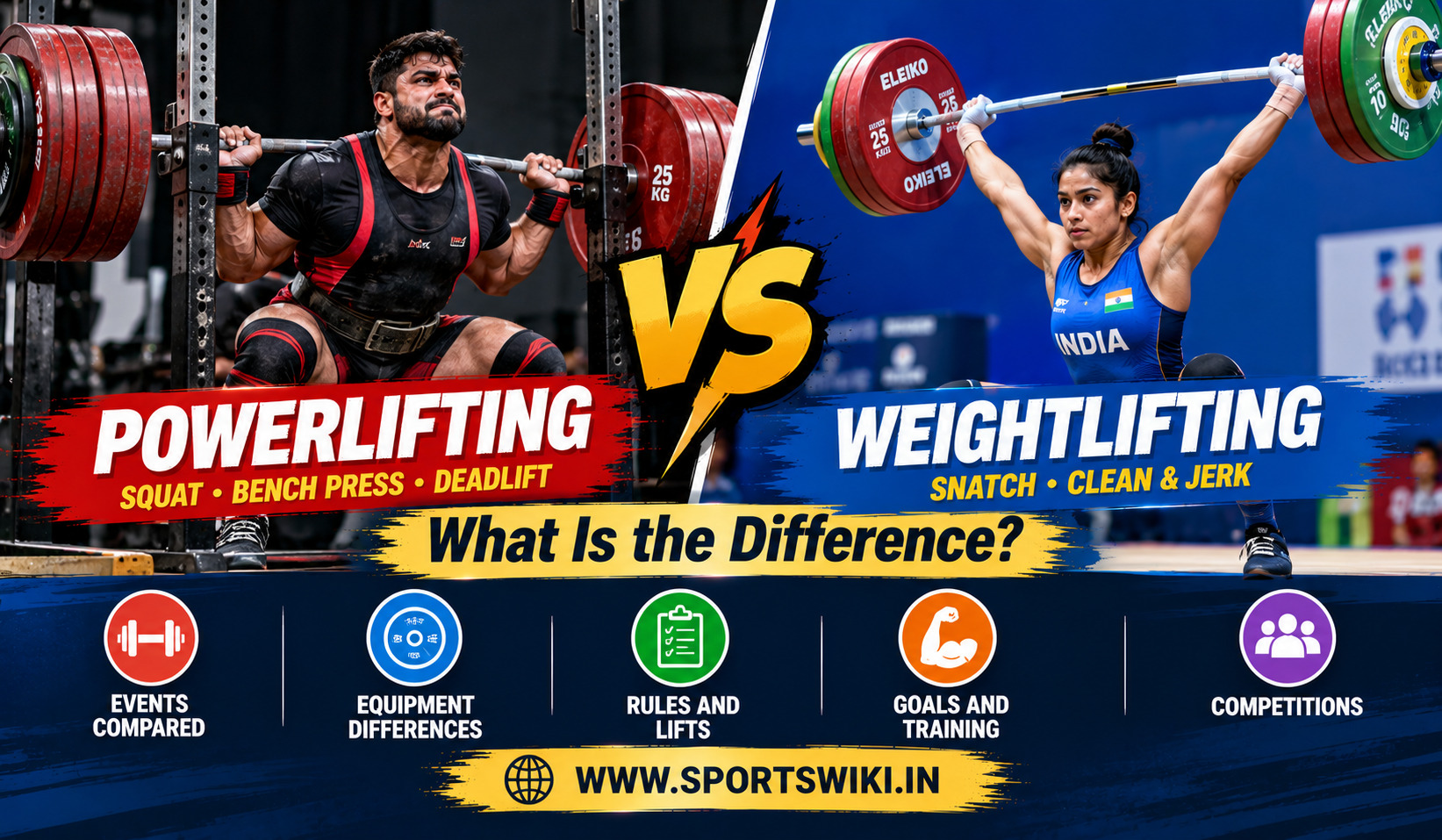
Think of it this way. Powerlifting measures raw strength. Weightlifting measures strength, speed, and technique all at once. That single difference shapes every rule, every lift, and even the way lifters train. Here’s how they compare, side by side.
The Lifts in Each Sport
The easiest way to see the gap is to look at the lifts. Powerlifting has three lifts: the squat, the bench press, and the deadlift. Weightlifting has two: the snatch and the clean and jerk. The names sound alike, so people often swap them, but the movements are very different.
Powerlifting Lifts
- Squat: the lifter carries the bar on the back, squats down, and stands up.
- Bench press: the lifter lies on a bench, lowers the bar to the chest, and presses it up.
- Deadlift: the lifter pulls the bar from the floor until standing tall.
These lifts are slow and heavy. The bar rarely leaves the lifter’s hands or back, and the focus is on pure force. Because of this, powerlifters often lift the largest loads in strength sport.
Weightlifting Lifts
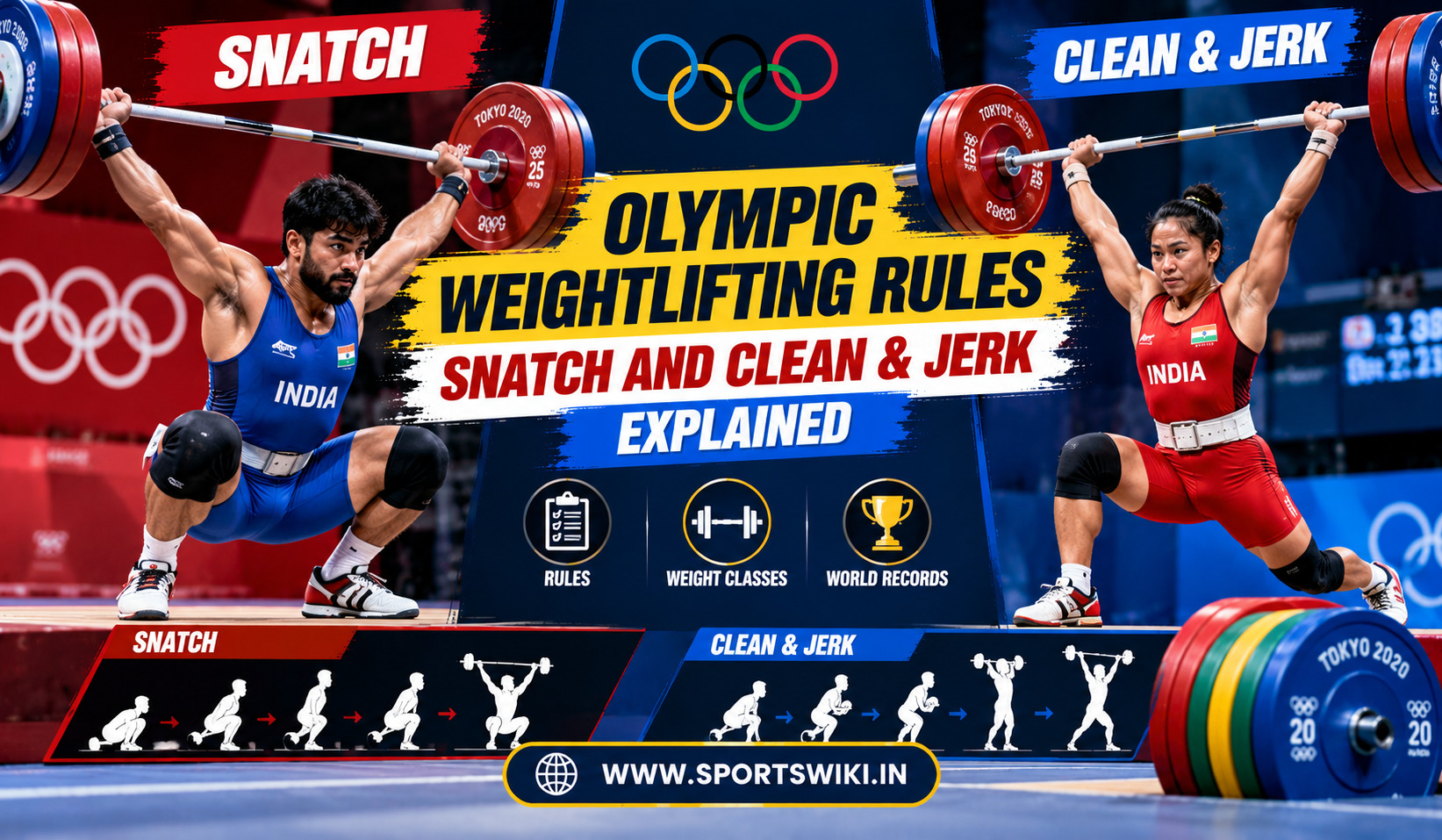
- Snatch: the bar goes from the floor to overhead in one fast motion.
- Clean and jerk: the bar goes to the shoulders first, then overhead in a second drive.
These lifts are explosive. The lifter must pull the bar fast, then drop under it and catch it. So weightlifting demands balance, mobility, and timing along with strength. For the full rules on each overhead lift, read our guide to Olympic weightlifting rules: snatch and clean and jerk explained.
How Each Sport Is Scored
Both sports give each lifter three attempts per lift. After that, the scoring paths split. In weightlifting, the best snatch and best clean and jerk are added together. The highest total wins within each weight category. A lifter who fails every attempt in one lift has no total at all.
In powerlifting, the best squat, best bench press, and best deadlift are added up. That sum is also called the total. However, powerlifting often goes one step further. Many events use points formulas that adjust the total for bodyweight. This lets a lighter lifter and a heavier lifter be compared on one scoreboard. In other words, a points system can crown an overall best lifter across all classes.
Referees and Lights
Both sports use referees with white and red lights. Weightlifting uses three referees, and two white lights make a good lift. Powerlifting also uses a panel of referees who judge depth, pauses, and lockouts. So in both sports, a lift only counts when it meets the rules, not just when the bar moves.
Olympic and Paralympic Status
Here’s where the sports differ most on the world stage. Weightlifting is an Olympic sport. Men have competed at the Games since 1896, and women joined in 2000. The program for Los Angeles 2028 will include 12 weightlifting events, six for men and six for women.
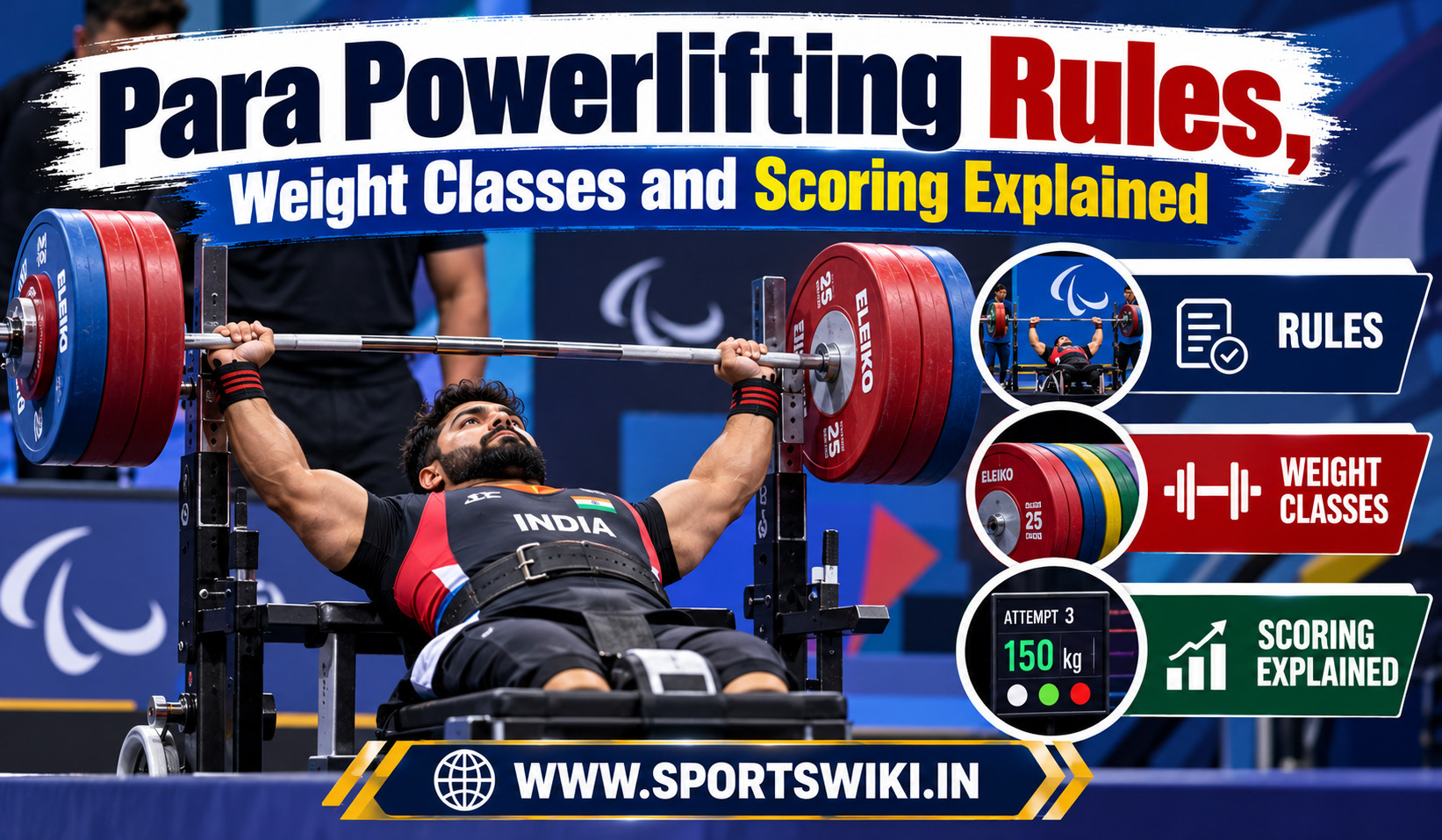
Powerlifting isn’t on the Olympic program. However, a form of it appears at the Paralympic Games. That sport is para powerlifting, which uses only the bench press. It has been on the Paralympic program since 1984, and women’s events began at Sydney 2000. To learn more, read our guide to para powerlifting rules, weight classes and scoring explained.
Governing Bodies
Weightlifting is governed by the International Weightlifting Federation. Powerlifting has its own international federations, including the International Powerlifting Federation. As a result, the rules, categories, and calendars are separate. Fans often need to check which body runs a given event before they compare results.
Weight Categories Compared
Both sports group lifters by bodyweight, but the lists differ. Weightlifting now uses eight categories per gender, which took effect on 1 August 2026. Men’s classes run from 60 kg to +110 kg. Women’s classes run from 49 kg to +86 kg. Our guide to weightlifting weight categories explained for men’s and women’s classes lists them all.
Powerlifting federations use their own class lists. Para powerlifting, for instance, has 10 classes for men and 10 for women. So you can’t assume that a 75 kg lifter in one sport belongs in the same class in another. Always check which sport and which federation you’re reading about.
Competition Day Compared
A weightlifting session feels fast. Lifters go to the platform in order of the weight on the bar, and the snatch session finishes before the clean and jerk begins. Each attempt lasts only seconds. Because of this, a meet can swing quickly, and one missed lift can change the medal race.
A powerlifting meet feels slower and longer. Lifters complete all squat attempts, then the bench press, then the deadlift. A full meet can take many hours, with long breaks between lifts. So endurance and focus matter as much as strength. Fans often arrive early for the squats and stay for the deadlifts, which tend to close the day with the biggest numbers.
Equipment Compared
Weightlifters wear lifting shoes with a raised heel, which helps them reach a deep squat. They also wear a singlet and often use a belt. Chalk keeps the grip dry. The bar spins freely in the sleeves, so it can turn during a fast catch.
Powerlifters use similar basics, but their gear depends on the federation. Some events allow only simple items like a belt, wrist wraps, and knee sleeves. Others permit supportive suits in certain divisions. Meanwhile, the bench press needs a stable bench and safety spotters. In other words, the equipment mirrors the style of each sport, with speed gear on one side and support gear on the other.
Skills and Training Compared
Training looks quite different too. Powerlifters spend most of their time building maximum strength. They practice heavy singles, slow reps, and careful setup. The goal is to grind through a heavy bar with perfect form. Because of this, patience and consistency matter a great deal.
Weightlifters train for speed and positions. They practice the pull, the catch, and the drive again and again, often with lighter bars. Flexibility is key, since a deep squat with the bar overhead needs strong shoulders and hips. Meanwhile, coaches spend long hours refining timing. Even small errors in the pull can ruin a lift.
Which Sport Is Harder?
Fans love this debate, and there’s no single answer. Powerlifting asks for huge strength and nerve. Weightlifting asks for strength, speed, and exact technique under pressure. In my view, weightlifting is harder to learn, while powerlifting is easier to start. Still, both sports reward years of steady work.
Which Sport Should a Beginner Pick?
If you want to build general strength, powerlifting is a friendly starting point. The three lifts are easy to learn at a basic level, and progress is simple to track. You add weight, and you watch the numbers climb. As a result, many gym lifters try a powerlifting meet at least once.
If you love athletic, explosive movement, weightlifting may suit you better. It takes more time to learn, so a good coach helps a lot. Beginners often start with light bars or even wooden dowels. Over time, the movements become smooth and quick. Either way, safe technique should come before heavy weights.
Key Takeaways
- Powerlifting lifts: squat, bench press, and deadlift.
- Weightlifting lifts: snatch and clean and jerk.
- Speed vs strength: weightlifting stresses speed and technique, powerlifting stresses maximum force.
- Olympic status: weightlifting is an Olympic sport, while powerlifting is not.
- Paralympic link: para powerlifting uses the bench press and is a Paralympic sport.
- Scoring: both sports use totals, and powerlifting often adds bodyweight formulas.
FAQs
What is the main difference between powerlifting and weightlifting?
Powerlifting tests maximum strength in three slow lifts, while weightlifting tests speed and technique in two overhead lifts.
Is powerlifting an Olympic sport?
No, powerlifting isn’t on the Olympic program, but para powerlifting is part of the Paralympic Games.
How many lifts are in weightlifting?
Weightlifting has two lifts: the snatch and the clean and jerk.
How many lifts are in powerlifting?
Powerlifting has three lifts: the squat, the bench press, and the deadlift.
Which sport uses the bench press?
Powerlifting uses it, and para powerlifting uses it as its only lift.
Conclusion
When you compare powerlifting vs weightlifting, the main idea is simple. Powerlifting rewards raw strength across the squat, bench press, and deadlift. Weightlifting rewards speed, balance, and technique in the snatch and the clean and jerk. Each sport has its own rules, its own governing bodies, and its own fans. Once you know the basics, it’s easy to enjoy both, and to see why lifters in each sport take such pride in their craft.