Taekwondo Rules and Scoring Explained for Beginners
A spinning kick to the head now scores six points in elite taekwondo. Not long ago, it was worth five. That small change shows how fast the sport keeps evolving. So if you’re new, taekwondo rules and scoring can feel like a moving target. Still, the basics are easy to learn.
Because World Taekwondo updated its rulebook in January and June 2026, many guides are already out of date. Because of this, this explainer covers the match format, the point values and the penalties. Along the way, it also looks at belts and Olympic status. Since rules can shift again, everything below reflects reports as of October 2026.
Taekwondo Basics: What Is the Sport?
Taekwondo is a Korean martial art famous for its kicks. The sport has two main competitive forms. While kyorugi is sparring, where two fighters score points on each other. Poomsae, meanwhile, is a set of patterns, where athletes perform fixed movements for judges.
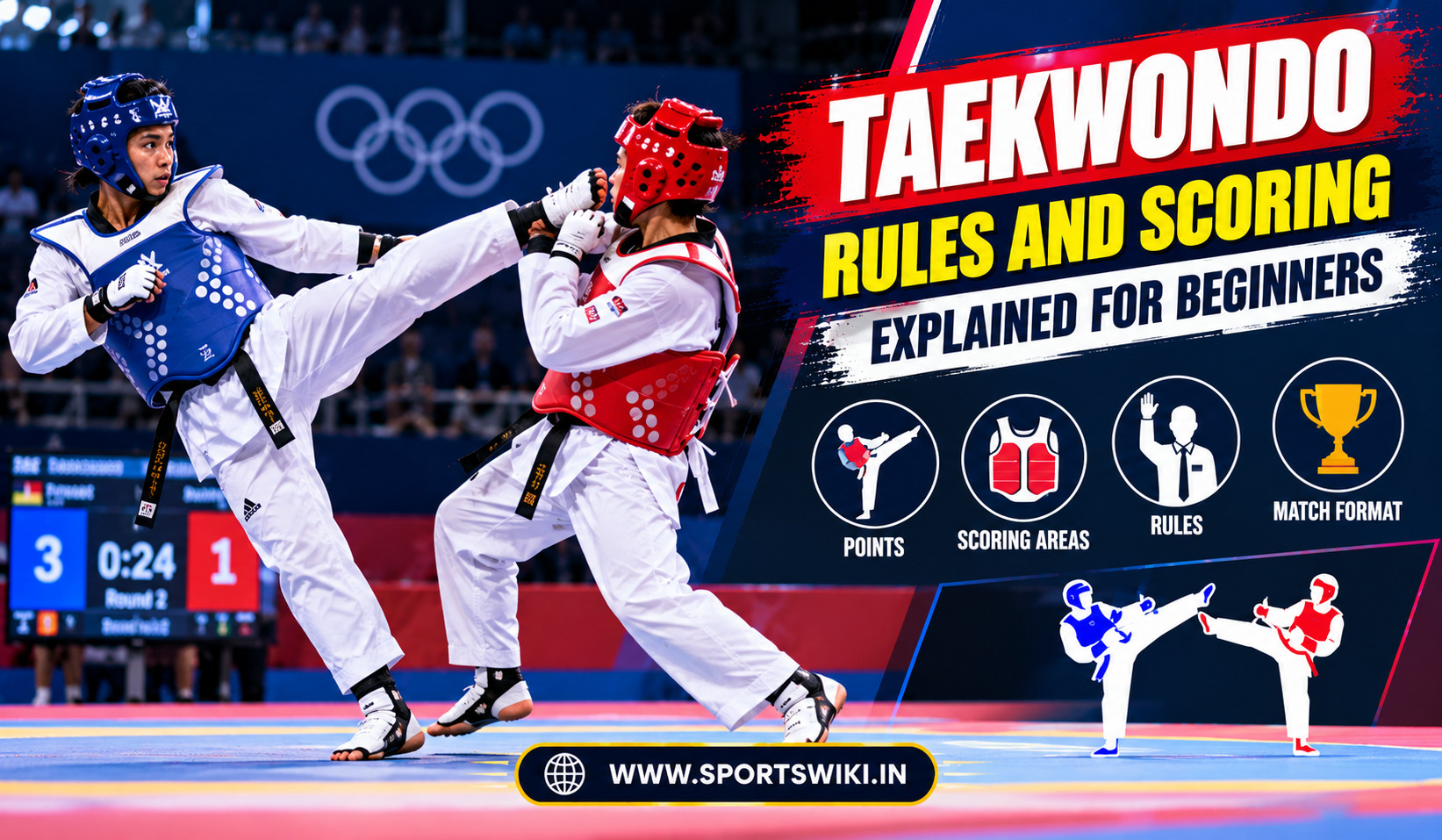
This guide focuses on sparring, since that’s what most fans see. Fighters wear a chest protector called a hogu, plus a helmet. Because both contain sensors, valid hits register on a screen within moments. As a result, scoring is faster and more consistent than in the old judge-only days.
A Short Olympic Story
Taekwondo became an official Olympic medal sport at Sydney 2000. Later, the international body, once known as the WTF, renamed itself World Taekwondo in 2017. Since then, it has kept tweaking the rules to make bouts clearer for viewers. Even so, the heart of the sport, fast kicking, hasn’t changed.
Match Format: Rounds, Rest and Winning
A standard sparring match has three rounds of two minutes each. Between rounds, fighters get a one-minute rest. Importantly, the match is best of three rounds, so winning two rounds takes the match. That means a fighter can lose on total points and still win.
The older system added up points across all three rounds. Now, since each round stands alone, the drama stays alive. For instance, a fighter who loses a round heavily can still bounce back and win the next two. Because every round matters, comebacks happen more often.
A round can end early, too. From June 2026, the point gap rule rose from 12 points to 15. So if one fighter leads by 15, the round stops. That change came because the top kick is now worth six points, not five.
Taekwondo Rules and Scoring: Point Values
Points depend on the technique and the target. Because only the trunk protector and the head count, fighters aim there. They score with kicks to both areas, but punches count only on the trunk. Punches to the head aren’t allowed, so head kicks stay the star attraction. Here is the 2026 scoring table:
- Punch to the trunk: 1 point.
- Kick to the trunk: 2 points.
- Kick to the head: 3 points.
- Turning kick to the trunk: 4 points.
- Turning kick to the head: 6 points.
A turning kick is any kick with a rotation, such as a spinning back kick. These carry bonus points because they’re harder to land. In 2026, World Taekwondo doubled the base score for turning kicks. As a result, a single turning head kick can swing a round in a heartbeat.
Light touches don’t count, since a hit must carry enough force to register on the sensors. Electronic gloves now help detect punches, and a judge confirms the technique. Because the system is semi-automatic, fighters have less to argue about.
Penalties: Gam-jeom and Warnings
Penalties are called gam-jeom, and they’re given for unsafe or unsporting acts. For example, striking the head with the hand or attacking a fallen opponent can bring one. Stepping out of bounds can too. As a result, each gam-jeom gives a point to the opponent.
From June 2026, the boundary rule is stricter. A gam-jeom now applies if any part of the foot crosses the line. Before that, the whole foot had to cross. Because of this, fighters now think harder about their footwork near the edge.
Passive play is also punished. In the last 10 seconds of a round, some penalties give the opponent two points instead of one. For instance, running away or avoiding combat can cost a fighter dearly. That rule discourages stalling when a round is close.
What Happens When Scores Are Level?
Tied rounds need a tiebreaker. Because several criteria apply, World Taekwondo lists them in order. First, officials look at points from turning kicks. Next, they compare higher-value techniques, then points from penalties, then the number of registered hits. If all of those match, a judges’ decision called superiority settles it.
Superiority looks at who managed the fight better. In practice, judges consider aggressive match management, the number of techniques and how advanced they were. Sportsmanship counts too. Because of this, a fighter who attacks with intent usually has the edge in a close round.
A Sample Round, Step by Step
Here’s an illustrative round, not a real match. First, Red lands a kick to the trunk for 2 points. Then Blue answers with a turning kick to the trunk for 4. Next, Red lands a head kick for 3, and the score reads 5–4 to Red. Finally, Blue lands a turning head kick for 6, and the lead flips to 10–5.
Notice how one big kick changes the picture. Because the point gap is 15, nobody can relax at 10–5. Both fighters keep probing, and the referee keeps watching for penalties. That’s why taekwondo bouts feel tense even when the scoreboard looks lopsided.
Video Review and Coaches
Coaches can request a video review in a few situations. To do so, they raise a card to the referee. If the request is fully accepted, the card comes back. If it’s rejected, the coach can receive a misconduct penalty. Because of this, coaches think carefully before challenging.
Since January 2026, coaches can no longer ask for review of head kicks that sensors miss. The centre referee can still ask for one after counting a missed head kick. Because of that change, stoppages should fall. Even so, fans still see plenty of video checks at big events.
Belts, Weight Classes and Etiquette
Taekwondo uses a belt system, from white to black. While ranks below black are called gup, black belt ranks are called dan. Colours between white and black vary by school and country. Because of that, the exact order may differ from club to club.
Respect is part of the sport, too. From June 2026, referees again call “Chung, Hong” and bring fighters to the centre before announcing a winner. Fighters then bow, and they can choose whether to remove their helmets. In short, the sport wants matches to begin and end with respect.
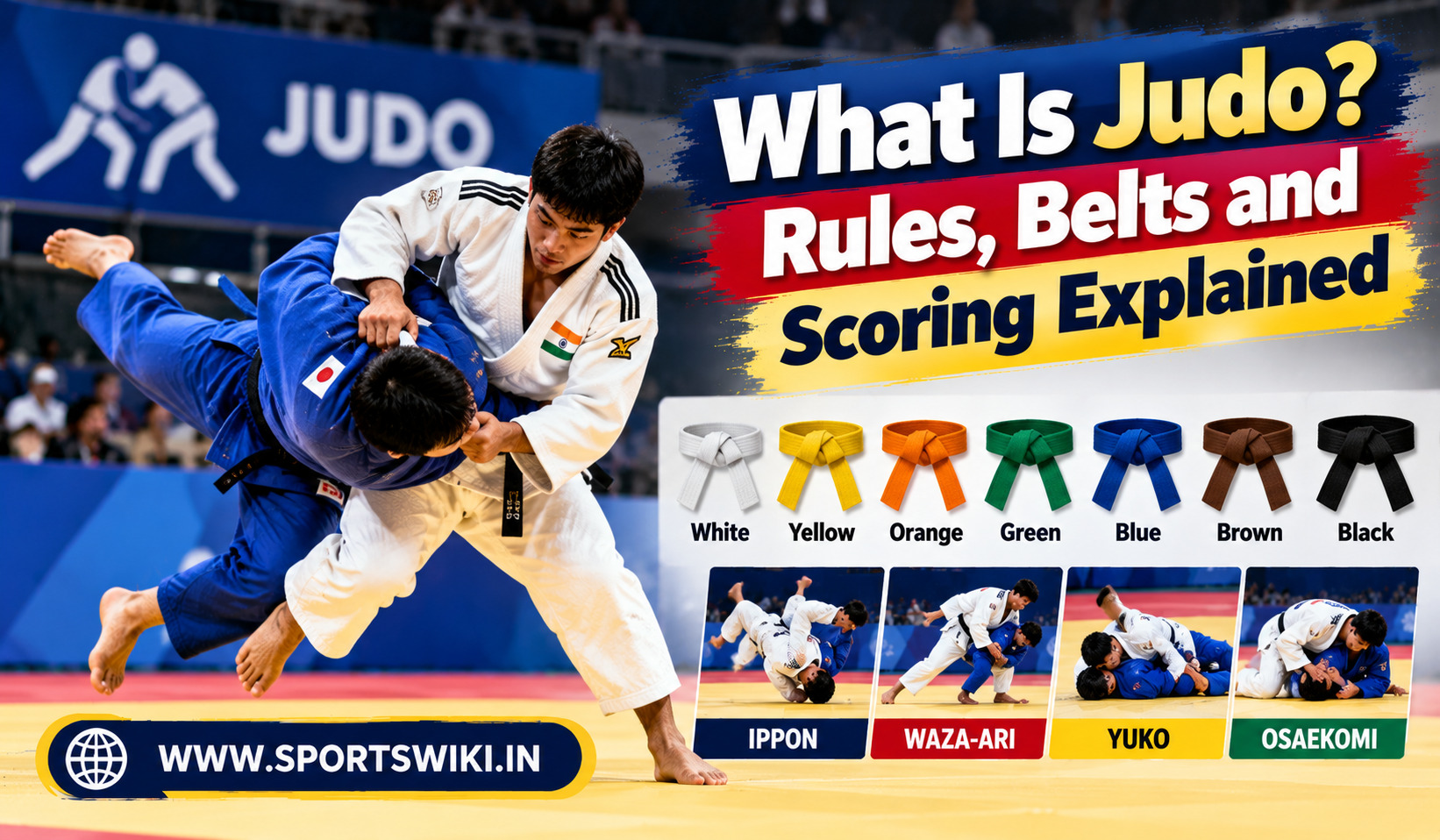
Fighters also compete by weight. Although the Olympic programme has used four classes per gender, World Taekwondo’s 2026 guidance says six will be tested. Meanwhile, our guide to what is judo shows how another Olympic combat sport handles weight classes and belts.
How It Compares With Other Sports
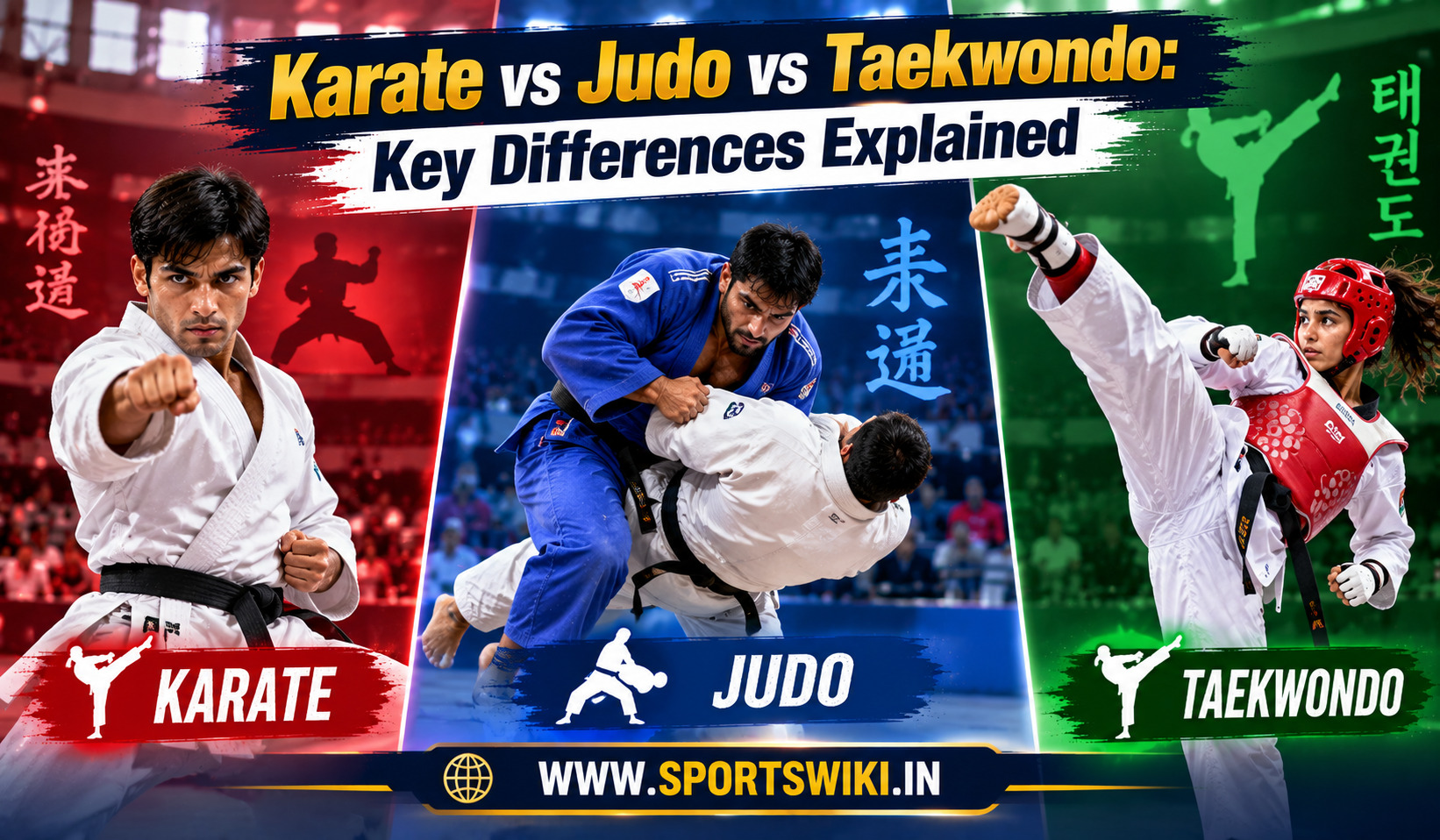
Taekwondo is all about long-range kicks. Judo, in contrast, focuses on grips, throws and groundwork. Karate, meanwhile, sits between them, with punches and kicks scored by judges. For a side-by-side look, read karate vs judo vs taekwondo.
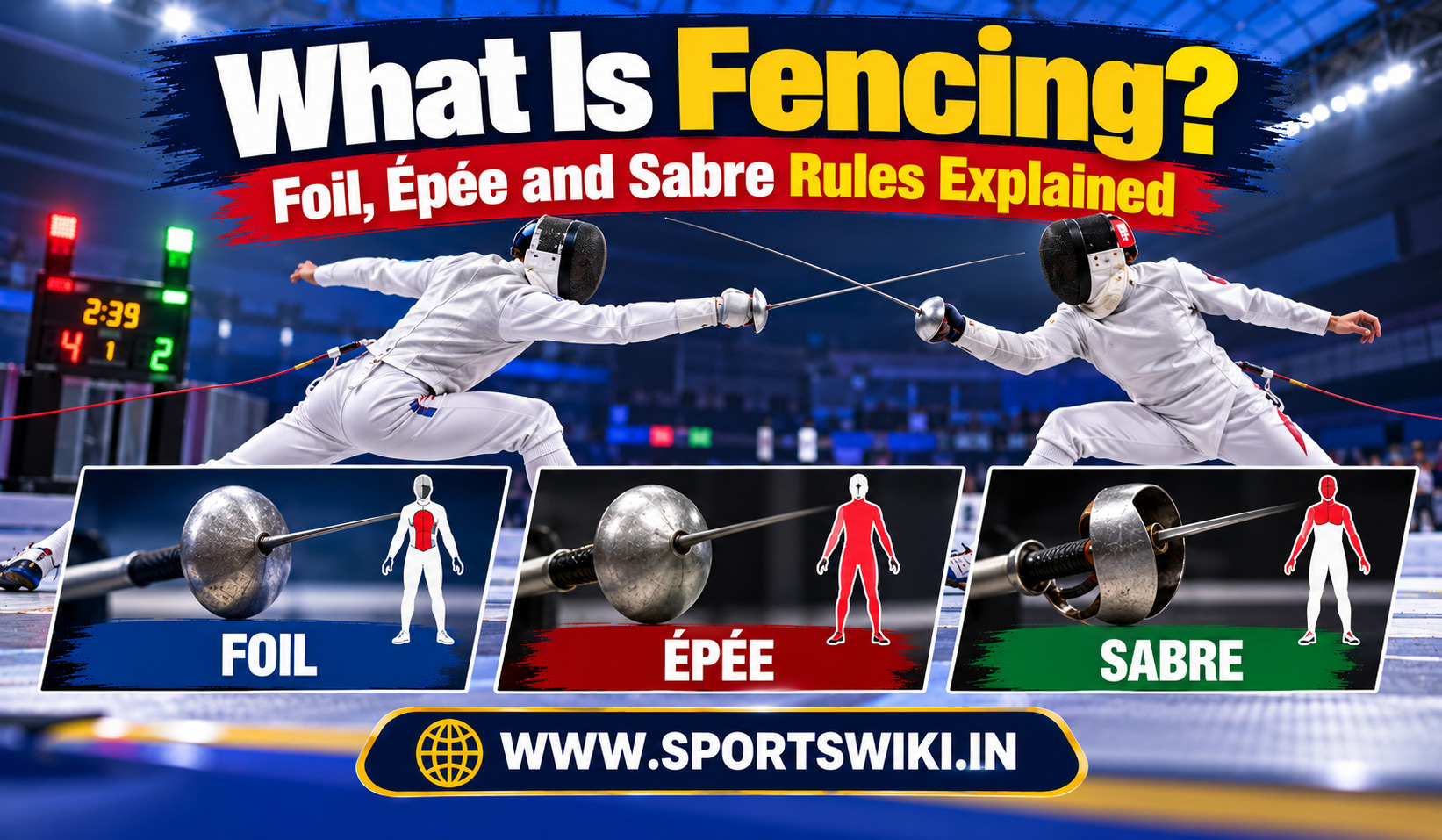
If you like sport with electronic scoring, fencing is another good watch. It uses coloured lights instead of body sensors. To see how that works, read our explainer on what is fencing. Meanwhile, the Olympic judo programme offers a very different feel, with throws and pins instead of kicks. Because each sport rewards different skills, many fans end up following all three.
Key Takeaways
- Match format: Three two-minute rounds, with the match won by taking two rounds.
- Point gap: A round ends if one fighter leads by 15 points, from June 2026.
- Top score: A turning head kick is worth six points under 2026 rules.
- Penalties: Gam-jeom gives points to the opponent, and some count double late in a round.
- Equipment: Chest protector, helmet and sensors register valid hits.
FAQs
How many rounds are in a taekwondo match?
A match has three rounds of two minutes each, with a one-minute rest between rounds.
How many points is a head kick worth?
A basic head kick is worth three points, and a turning head kick is worth six.
What is gam-jeom?
Gam-jeom is a penalty that gives a point to the opponent.
Are punches to the head allowed?
No, punches to the head are not allowed, though punches to the trunk score one point.
When did taekwondo become an Olympic sport?
Taekwondo became an official Olympic medal sport at the Sydney 2000 Games.
Conclusion
Taekwondo rules and scoring look complex at first, but they follow a clear logic. Fighters win rounds with kicks, punches and smart tactics, while penalties keep things fair. With the 2026 updates in place, turning kicks matter more than ever. Once you know the point values and the best-of-three format, matches become far easier to enjoy.