What Is Equestrian Sport? Dressage, Eventing & Show Jumping Explained
Few sports let men and women compete against each other on equal terms. Even fewer put a horse at the center of every result. That’s equestrian sport in a sentence. It asks a rider and a horse to work as one team, and judges, clocks, and fences decide who did it best. This guide explains what equestrian sport is, how its three Olympic disciplines differ, and why the partnership matters so much.
If you’re new to horse riding sports, the terms can sound confusing. Dressage, eventing, and show jumping all use horses, yet they test very different skills. One rewards calm precision. Another rewards bravery over solid obstacles. The third rewards speed and clean jumping. Here’s a simple breakdown of each, along with the rules, the history, and the basics you need to enjoy your next broadcast.
What Equestrian Sport Actually Means
Equestrian sport covers any competition where a rider and a horse perform together. The Olympic Games feature three disciplines: dressage, eventing, and show jumping. Each has its own rules, its own scoring, and its own kind of pressure. Still, all three share one idea. The rider must guide the horse with quiet, clear signals, and the horse must respond willingly.
Because the sport relies on an animal, it works differently from most others. A horse can’t read a rulebook or follow a game plan. So the rider’s job is to build trust, day after day, until the pair moves in step. That patient work happens long before any crowd arrives, and it’s the hidden half of every result you see.
The Three Olympic Disciplines
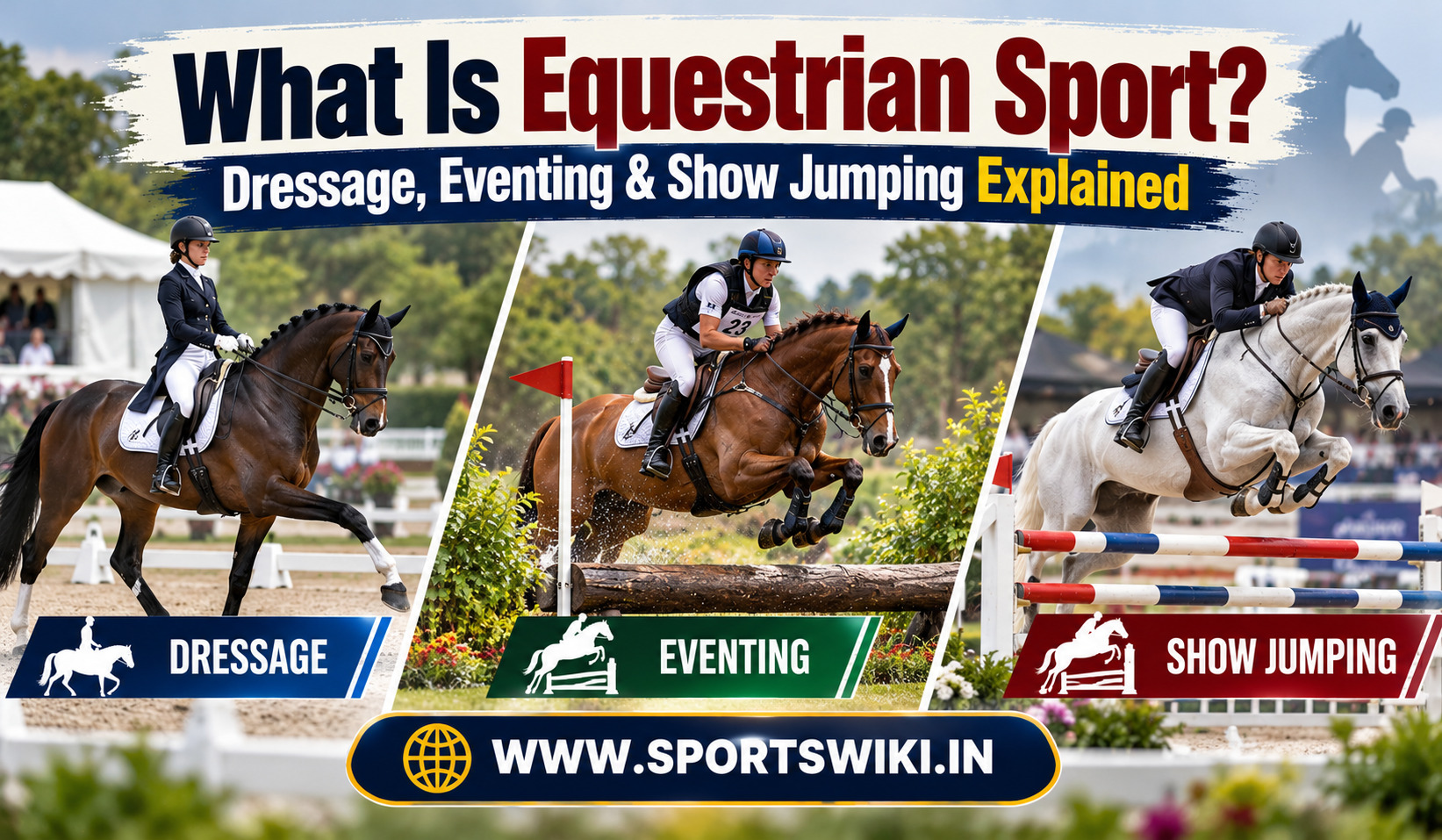
Since the disciplines look so different, it helps to see them side by side.
- Dressage: a judged test of set movements, performed in an arena.
- Eventing: three tests in one, covering dressage, cross-country, and jumping.
- Show jumping: a course of fences, where the aim is a clean and quick round.
That’s the whole map. Everything else in equestrian sport grows from these three branches. Even the smaller horse sports, such as endurance riding or vaulting, borrow ideas from them. Once you know these three, you can follow almost any equestrian broadcast with confidence.
A Short History of Equestrian Sport
Horses have been trained for war, travel, and sport for thousands of years. However, the modern form of equestrian sport took shape because of the military. Cavalry officers needed to prove their horses could stay calm, move precisely, and cross rough ground. Those same ideas became the tests we see today.
Over time, riding schools across Europe turned these skills into an art form. Riders wrote books on training, and academies taught young officers how to school a horse. Eventually, the tests moved from the parade ground to the competition arena. By then, the sport had rules, judges, and a growing crowd of fans. That slow shift explains why dressage looks so formal and eventing feels so rugged.
Olympic Milestones
The 1912 Stockholm Games featured dressage, eventing, and jumping together. Soon after, the sport found its global home. The international federation, known as the FEI, was founded in 1921 and still governs the sport. Early Olympic fields were closed to women, but that changed in the 1950s and 1960s. Today, men and women ride in the same classes and chase the same medals. That equal footing makes equestrian sport unusual among Olympic events.
Dressage: The Art of Precision
Dressage is often called horse ballet, and the nickname fits. Horse and rider perform a set pattern of movements in a marked arena. Judges score each movement from 0 to 10. A calm, relaxed horse that obeys light signals earns the best marks.
The word itself comes from a French term meaning training. So a dressage test is really a check on how well a horse has been schooled over the years. Judges look for rhythm, balance, and a willing attitude. A horse that looks happy and relaxed will almost always outscore one that looks tense, even if both ride the same pattern.
Why It Looks So Effortless
The goal is to make hard things look easy. A great dressage horse changes pace, direction, and rhythm without any visible pull from the rider. Meanwhile, the rider sits almost still. Of course, that stillness takes years to build. At the top level, you’ll see movements like the piaffe, which is a trot on the spot, and the passage, a slow and floating trot. If you want the full scoring system, our guide to dressage rules and scoring explained in simple words covers it step by step.
Eventing: Three Tests, One Score
Eventing is the all-rounder of equestrian sport. Riders compete in dressage, cross-country, and show jumping, often over several days. Because of this, the horse must be elegant, brave, and fit all at once. That’s a rare mix, and it’s why eventing fans love it.
The sport traces back to military tests, where a horse had to prove it could do a bit of everything. A cavalry horse needed to stay calm on parade, gallop over rough ground, and still be sound the next day. Modern eventing keeps that idea alive. Today’s riders train for months to build the fitness and trust that all three phases demand.
How the Three Phases Fit Together
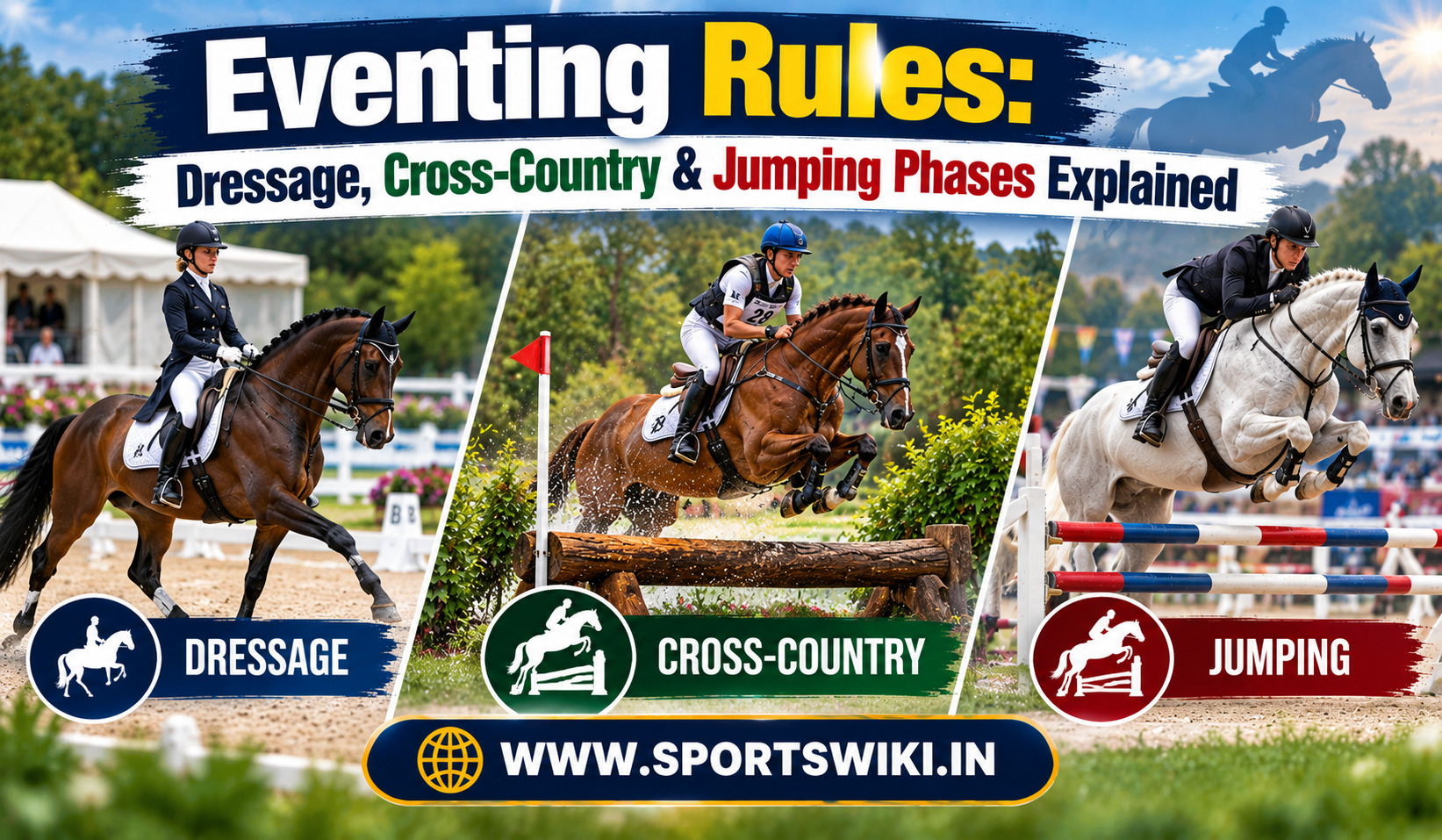
Dressage comes first and sets the tone. Cross-country follows, and it’s the thrilling part. Riders gallop across open land, jumping solid obstacles like logs, ditches, and water. Finally, show jumping tests whether the horse is still sharp and sound after the hard work. Every mistake adds penalty points, so the lowest total score wins. To see how penalties work in each phase, read our breakdown of eventing rules: dressage, cross-country and jumping phases explained.
Show Jumping: Speed and Clean Rounds
Show jumping is the most familiar discipline to casual viewers. A rider guides a horse around a course of colorful fences in a set order. Knocking down a pole or refusing a jump costs faults. The clock matters too, since going over the time allowed adds penalties.
Course designers play a big part in the drama. They place fences at different heights, angles, and distances. Some lines ask the horse to take long, flowing strides. Others demand short, bouncy ones. As a result, riders must plan every turn and adjust on the fly if the horse reacts to something unexpected.
What Happens in a Tie
Many rounds end with several riders on zero faults. In that case, a jump-off decides the winner. Riders return to a shorter course, and the fastest clear round takes the prize. As a result, the best riders balance risk and speed in every stride. Curious about the exact numbers? Our guide to show jumping rules: faults, time penalties and jump-offs lays them out clearly.
The Horse and Rider Partnership
What sets equestrian sport apart is the animal. A horse can’t tell its rider how it feels, so the rider must learn to read subtle signs. Ears, tail, breathing, and rhythm all carry messages. Good riders spend years learning to feel what the horse is thinking. In fact, many top competitors say their results come from patience, not force.
Horses also have their own personalities. Some are bold and love to jump. Others are cautious and need extra time. Because of this, no two partnerships look alike. A rider who succeeds with one horse may struggle with another. That unpredictability is part of the charm, and it’s why equestrian sport rewards both skill and sensitivity.
Care Comes First
Welfare sits at the heart of the modern sport. Horses are checked by vets at major events, and unfit horses can be stopped from competing. Riders also wear hard hats and, in many disciplines, body protectors. Because of these rules, the sport keeps a close eye on safety for both partners. That focus on care is part of what equestrian sport stands for today.
How Equestrian Sport Is Judged
Each discipline uses a different way to decide winners. This is one of the first things new fans notice. Dressage relies on human judges who give marks. Show jumping relies on faults and a stopwatch. Eventing blends the two, turning everything into penalty points.
Because of these differences, results can feel confusing at first. A high score is good in dressage, but a low score is good in eventing. Faults are bad in jumping, yet marks are good in dressage. Still, the logic is easy once you learn it. Better performance always means a better placing, no matter how the numbers look on the screen.
Team and Individual Medals
At the Olympics, riders compete for both team and individual medals. In many classes, the same performance counts toward both. Team scores usually add up the results of the best riders from each country. So one weak round can hurt the whole squad. That shared pressure adds extra drama, and it’s why the team events often produce the biggest crowd moments.
Equipment and Dress in Equestrian Sport
Equipment varies by discipline, but every rider wears a hard hat. Beyond that, show jumpers often wear a fitted jacket and white breeches. Dressage riders may wear a tailcoat and top hat at the highest levels. Eventing riders switch outfits between phases, since cross-country needs lighter, tougher clothing.
Horses wear tack that suits the job. Saddles differ in shape, with jumping saddles cut for a forward seat and dressage saddles built for a deep, upright one. Bridles and bits also follow strict rules set by the sport’s governing bodies. In other words, the gear is never random. Every piece has a reason, and every rule helps protect the horse.
Getting Started as a Fan or Rider
You don’t need to own a horse to enjoy equestrian sport. Many riding schools offer beginner lessons, and many shows let spectators walk the grounds for free or a small fee. Watching a local show is a great way to learn how the classes work. You’ll hear the commentary, see the scoring, and meet the riders up close.
If you’d like to ride, start with a qualified instructor. Good teachers explain how to sit, steer, and stay safe. Over time, you can try each discipline and find which one suits you best. Some people love the calm patterns of dressage, while others crave the thrill of cross-country. Either way, the first lesson is usually the hardest, and it gets easier from there.
Key Takeaways
- Three disciplines: dressage, eventing, and show jumping make up Olympic equestrian sport.
- Equal competition: men and women compete against each other in the same classes.
- Dressage: judges score set movements from 0 to 10.
- Eventing: three phases combine into one penalty score, and the lowest wins.
- Show jumping: faults for knockdowns and time decide the result, with jump-offs for ties.
- Governing body: the FEI, founded in 1921, oversees international competition.
FAQs
What is equestrian sport in simple words?
It’s a group of sports where a rider and a horse compete together, judged on skill, accuracy, or speed.
How many equestrian disciplines are in the Olympics?
There are three: dressage, eventing, and show jumping.
Do men and women compete together in equestrian sport?
Yes, they ride in the same classes at the Olympics and are scored the same way.
Which equestrian discipline is the hardest?
That’s a matter of opinion, but eventing tests the widest range of skills because it combines all three.
Who governs international equestrian sport?
The FEI, founded in 1921, sets the rules for international competition.
Conclusion
Equestrian sport blends precision, courage, and teamwork in a way few other sports can match. Dressage rewards calm control, eventing tests all-round strength, and show jumping demands speed and clean jumping. Understanding those three paths makes every broadcast easier to follow. Once you know what the judges and clocks are looking for, equestrian sport becomes far more fun to watch.