Eventing Rules: Dressage, Cross-Country & Jumping Phases Explained
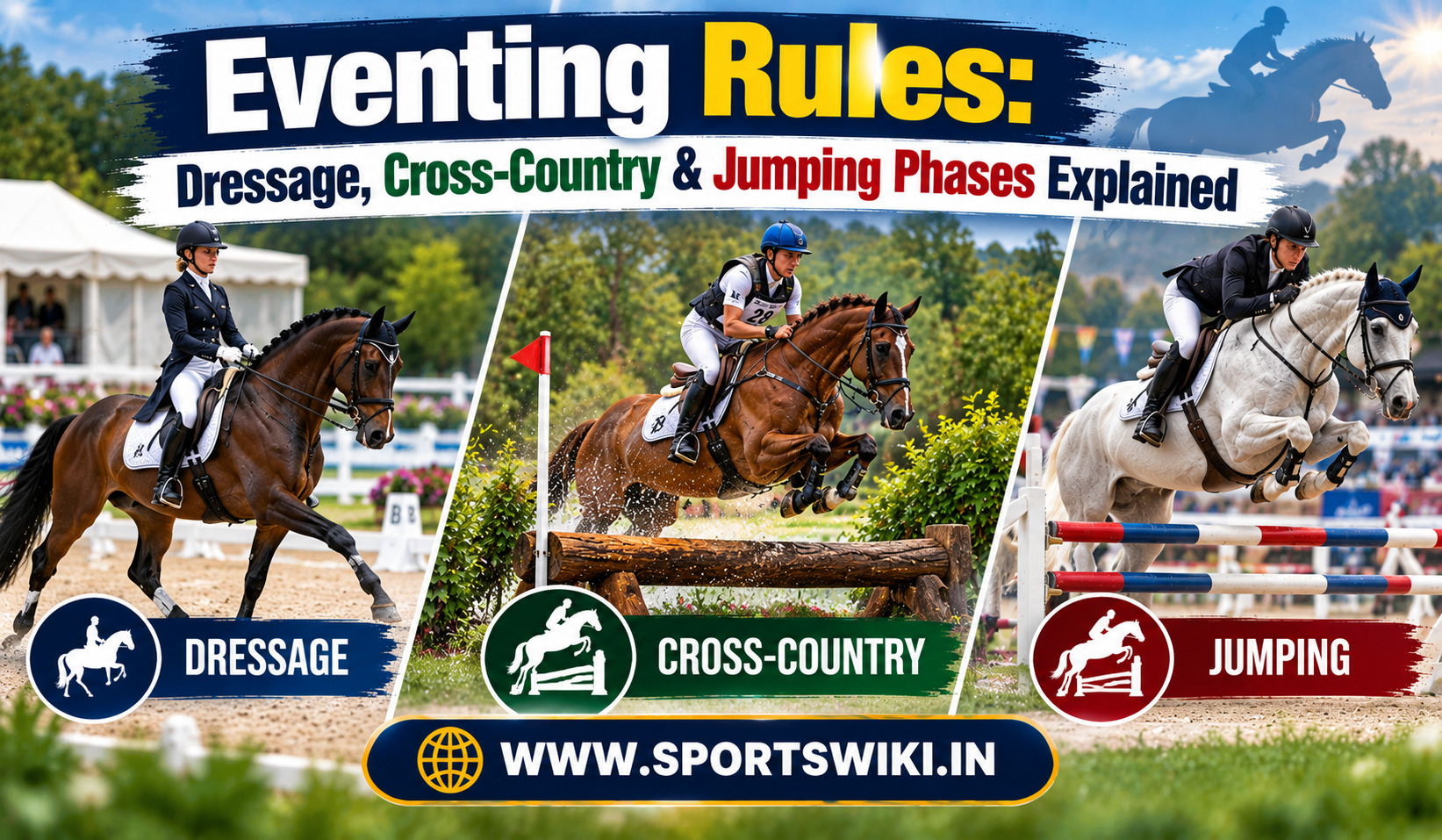
A horse has to be calm in the arena, brave across open country, and sharp over fences. That’s a lot to ask of one animal. Yet that’s exactly what eventing demands. The eventing rules combine three very different tests into one competition, and every mistake adds penalty points. This guide explains each phase in simple words, so you can follow the action with confidence.
Eventing is often called the triathlon of equestrian sport. Riders compete in dressage, cross-country, and show jumping, usually across several days. The pair with the lowest total penalty score wins. Still, each phase has its own way of counting mistakes. Here’s how they all fit together, from the first test to the final fence.
The Three Phases of Eventing
Eventing began as a test for military horses. Officers needed horses that could stay calm in formation, travel boldly over rough ground, and remain sound afterward. Those three needs became the three phases we know today. They’re always held in the same order: dressage, cross-country, then show jumping.
The old name for the sport was the three-day event, and many fans still use it. Each phase once took a full day, which gave horses time to rest between tests. Today, many events squeeze the phases into shorter schedules. Even so, the core idea hasn’t changed. One horse and one rider must prove they can do it all.
Why the Order Matters
Dressage comes first because it sets a calm, controlled tone. Cross-country follows and tests courage and fitness. Show jumping closes the event and asks whether the horse is still fresh and careful. In other words, the final phase tests how well the horse has recovered. Because of this order, a rider can win or lose the title at the very last fence. For a wider introduction, see our guide on what is equestrian sport and how dressage, eventing and show jumping explained.
Phase One: Dressage
The dressage test opens the competition. Horse and rider perform a set pattern of movements in an arena. Judges give marks, and those marks are turned into penalty points. The better the test, the fewer penalties the pair carries into the next phase.
Calm is the key word here. A horse that’s tense or distracted will lose marks quickly. Riders know that a good test builds confidence for what comes next. So many eventers treat dressage as a warm-up for the mind as well as the body. A relaxed start often leads to a bold, focused ride on cross-country day.
How Dressage Becomes Penalties
In pure dressage, a higher percentage is better. In eventing, the scoring flips. The percentage is converted into penalty points, so a better test means a lower penalty score. This keeps all three phases on the same scale. If you want to understand how the marks work, our guide to dressage rules and scoring explained in simple words breaks it down. Meanwhile, remember that eventing dressage tests are simpler than the top-level dressage ones. The focus is on calm, obedient riding.
Phase Two: Cross-Country
Cross-country is the highlight of eventing. Riders gallop across open land and jump solid obstacles such as logs, stone walls, ditches, and water complexes. Unlike show jumping fences, these obstacles don’t fall down. That’s why this phase demands such courage and trust.
The course runs over a long distance, and the pace is brisk. Riders must manage the horse’s energy so there’s enough left for the final fences. Go too fast early, and the horse tires. Go too slowly, and time penalties pile up. So the best riders find a steady rhythm and stick to it, much like a distance runner pacing a race.
Penalties on the Cross-Country Course
- First refusal: a horse that stops at an obstacle earns 20 penalties.
- Second refusal: stopping again at the same obstacle earns 40 penalties.
- Third refusal: a third stop at the same obstacle leads to elimination.
- Fall: a fall by the horse or rider leads to elimination.
- Time penalties: 0.4 penalties are added for every second over the optimum time.
Every course has an optimum time, which is the target pace. Finishing faster brings no bonus, but finishing slower costs points. So riders must stay quick without taking silly risks. Also, riders check the course on foot before the phase begins, much like in show jumping.
Types of Cross-Country Obstacles
Course designers use many shapes and styles. Some fences are simple logs, while others are carefully built to look like boats, cottages, or tree trunks. Water complexes ask horses to jump in, splash through, and jump out. Banks and ditches test balance and trust. As a result, no two courses feel quite alike, and every event brings a new puzzle.
Safety on Course
Safety has changed the cross-country phase in recent years. Many fences now use frangible pins, which are designed to break if hit hard. Riders also wear hard hats and body protectors. Because of these changes, the sport keeps pushing to lower risk. Even so, cross-country remains the most daring part of any eventing weekend.
Phase Three: Show Jumping
The final phase takes place in an arena with colorful fences. The rules mirror classic show jumping, but the stakes feel different. After a hard cross-country run, horses may be tired, and poles are easier to hit. As a result, this phase often shuffles the leaderboard.
Riders must stay focused and precise. The fences are lighter than those on cross-country, but the margin for error is thin. One rail can drop a rider several places. So the jumping phase becomes a test of nerve as much as skill. Riders at the top of the standings often jump last, which adds even more pressure.
Faults in the Jumping Phase
A knocked pole costs 4 penalties. A refusal also adds penalties, and a fall brings elimination. In addition, going over the time allowed adds penalties for each second. For the details behind these numbers, our explainer on show jumping rules: faults, time penalties and jump-offs is a perfect companion. In contrast to a pure show jumping class, no jump-off is used in most eventing events. The phase simply adds to the overall total.
How the Final Score Works
Once all three phases end, the penalty points are added up. The rider with the lowest total wins. Because dressage penalties start the event, a strong first test gives a real head start. However, a clean cross-country round can erase a lead very quickly.
Ties are rare, but they do happen. In that case, rules usually look at cross-country time or other tie-break points to decide the winner. The exact method varies by event, so organizers publish it in advance. That way, every rider knows the rules before the first test begins.
An Example Rule of Thumb
Picture two riders. One has a better dressage score, but the other jumps clear on cross-country and show jumping. The second rider may overtake the first. That’s why eventing fans never leave early. The leaderboard keeps moving until the last horse leaves the arena.
Horse Welfare and Veterinary Checks
Eventing places heavy demands on horses, so welfare checks are part of the rules. At major events, vets inspect each horse before the competition begins. They check soundness again before the final phase. If a horse isn’t fit, it can be withdrawn.
These checks protect the horse and keep the sport fair. Additionally, riders must follow strict rules on equipment and treatment. The best riders view welfare as part of their job, not an extra burden. Following the eventing rules fully means putting the horse first, every time.
What Makes a Great Eventing Horse
A top eventer needs a rare mix of traits. It must be calm enough for dressage, bold enough for cross-country, and careful enough for show jumping. Fitness matters too, since cross-country asks for stamina and speed. Many top horses are Thoroughbred crosses, which blend athleticism with a willing attitude.
Temperament counts as much as talent. A brave horse that listens to its rider can tackle almost any fence. A talented but nervous horse may struggle. So riders search for horses with both skill and a cool head. Years of careful training then shape that raw ability into a reliable partner.
Tips for Following an Eventing Weekend
Eventing can feel busy, since three phases unfold across several days. Start by checking the leaderboard after dressage. That shows who holds the early lead. Then watch cross-country closely, since big moves usually happen there. Finally, tune in for show jumping, where the final order is settled.
Beyond that, keep an eye on the time penalties. A fast, clear cross-country round can leap ahead of many rivals. Also, listen to the commentary, which often explains why a rider chose a particular route. With a little practice, you’ll soon follow the action like a seasoned fan.
Key Takeaways
- Three phases: dressage, cross-country, and show jumping, always in that order.
- Scoring: penalty points are added, and the lowest total wins.
- Dressage: the percentage becomes penalty points.
- Cross-country: 20 penalties for a first refusal, 40 for a second, and elimination for a third.
- Time penalties: 0.4 per second over the optimum time on cross-country.
- Welfare: vet checks protect the horse throughout the event.
FAQs
What are the three phases of eventing?
They are dressage, cross-country, and show jumping.
How is eventing scored?
Each phase adds penalty points, and the lowest total wins.
What happens if a horse refuses on cross-country?
A first refusal costs 20 penalties, a second costs 40, and a third leads to elimination.
Is eventing dangerous?
It carries more risk than most equestrian sports, so safety rules, protective gear, and frangible fences are used to reduce it.
Why is eventing called the triathlon of horse sports?
It tests three different skills in one competition, just like a triathlon tests three different sports.
Conclusion
The eventing rules ask a lot of both horse and rider, and that’s what makes the sport so gripping. Dressage sets the base score, cross-country tests courage, and show jumping decides who stays calm under pressure. Penalties add up, and the lowest total takes the title. With these basics in mind, any eventing weekend becomes easy to follow, from the first test to the last fence.