Show Jumping Rules: Faults, Time Penalties & Jump-Offs
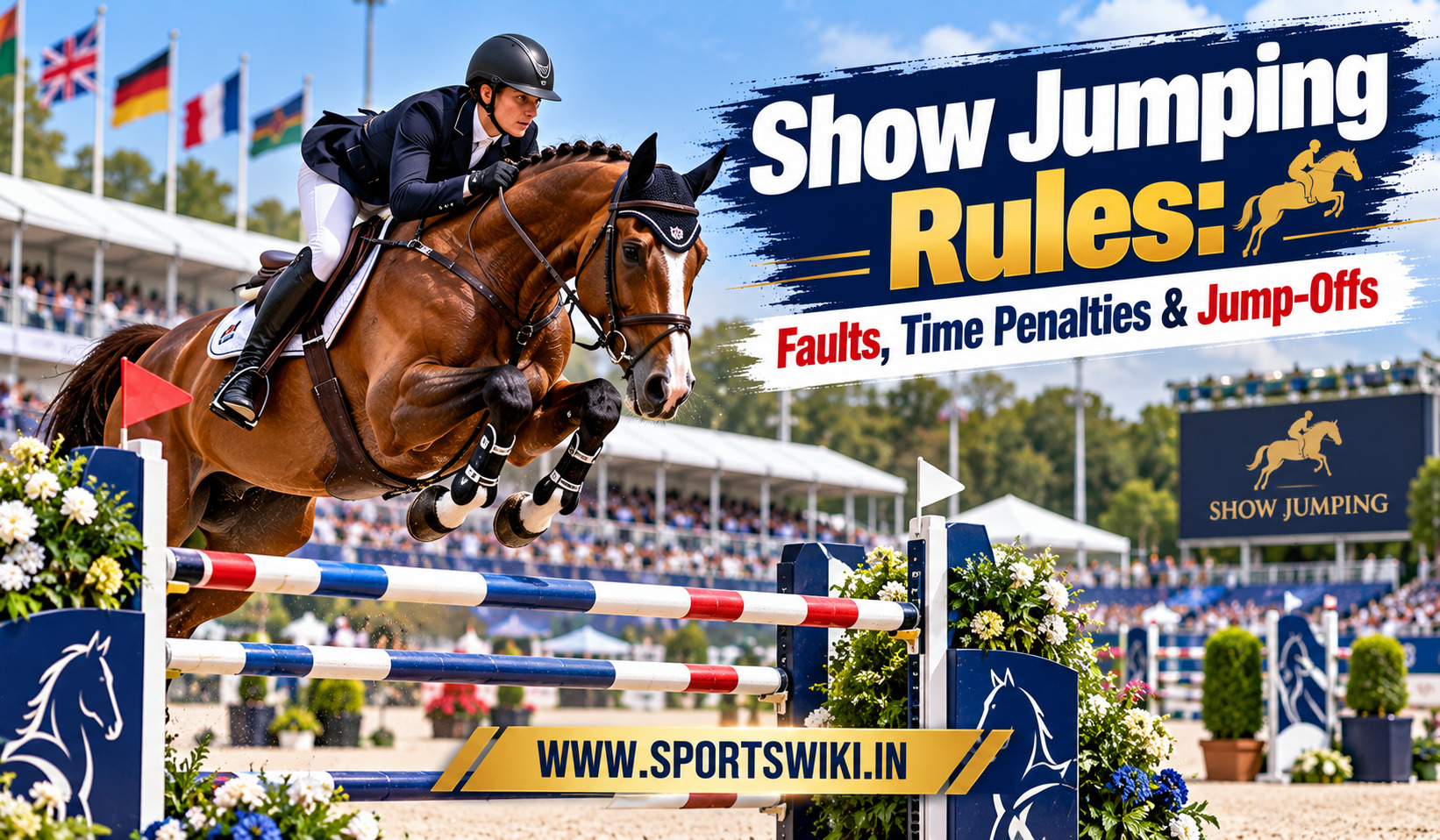
One falling pole. Four faults. That’s all it takes to turn a perfect round into a heartbreak. Show jumping looks simple from the stands, yet the show jumping rules carry plenty of small details. Faults, time penalties, and jump-offs all shape who wins and who goes home empty-handed. This guide explains each rule in plain words, so the next round you watch makes complete sense.
Show jumping is one of the three Olympic equestrian disciplines. Riders and horses tackle a course of fences in a set order. The goal is a clear round within the time allowed. Still, a clear round alone doesn’t always win. Here’s how the rules work from the first fence to the final jump-off, with simple examples along the way.
The Basics of a Show Jumping Round
Every round follows the same plan. The rider enters the arena, waits for the bell, and then has a short window to start. The clock runs from the moment the horse crosses the start line. From there, the pair must jump every fence in the right order and direction. Missing a fence or jumping one twice can lead to elimination.
The fences are numbered, and flags mark the path. Red flags go on the right of each fence, and white flags go on the left. Riders must pass between them. So even a perfect jump doesn’t count if the horse crosses outside the flags. That small rule catches out many new riders, and it keeps every round fair.
Walking the Course
Before the class begins, riders walk the course on foot. They count strides between fences, study the turns, and plan their line. This is a key part of the show jumping rules, since horses can’t see the course beforehand. A smart plan saves precious seconds and keeps the horse balanced. As a result, the walk often decides the round before it begins.
Understanding Faults
Faults are the penalty points riders collect for mistakes. The lowest number wins. Four types of errors cause most faults, and each one is easy to spot once you know what to look for. Judges and electronic sensors work together to record them, so the results stay accurate.
Common Faults in Show Jumping
- Knockdown: a fallen pole or any part of the fence costs 4 faults.
- Foot in the water: touching the water or tape of a water jump costs 4 faults.
- First refusal: a horse that stops or runs out at a fence earns 4 faults.
- Second refusal: a second disobedience on the course leads to elimination.
A fall by the horse or rider also means elimination. So while a single rail hurts, a refusal or fall hurts far more. In short, the best riders protect the horse’s confidence above all. A nervous horse is far more likely to stop, and one stop can end a whole season’s hopes.
What Counts as a Refusal
A refusal happens when the horse stops in front of a fence instead of jumping it. Running out to the side counts too. Even a short pause can be marked if the horse stops moving forward. After a refusal, the rider must re-approach the fence and jump it correctly. The clock keeps running throughout, so refusals cost both faults and precious time.
Time Penalties Explained
Every course has a time allowed, which is set by the course designer. It’s based on the length of the course and a fixed speed. Riders who finish after that time pick up time faults. For each second over the limit, one time fault is added to the score.
There’s also a time limit, which is longer than the time allowed. Riders who go beyond it can be eliminated. In most cases, this limit equals twice the time allowed. So a rider can recover from a slow start, but not from a very slow round. This rule keeps the class moving and protects horses from being pushed too long.
Why the Clock Matters
At first glance, one time fault seems small. However, it can separate first place from second when two riders both jump clear. That’s why top riders carefully balance speed and accuracy. Going too fast raises the risk of a knockdown. Going too slow loses points on the clock. Because of this, riders learn to feel the pace of a round almost without looking at a watch.
How Jump-Offs Work
A jump-off breaks a tie. When two or more riders finish on the same score, they return for a second round. The jump-off course is shorter and often uses taller or wider fences. This time, the clock decides almost everything.
Jump-offs are some of the most exciting moments in sport. Riders cut tight corners, turn sharply, and gallop between fences. The crowd rises with every stride. Yet one wide turn or one rail can end a hopeful run. That’s why many fans say a jump-off feels like a sprint through a puzzle.
Rules for the Jump-Off Round
Only riders who are tied for the lead take part. Faults come first, and time comes second. If two riders jump clear, the faster rider wins. If a rider knocks a pole, the clear rider ahead of them moves up. For this reason, riders must decide how much risk they’re willing to take. If you’re new to the discipline, our overview of what is equestrian sport and how dressage, eventing and show jumping differ gives helpful background.
The Fences Riders Face
Understanding the show jumping rules is easier when you know the obstacles. Course designers use many types of fences, and each one asks a different question of the horse. Some test height, others test width, and some test the rider’s accuracy. A good course mixes them all so no horse can rely on one skill.
Main Fence Types
- Vertical: a straight upright fence with poles stacked above each other.
- Oxer: two sets of poles placed close together to test width.
- Combination: two or three fences set close, jumped without a break.
- Water jump: a wide pool of water that horses must clear.
At the top level, fences can reach 1.60 meters in height. That’s taller than many adults. In contrast, lower-level classes use much smaller fences, so newer pairs can learn safely. Beginners often start on fences well under a meter.
How Combinations Work
A combination is a set of two or three fences placed close together. A double has two parts, and a triple has three. The horse jumps them one after another with only a few strides in between. Each part is judged on its own. So a rider can knock the first fence and still jump the next two clear, but the faults add up.
How Course Designers Build Challenges
Course designers are the quiet stars of show jumping. They decide how high the fences go, where the turns fall, and how many strides sit between each jump. Their goal is a fair test that still creates drama. A course that’s too easy produces many clear rounds, which leads to long jump-offs. A course that’s too hard leaves almost nobody clear.
Designers often use distance to create pressure. A short gap forces a quick, bouncy stride. A long gap demands a bold, stretching one. Meanwhile, tight turns punish riders who rush. So every line on the course asks a new question, and the best horses answer each one calmly. That’s why a great course can feel like a story told in fences.
Rider Behavior and Safety Rules
The rules also protect horses and riders. Riders must wear approved hard hats, and many wear body protectors too. Equipment such as whips and spurs follows strict limits. Officials can penalize riders who treat horses roughly, and serious cases can lead to elimination.
Welfare checks matter just as much. At major events, vets monitor horses for signs of injury or stress. Fences must meet safety standards, with cups designed to release poles safely. Because of these rules, the sport can stay thrilling without risking unfair harm. In other words, the horse always comes first.
Show Jumping Rules Compared with Other Disciplines
Show jumping scores by faults and time, which makes it simple to follow. Dressage, on the other hand, uses judges’ marks and percentages. You can learn more about that in our guide to dressage rules and scoring explained in simple words. Eventing blends both styles into one weekend. For the full picture, see our explainer on eventing rules: dressage, cross-country and jumping phases.
Even so, the jumping phase of eventing uses similar ideas to the rules above. Poles still fall, and time still counts. Knowing show jumping inside out makes the other disciplines easier to follow too. That’s a good reason to start here, especially if you’re a new fan.
Tips for Watching Show Jumping
Watching a class becomes easier when you know what to look for. Start by checking the scoreboard, which shows faults and time for each rider. Then watch the turns, since that’s where seconds are won or lost. Listen to the commentary too, as experts often explain why a horse made a mistake.
Next, notice the rhythm. A good round has a steady beat, with even strides between fences. When the rhythm breaks, a fault often follows. Finally, pay attention to the horse’s ears and tail. A calm horse with focused ears usually jumps well. With a little practice, you’ll start predicting faults before they happen.
Key Takeaways
- Knockdowns: each fallen fence costs 4 faults.
- Refusals: the first costs 4 faults, and a second leads to elimination.
- Falls: a fall by horse or rider means elimination.
- Time faults: each second over the time allowed adds one fault.
- Jump-offs: tied riders return for a shorter, faster round.
- Winning formula: fewest faults wins, and time breaks ties.
FAQs
How many faults is a knockdown in show jumping?
A knockdown costs 4 faults.
What happens if a horse refuses a jump?
The first refusal adds 4 faults, and a second leads to elimination.
How are time faults counted?
Each second over the time allowed adds one fault.
What is a jump-off?
It’s a shorter, faster round that decides the winner when riders tie on faults.
Can a rider fall and keep going?
No, a fall by the horse or rider leads to elimination.
Conclusion
The show jumping rules come down to three simple ideas: don’t knock poles, don’t stop, and don’t be slow. Faults and time penalties decide most results, and jump-offs add a final twist when scores tie. Once you know how each rule works, every round becomes easier to enjoy. The next time a rider tilts into a tight turn, you’ll know exactly what’s at stake.