Grand Slam Tournaments Explained: Four Majors, Dates and Winners List

In 2026, three different men won the four majors, and Alexander Zverev took two of them. So that’s the kind of twist that keeps fans glued to the Grand Slam tournaments. Because four events, three surfaces and four cities define the tennis year, every major feels distinct. So what are the Grand Slam tournaments, when do they run, and who has won lately? Here’s a complete guide, with dates, history and a winners list.
What Are the Grand Slam Tournaments?
First, the Grand Slam tournaments are the four biggest events in tennis. Together, they are the Australian Open, the French Open, Wimbledon and the US Open. Meanwhile, each one is played over two weeks, and each carries the most prestige. Because winning one changes a career, players build their whole season around them. In fact, many top names plan their rest periods and travel around these four events. So the Grand Slam tournaments shape not just results, but also schedules.
Men play best-of-five sets at these events, while women play best-of-three. As a result, the men’s matches can run for hours. Since 2022, all four majors also use a 10-point tie-break when the final set reaches 6-6. For a full breakdown of how sets and tie-breaks work, then read our guide to tennis scoring.
The Four Majors: Cities, Surfaces and 2026 Dates
Australian Open
First, the year starts in Melbourne. The Australian Open was first held in 1905. Meanwhile, the women’s singles title began in 1922. Since 1988, it has used hard courts. Meanwhile, in 2026, the event ran from 18 January to 1 February. Because it opens the season, it often sets the tone for the months ahead.
French Open
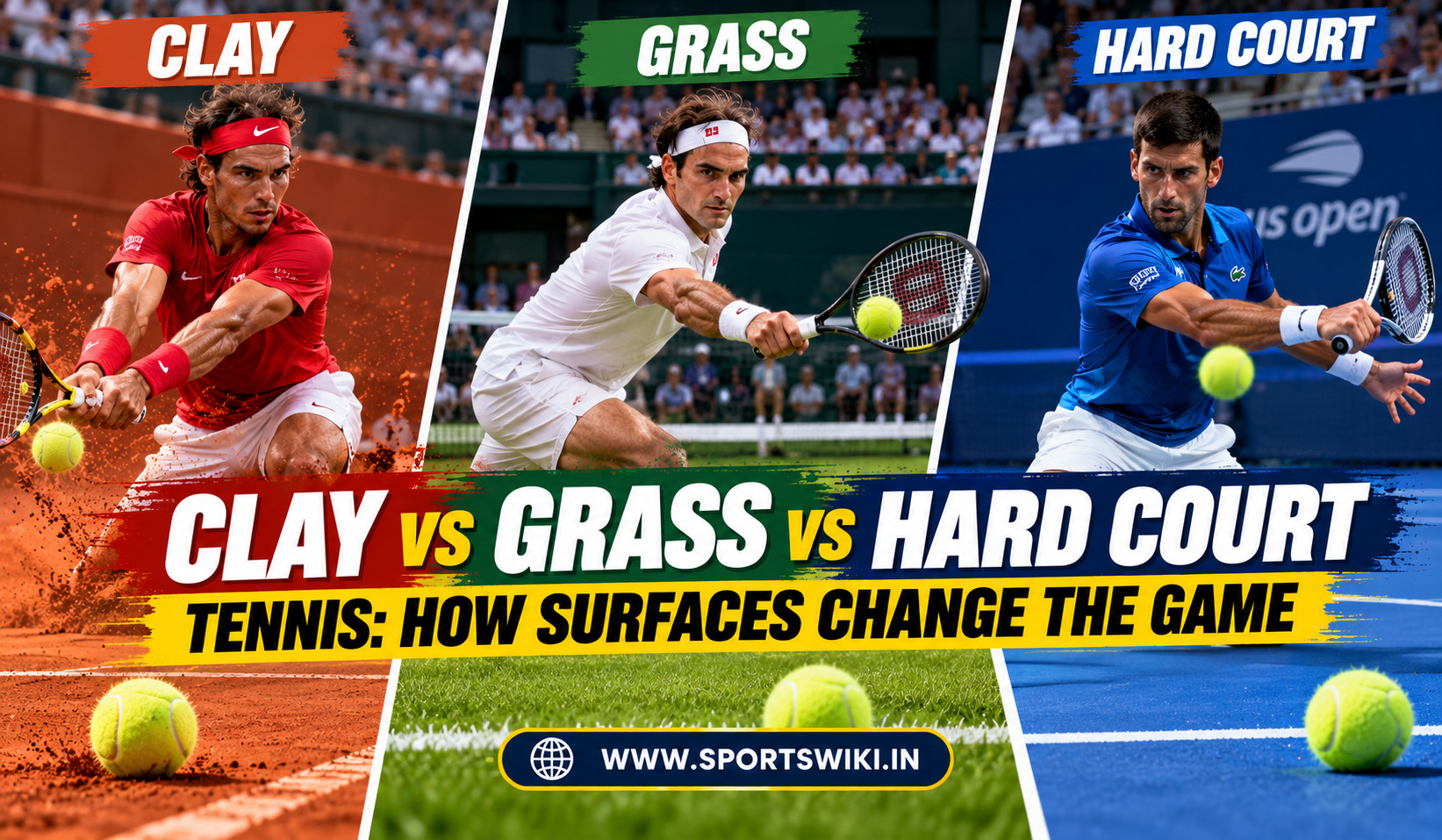
Next comes the clay of Roland Garros in Paris. The French Open has been played on clay since 1928, and it’s the only major on that surface. Meanwhile, the 2026 edition ran from 24 May to 7 June. Meanwhile, its slow courts reward patience and heavy topspin, so long rallies are common.
Wimbledon
Then the tour moves to London for Wimbledon. Since it was founded in 1877, it’s the oldest tennis tournament in the world. Also, it’s the only major played on grass. In 2026, the dates were 29 June to 12 July. Because the courts are fast and low, big servers do well here.
US Open
Finally, the season ends in New York. Since the US Open moved to hard courts in 1978, it has shared that surface with Melbourne. In 2026, then, it ran from 30 August to 13 September. Meanwhile, the hard courts give a high, steady bounce, so all-court players thrive. For more on how each court plays, then see our guide to clay vs grass vs hard court tennis.
Grand Slam Tournaments Winners List for 2026
Still, this season had plenty of surprises. First, Carlos Alcaraz won in Melbourne, and Zverev took Roland Garros. Then Jannik Sinner won Wimbledon, before Zverev added the US Open. On the women’s side, reports list Elena Rybakina as the champion in Melbourne and New York. Meanwhile, Mirra Andreeva won in Paris, and Linda Noskova won at Wimbledon.
- Australian Open: Carlos Alcaraz (men), Elena Rybakina (women)
- French Open: Alexander Zverev (men), Mirra Andreeva (women)
- Wimbledon: Jannik Sinner (men), Linda Noskova (women)
- US Open: Alexander Zverev (men), Elena Rybakina (women)
However, several details stand out. Alcaraz was the two-time defending champion in Paris, but he had to withdraw through injury. As a result, the French Open crowned new champions in both singles events. Meanwhile, Ben Shelton reached the US Open final, and Aryna Sabalenka lost the women’s final there. Because those results came from reports, check the official tournament sites for final confirmation. Meanwhile, the women’s list follows published tournament summaries. So it’s worth checking each official site for final spellings, scores and draw details. Even so, the main story is clear: 2026 brought several first-time and surprise champions, and that variety made every major worth watching.
Winners List for 2025
Meanwhile, last year’s results give useful context. First, in 2025, Sinner won the Australian Open, and Madison Keys won the women’s title for her first major. Alcaraz won the French Open, while Coco Gauff won the women’s title in Paris. Then at Wimbledon, Sinner beat Alcaraz, and Iga Swiatek won her first title on grass. Finally, at the US Open, Alcaraz won the men’s event, and Sabalenka defended her women’s crown.
- Australian Open 2025: Jannik Sinner and Madison Keys
- French Open 2025: Carlos Alcaraz and Coco Gauff
- Wimbledon 2025: Jannik Sinner and Iga Swiatek
- US Open 2025: Carlos Alcaraz and Aryna Sabalenka
So the same names keep returning. Because the men’s side has been led by Sinner and Alcaraz, Zverev’s two titles in 2026 stand out even more. So that mix of old and new is what keeps the Grand Slam tournaments fresh.
Grand Slam Tournaments Records to Know
Still, some numbers define the sport. First, Novak Djokovic holds 24 major singles titles, the most among men. Meanwhile, Rafael Nadal won 22, including 14 at the French Open. Meanwhile, Roger Federer won 20, and eight of them came at Wimbledon. Likewise, Djokovic won 10 Australian Open titles.
On the women’s side, however, Martina Navratilova won nine Wimbledon titles. More recently, though, Swiatek has won six majors, with four at the French Open. Meanwhile, Sabalenka has four titles, split evenly between the Australian Open and the US Open. Because these records span decades, they show how rare lasting dominance is.
Doubles and Other Events at the Majors
Singles draws get the spotlight, but each major also has doubles events. In 2026, Elise Mertens and Zhang Shuai won the women’s doubles in Melbourne. Meanwhile, Katerina Siniakova and Taylor Townsend won it at Roland Garros. Because these events share the same courts, fans can watch top stars in several formats in one week.
Entry works mainly by ranking, so the best players earn direct places. In addition, organisers award wildcards to selected players. That mix keeps the draws strong while leaving room for local favourites. As a result, the Grand Slam tournaments always feature both star names and fresh faces.
Why Each Major Feels Different
The four events share a name, but they don’t share a style. Melbourne is the season opener, and its hard courts reward all-court play. Paris is slower, so it favours patient, physical players. London is faster and lower, so serves and net play gain value. New York brings the season to a close with a high, steady bounce.
Because of that variety, no single skill wins everywhere. For instance, Zverev’s 2026 titles came on both clay and hard courts. Sinner won on grass, and Alcaraz won on hard courts. So the Grand Slam tournaments test every part of a player’s game. That’s why a winners list reads so differently from year to year.
What Is a Calendar Grand Slam?
However, the word “Grand Slam” can mean two things. First, it names the four events. Second, it describes a player who wins all four in the same calendar year. That feat is extremely rare, so it draws huge attention. Even in strong seasons, though, a single loss in any of the four events ends the chase.
No player did it in 2026, since three men shared the men’s titles. Even so, the idea of a calendar sweep still colours every Grand Slam tournaments preview. Because the sweep needs four wins in a row across three surfaces, it tests skill, health and luck at once. That’s why fans mark each January with fresh hope. Still, the idea shapes how fans watch the year. So each major adds a chapter, and the chase builds tension from January to September.
How the Majors Shape the Season
The Grand Slam tournaments drive the rankings and the qualification races. For example, a major champion in the season race top 20 can qualify for the year-end finals. That rule helped Alcaraz lock up a place this year. To see who’s in the field, read our guide to the ATP Finals 2026.
Beyond that, the majors fix the rhythm of the calendar. The hard-court swing leads into Melbourne, the clay swing leads into Paris, and the grass swing leads into London. Because every stretch is different, players must adapt again and again. In turn, the Grand Slam tournaments reward flexible champions most of all.
Key Takeaways
- Four majors: The Australian Open, French Open, Wimbledon and US Open.
- Surfaces: Hard courts in Melbourne and New York, clay in Paris, and grass in London.
- 2026 men’s winners: Alcaraz, Zverev, Sinner and Zverev again.
- Records: Djokovic leads with 24 major singles titles.
- Final sets: Since 2022, all four majors use a 10-point tie-break at 6-6.
FAQs
What are the four Grand Slam tournaments?
Together, they are the Australian Open, the French Open, Wimbledon and the US Open.
Which Grand Slam is played on grass?
Wimbledon is the only Grand Slam played on grass.
Who won the most Grand Slam singles titles among men?
Novak Djokovic leads with 24 major singles titles.
Who won Wimbledon in 2026?
Jannik Sinner won the men’s title, and Linda Noskova won the women’s title.
What is a calendar Grand Slam?
It means winning all four majors in the same calendar year.
Conclusion
The Grand Slam tournaments sit at the heart of tennis. Four cities, three surfaces and two weeks each create a year of stories. In 2026, new champions rose, and familiar names fell short. Because the majors carry the most prestige, they’ll keep shaping careers for years to come. For any fan, learning the dates, surfaces and winners is the best way to follow the season.