History of Marylebone Cricket Club: Origins to Today
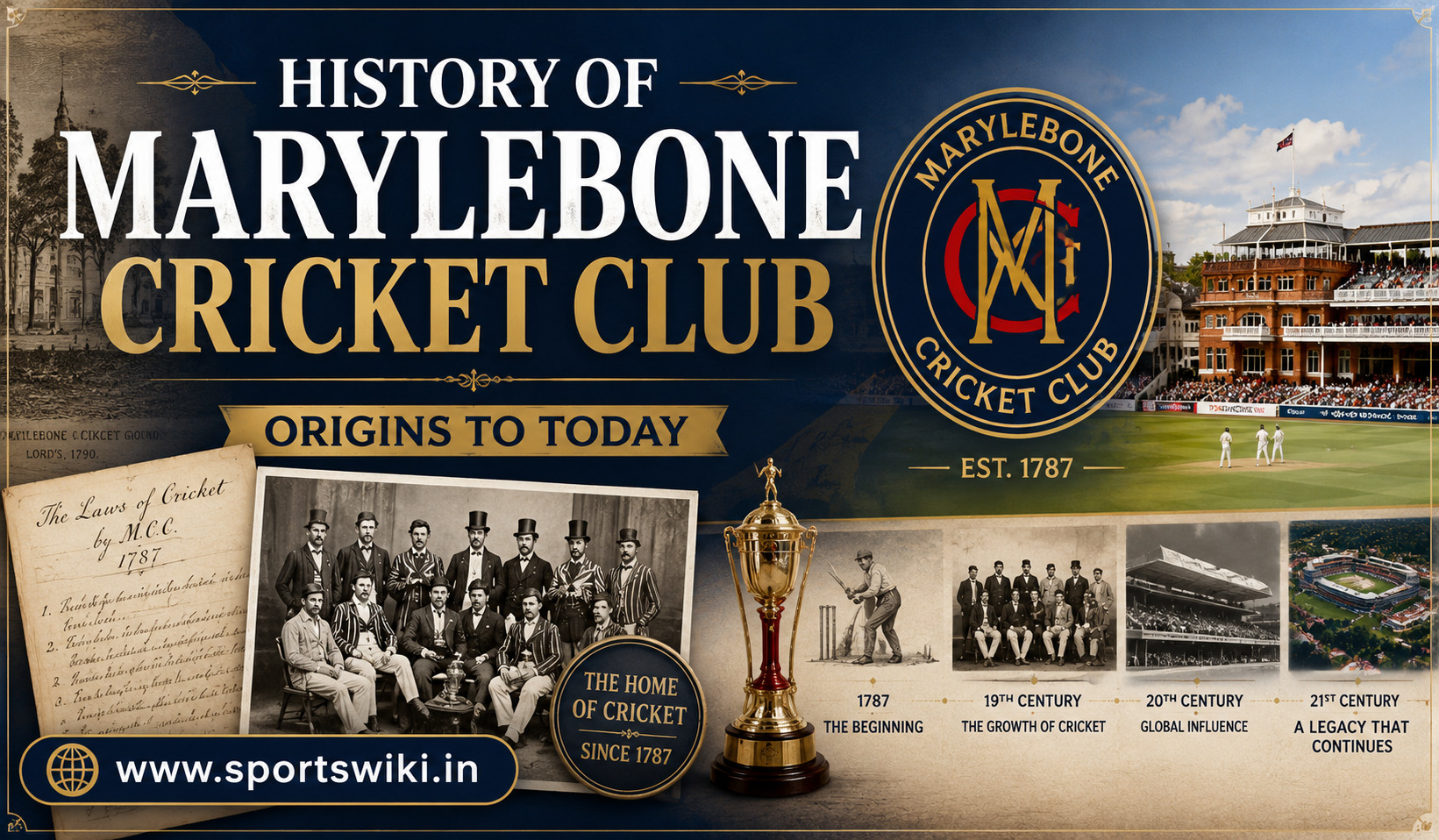
A cricket club founded by a group of gentlemen looking for a private ground away from prying eyes went on to write the rules the entire sport still plays by. The Marylebone Cricket Club has stood at the center of cricket for well over two centuries, and its story runs from a scrappy 1787 relocation in London all the way to a 2018 milestone when the club welcomed its first “ordinary” female members after a twenty-year waiting list. Here is the full history of the Marylebone Cricket Club, its origins, its legacy, and the milestones that shaped the game along the way.
The Origins of Marylebone Cricket Club
The Marylebone Cricket Club traces its roots back to the White Conduit Club, a gentlemen’s club whose members played their matches on White Conduit Fields in Islington during the early 1780s. The exact founding date of the White Conduit Club is not known with certainty, though it appears to have existed by 1785 at the latest. What is clear is that its members, many of them aristocrats and wealthy patrons, wanted a more private venue for their cricket, away from public intrusion.
That search led them to Thomas Lord, a professional cricketer employed by the White Conduit patrons. Lord leased a plot of land at Dorset Fields in the parish of Marylebone and converted it into a proper cricket ground, laying turf and putting up fencing. The first match at the new ground was played in May 1787 between Middlesex and Essex. Because the ground sat in Marylebone, the relocating members began calling themselves the Mary-le-bone Club, and the Marylebone Cricket Club was born.
Thomas Lord and the Search for a Permanent Home
Finding a stable ground proved to be one of the young club’s biggest early challenges. Lord’s original ground, now known as Lord’s Old Ground, hosted MCC matches until 1810, when rising rent forced Lord to move on. He physically relocated the turf itself to a second site, now called Lord’s Middle Ground, which opened in 1809. Cricket struggled for popularity during this period due to the Napoleonic Wars, and MCC played only three matches at the Middle Ground in 1813. When construction of a canal cut straight through that site, Lord was forced to move a third and final time, leasing a plot in St John’s Wood in 1814. That ground remains MCC’s home to this day, and the world simply knows it as Lord’s.
MCC and the Laws of Cricket
In 1788, just a year after its founding, the Marylebone Cricket Club laid down a formal Code of Laws for the game, specifying details such as the 22-yard distance between the wickets and the conditions under which a batter could be given out. Those Laws were adopted across the sport, and MCC has remained the custodian and arbiter of cricket’s Laws ever since, a role it still holds today even though the International Cricket Council now oversees the sport’s overall governance.
This dual arrangement is one of the more unusual quirks in world sport. The ICC decides how the Laws should evolve, but MCC actually owns the copyright and does the technical work of writing and interpreting them. Few sports anywhere in the world still lean on a private members’ club for something this central to how the game is officially played.
From Governing Body to Guardian of the Game
For much of its history, MCC was not just a club but cricket’s de facto governing body. From 1788 through into the 20th century, MCC organized England’s overseas Test tours, starting with the 1903-04 tour of Australia and continuing all the way through the 1976-77 tour of India. When the ICC was created in 1909, MCC’s own secretary managed it, and the sitting MCC president automatically became ICC chairman, a arrangement that lasted until 1989.
The Handover to the ICC and TCCB
MCC’s grip on cricket administration gradually loosened through the second half of the twentieth century. In 1993, MCC formally transferred global governance responsibilities to the ICC, while domestic administration in England passed to the Test and County Cricket Board, later reorganized as the England and Wales Cricket Board. MCC’s role shifted from running the sport to something closer to an ambassadorial one, sending touring sides to developing cricket nations and fielding more than 400 sides in outmatches across the UK every summer.
Key Milestones in MCC’s Legacy
A handful of moments stand out as genuine turning points in MCC’s long history.
- 1787, founding of the club and the first match at Thomas Lord’s original ground in Dorset Fields
- 1788, the first formal Code of Laws for cricket is issued
- 1814, MCC settles permanently at its third and final ground in St John’s Wood, the site known today as Lord’s
- 1825, the original pavilion, which housed the club’s early artifacts, burns down
- 1903-04, MCC takes over responsibility for selecting and organizing England’s overseas touring sides
- 1993, MCC formally transfers global cricket governance to the ICC
- 1998, members vote to admit women, ending 212 years of male-only membership
- 2018, the first cohort of “ordinary” female members, those who joined the waiting list back in 1998, finally graduate to full membership
- 2021, Clare Connor becomes the first female president in MCC’s 233-year history
The Long Fight Over Women’s Membership
Few chapters in MCC’s history stirred as much public debate as the campaign to admit women. Rachael Heyhoe Flint helped lead the push, and it took a seven-year campaign before members finally voted in September 1998, with 70 percent in favor of ending the club’s male-only policy. Ten honorary life members, including Heyhoe Flint herself, were welcomed immediately. The scale of the change only became fully visible two decades later. Because the waiting list stretched back to 1998, it was not until 2018 that the first wave of ordinary female members, rather than honorary ones, actually joined the club. By 2019, MCC counted 645 women members in total, including 217 full members, with more than a thousand women still on the waiting list at the time.
Think of that waiting list a bit like a long, slow-moving queue outside a members-only door that had been locked for over two centuries. Even after the vote finally opened it, it still took twenty years for that queue to properly move.
MCC’s Role in Cricket Today
MCC today has roughly 18,000 full members and 5,000 associate members, making it one of the most active cricket clubs in the world despite being, at its core, a private members’ organization. It still fields ad hoc MCC XIs from a pool of around 2,000 playing members, retains first-class status when facing first-class opposition, and traditionally opens each English season with a fixture against the reigning county champions.
Beyond playing cricket, MCC has expanded into coaching and development through initiatives like MCC Universities, formerly known as University Centres of Cricketing Excellence, which have held first-class status since 2012 and give university sides the chance to face professional county opposition. The club has also worked to make its own history more visible and inclusive, recognizing centuries and five-wicket hauls scored in ODIs on the honors boards at Lord’s, a change made in 2019 that finally gave women’s cricket a permanent place in the dressing rooms alongside Test match achievements.
Frequently Asked Questions
When was the Marylebone Cricket Club founded?
MCC was founded in 1787, emerging from members of the White Conduit Club who relocated to a new ground laid out by Thomas Lord in Marylebone, London.
Why is MCC important in cricket history?
MCC wrote the first formal Laws of Cricket in 1788 and served as the sport’s global governing body for more than two centuries, a role it held until formally transferring governance to the ICC in 1993.
When did women first become members of MCC?
Members voted in September 1998 to admit women, ending 212 years of male-only membership, though the first wave of ordinary female members did not graduate from the waiting list until 2018.
Does MCC still control cricket’s rules today?
MCC remains the custodian and copyright holder of the Laws of Cricket, writing and interpreting them, even though the ICC now oversees the sport’s broader global governance.