Saina Nehwal Olympic Medal: India’s Badminton Awakening
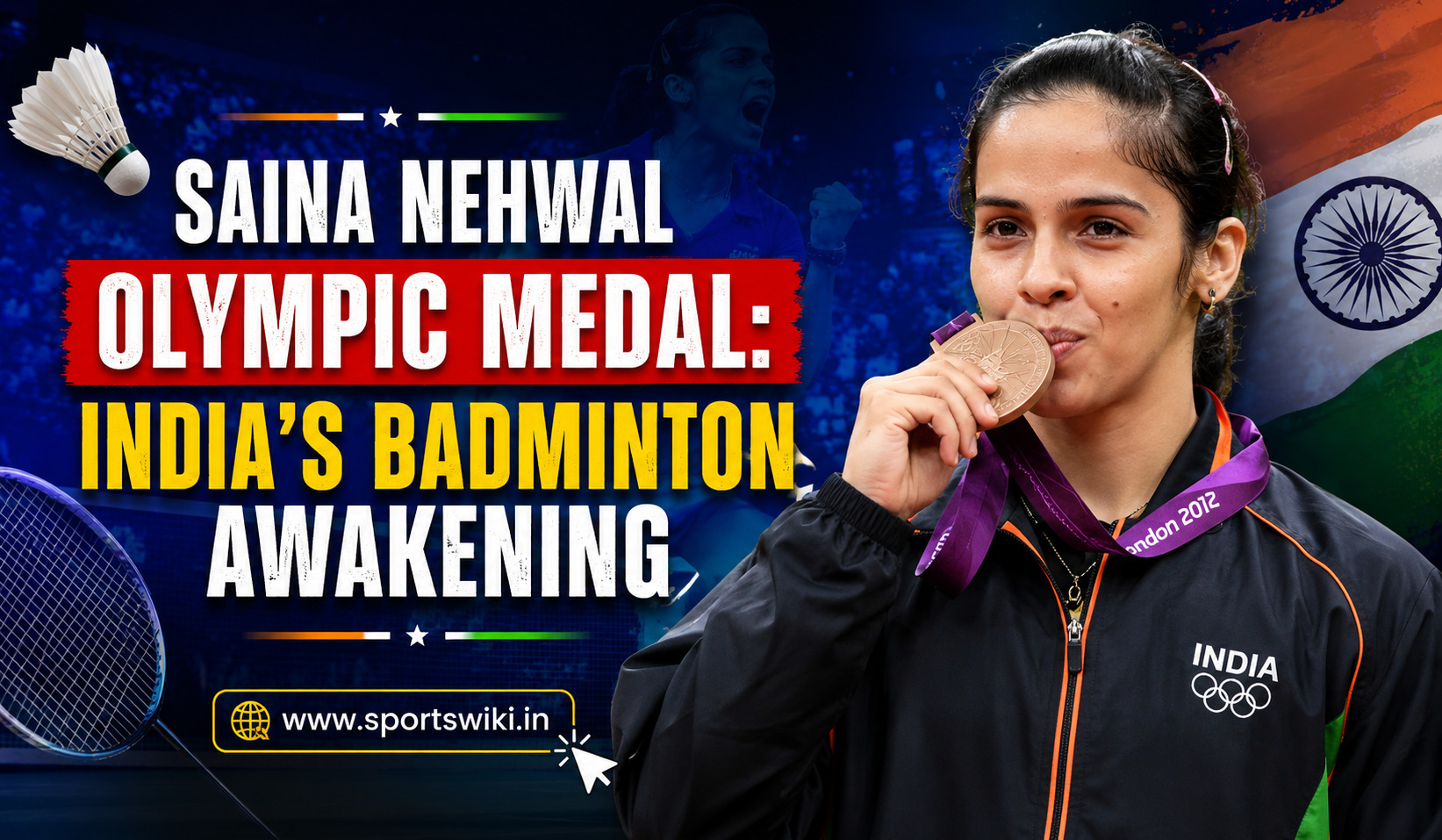
A 22 year old from Hyderabad walked onto Wembley Arena’s badminton court in August 2012 and, within a few tense games, rewrote what Indian sport believed was possible. The Saina Nehwal Olympic medal at the London Games was not just a bronze around one player’s neck. It was the first individual Olympic medal in Indian badminton history, and it planted a seed that would grow into an entire generation of world class women shuttlers.
This post looks at how that single medal changed the trajectory of Indian women’s badminton, why it mattered so much culturally and competitively, and what current and upcoming shuttlers can still learn from it more than a decade later.
The London 2012 Bronze That Changed Everything
Before 2012, Indian badminton had talent but no Olympic hardware to show for it. Prakash Padukone and Pullela Gopichand had won All England titles, and Saina herself had already claimed a Commonwealth Games gold and multiple Superseries titles. But the Olympics remained an unclaimed frontier. The Saina Nehwal Olympic medal changed that in one afternoon.
The Bronze Medal Match Against Wang Xin
Saina’s bronze medal playoff against China’s Wang Xin is remembered as much for its ending as for the badminton itself. Wang Xin retired mid match due to a knee injury while Saina held a commanding position, handing India its long awaited medal. Some fans have argued the manner of the win takes something away from the achievement. That take misses the point entirely. Saina had already fought through a brutal draw that included a win over Olympic champion Wang Yihan’s compatriot and top ranked rivals to even reach that stage. The medal was earned over the full course of the tournament, not just the final few points.
Why Saina Nehwal’s Olympic Medal Mattered So Much
Think about what Indian sport looked like before 2012. Badminton lived in the shadow of cricket, treated almost like a backyard hobby rather than a career path. Parents did not send their daughters to badminton academies expecting Olympic glory. The Saina Nehwal Olympic medal flipped that script almost overnight.
Television ratings for badminton spiked. Sponsors who had previously ignored the sport suddenly wanted their logos on shuttler jerseys. Badminton academies across Hyderabad, Bengaluru, and later smaller towns saw enrollment numbers climb, and a large share of those new enrollments were young girls whose parents pointed to Saina as proof that a racket could lead somewhere real.
It is a bit like watching a local runner qualify for a marathon major. Once someone from your own neighborhood does it, the goal stops feeling abstract and starts feeling achievable. That is exactly what happened with Indian women’s badminton after London.
The Ripple Effect on Indian Women’s Badminton
The most direct evidence of Saina’s influence is not opinion, it is the names that followed her onto the Olympic podium and into world rankings over the next decade.
PV Sindhu and the Rio Silver
Four years after Saina’s bronze, PV Sindhu went one step further at the Rio 2016 Olympics, taking home a silver medal after a hard fought final against Carolina Marin. Sindhu has often spoken about training alongside Saina at the Gopichand Academy in her early years and watching her push through fitness sessions with a work rate that set the tone for the entire training group. The link between the two careers is not a coincidence, it is a direct line of inspiration and shared coaching lineage under Pullela Gopichand.
Sindhu went on to become World Champion in 2019 and later added a bronze at the Tokyo 2020 Olympics, making her the first Indian to win two individual Olympic medals. Without the trail Saina blazed in London, it is fair to ask whether that pipeline of belief and infrastructure would have formed at all.
The New Generation of Shuttlers
Beyond Sindhu, a wider crop of Indian women shuttlers has pushed into world rankings and international finals over the past several years, including players competing regularly on the BWF World Tour circuit. Junior level participation numbers from state badminton associations have also climbed steadily since 2012, though exact national figures vary by source and year, so readers should treat specific enrollment statistics with some caution unless pulled from an official BWF or Badminton Association of India release.
Breaking Down the Shift: Before and After 2012
It helps to lay out exactly what changed in the years following the Saina Nehwal Olympic medal. Here is a rough snapshot of the shift in Indian women’s badminton culture and results:
- Olympic medals: Zero individual Indian badminton medals before 2012. Since then, India has added Sindhu’s Rio silver and Tokyo bronze, along with Saina’s own bronze counted as the starting point.
- World ranking depth: India went from having essentially one woman inside the world top 5 to regularly placing multiple women’s singles and doubles players inside competitive world ranking brackets.
- Academy growth: Coaching centers modeled on the Gopichand Academy structure expanded into more Indian cities, giving young players access to structured training earlier in their development.
- Corporate sponsorship: Major brands began signing individual shuttlers to endorsement deals, something that was rare for Indian badminton players before 2012.
- Media coverage: Badminton tournaments, including Superseries and later BWF World Tour events, started getting dedicated live broadcast slots on Indian sports channels.
Comparing Saina’s Journey to Rival Legends
It is worth placing Saina’s achievement next to the era she competed in. Her rivalry with China’s Wang Yihan and Wang Shixian defined much of the early 2010s in women’s singles badminton. China’s badminton system, backed by deep state funded infrastructure, had produced Olympic champions for decades before Saina broke through. For an Indian player without that same systemic depth to reach an Olympic podium against that competition says a great deal about individual grit filling in for structural gaps.
Compare that to how PV Sindhu’s later career unfolded with far more institutional support already in place, including sports science backing, better domestic competition, and a clearer pathway carved out specifically because Saina had proven it was possible. Saina essentially played the role of trailblazer while later shuttlers got to play the role of finisher, building on infrastructure that did not exist when she was coming up.
What Today’s Shuttlers Can Learn From Saina Nehwal
Fitness, patience, and self belief come up again and again when former teammates and coaches describe what set Saina apart. A few lessons stand out for players and coaches trying to replicate that path today:
- Physical conditioning is not optional. Saina’s rallies were built on stamina that let her outlast opponents in three game matches, a trait every serious singles player still needs.
- Big tournament experience matters more than a single result. Her Olympic run built on years of exposure to Superseries finals and World Championship pressure before London ever happened.
- Belief has to come before proof. Saina trained like a medal contender long before anyone outside her camp believed an Indian woman could win one.
- Rivalries sharpen you. Her ongoing battles with Chinese and Korean shuttlers forced constant tactical evolution rather than comfort with one style of play.
Frequently Asked Questions
When did Saina Nehwal win her Olympic medal?
Saina Nehwal won bronze in women’s singles badminton at the London 2012 Olympics, becoming the first Indian to medal individually in the sport at the Olympics.
Was Saina Nehwal the first Indian badminton player to win an Olympic medal?
Yes. The Saina Nehwal Olympic medal from London 2012 was India’s first individual Olympic medal in badminton, opening the door for later medalists like PV Sindhu.
How did Saina Nehwal’s medal influence PV Sindhu’s career?
Sindhu trained in the same Gopichand Academy system as Saina and has credited her senior teammate’s example and work ethic as part of what shaped her own path toward the Rio 2016 silver and Tokyo 2020 bronze.
Did the Saina Nehwal Olympic medal change Indian badminton at the grassroots level?
Coaches and academy founders across India have widely credited the 2012 medal with boosting badminton enrollment, particularly among young girls, though precise national participation figures should be verified against official Badminton Association of India data.