Para Table Tennis Classification Explained: Classes 1 to 11
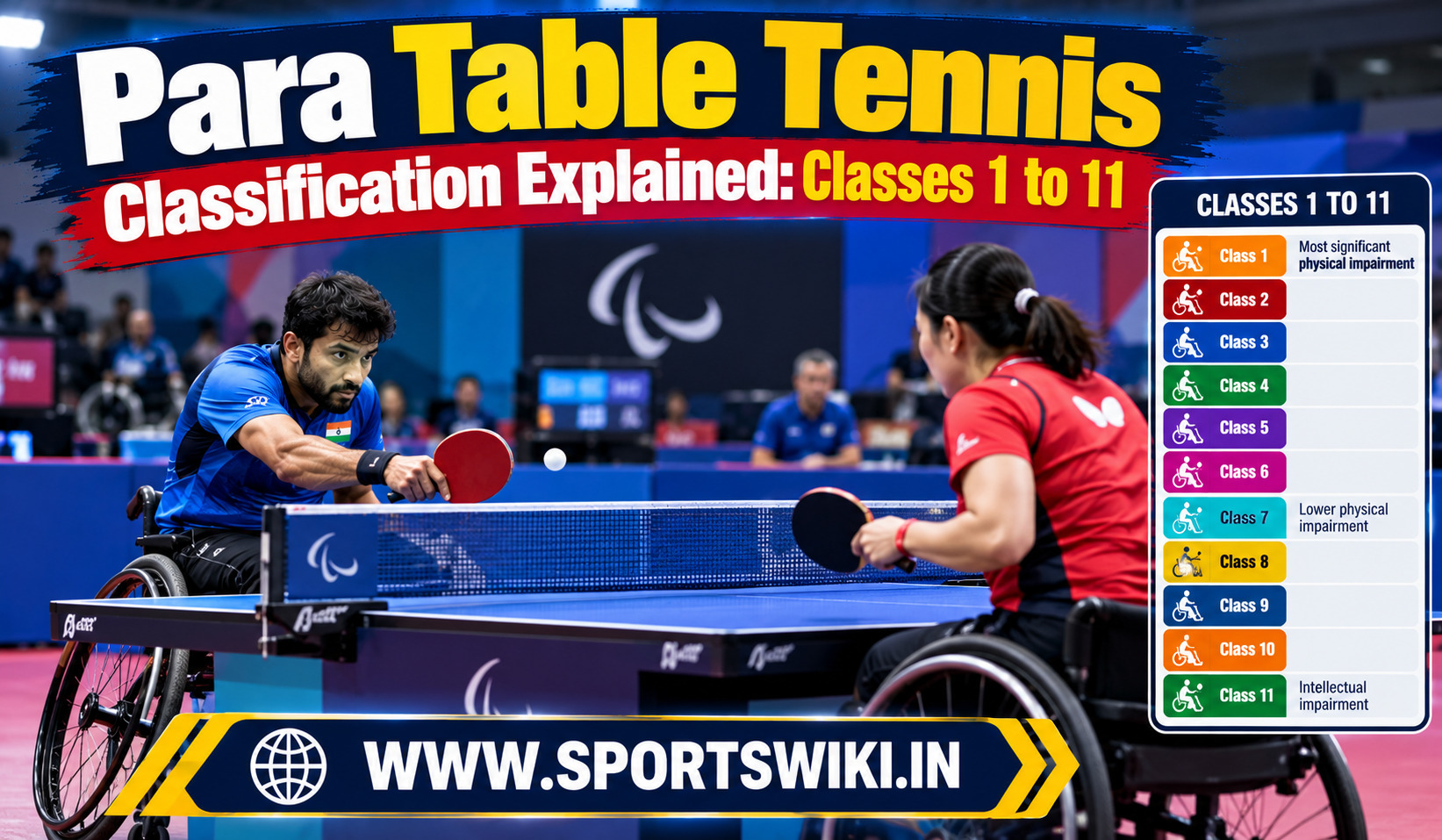
Para table tennis has 11 sport classes, and that number surprises many new fans. Players in classes 1 to 5 compete in wheelchairs, while classes 6 to 10 play standing. Meanwhile, class 11 is for athletes with an intellectual impairment. So para table tennis classification is really a fairness system. It’s built so that players of similar ability meet across the same table.
Why Para Table Tennis Classification Exists
Every para sport needs a way to group athletes fairly, because ability varies widely. Without one, a player with a mild impairment could face a player with a severe one. That wouldn’t test skill, because the gap in function would decide the result. As a result, classification places players by how their impairment affects table tennis, not by the medical label alone.
Para table tennis classification looks at function, so two players with different conditions can share a class. For instance, assessors check range of movement, muscle strength, balance and racket handling. Because the sport values what a player can do, para table tennis classification stays focused on play. At the same time, it keeps results meaningful for fans.
The Three Groups: Wheelchair, Standing and Intellectual
The 11 classes fall into three groups, so it helps to learn them in order. Classes 1 to 5 are the wheelchair classes, while classes 6 to 10 are the standing classes. Then class 11 covers intellectual impairment. Because the numbers run in order, a lower number means more severe impairment within each physical group.
That rule has a clear meaning, so it’s easy to remember. Class 1 is the most impaired wheelchair class, while class 5 has the most function. In the same way, class 6 is the most impaired standing class, while class 10 has the least. So the two physical groups mirror each other, even though the players use different equipment.
Wheelchair Classes 1 to 5
In para table tennis classification, the wheelchair classes depend heavily on sitting balance and arm function. Class 1 players have no sitting balance, and their playing arm is severely affected. In Class 2, they also lack sitting balance, although the playing arm is less affected. Meanwhile, Class 3 players still lack sitting balance, although the upper trunk may show some activity.
Still, classes 4 and 5 are the highest wheelchair classes. Class 4 players have sitting balance, but it isn’t optimal, because the pelvis has no stable anchor. Class 5 players have normal trunk function, along with normal arm and hand function. That makes class 5 the most physically capable wheelchair group, even though players still compete from a seated position.
Standing Classes 6 to 10
Standing classes follow the same logic, so the pattern will feel familiar. Class 6 covers severe impairments of both legs and arms. Then class 7 includes very severe leg impairments. It also covers a mix of arm and leg impairments that is less severe than class 6. Because the range is wide, assessors study each case closely.
The middle and upper classes reduce the level of impairment further. For instance, class 8 covers moderate leg impairments or a moderately affected playing arm. Likewise, class 9 covers mild leg impairments. Finally, class 10 covers very mild impairments, such as a stiff ankle or wrist of the playing arm. Short stature can also place a player in class 10, according to the Paralympic movement.
Class 11: Intellectual Impairment
In para table tennis classification, class 11 stands apart from the physical classes. It’s for players with an intellectual impairment, so the assessment differs. These athletes often find pattern recognition, sequencing and memory harder, while some react more slowly. Because those skills matter in table tennis, the sport adds a class to keep competition fair.
Players in this class must also meet sport-specific criteria, because each sport sets its own tests. In other words, an intellectual impairment alone doesn’t guarantee a place. Meanwhile, the standing players in class 11 follow the same table tennis rules as everyone else. That detail matters, since the laws don’t change with the class.
How Players Get Classified
Para table tennis classification isn’t a one-off label, because trained classifiers assess each athlete. They use checks of movement, strength, locomotion, balance and the ability to handle the racket. Because the ITTF trains and certifies these classifiers, the process follows set standards. Even so, officials stress that a brief overview can never replace the full sport-specific rules.
Eligible impairment types include impaired muscle power, limb deficiency, hypertonia, ataxia and athetosis. Beyond that, the list covers impaired passive range of movement, leg length difference, short stature and intellectual impairment. Because the list is broad, many athletes can take part in para table tennis. However, blindness and visual impairment are the main exceptions, so those athletes use other sports.
How Classes Are Combined in Events
In para table tennis classification, not every class gets its own event at every tournament, so draws can look different. Sometimes, organisers group neighbouring classes to create a bigger draw. For instance, the women’s singles event at the Asian Para Games 2026 in Nagoya combined classes 4 and 5. That meant players from two classes met in one bracket.
Combined events change how fans read para table tennis classification results, because the field is broader. A medal in a 4-5 event shows success against a wider range of opponents. Likewise, a result in a single-class event shows success against a closer field. So it helps to check the class label before comparing two medals, because the context can differ.
Rules of Play in Para Table Tennis
The sport follows ITTF laws with slight changes for wheelchair athletes, while standing players have no exceptions at all. A match is usually best of five games, and each game goes to 11 points with a two-point lead. Because the server changes every two points, the rhythm matches the able-bodied game. If you need a refresher, read these table tennis rules first.
One wheelchair rule deserves a mention, since it’s rarely discussed. If the wheels of a player’s chair become dislodged and no more than two wheels remain, the rally stops at once. The opponent then gets the point. Because safety and fairness both matter, the sport sets clear lines for equipment. That said, most matches pass without any such issue.
A Short History of the Sport
Table tennis was part of the first Paralympic Games in Rome in 1960, so it’s an original Paralympic sport. At first, only wheelchair users could play. Then standing players joined in 1976, while athletes with cerebral palsy arrived in 1980. As a result, the class system grew as the sport opened up.
Today, para table tennis is the third largest Paralympic sport by athlete numbers, which means it has a wide base. It’s played in more than 100 countries, so its reach is global. Poland’s Natalia Partyka, a four-time Olympian, also competes in class 10 events. Meanwhile, scoring in other sports works differently from para table tennis classification, as gymnastics scoring and golf scoring show.
Key Takeaways
- Three groups: Wheelchair classes 1 to 5, standing classes 6 to 10 and intellectual class 11.
- Number rule: A lower number means more severe impairment within each physical group.
- Wheelchair focus: Sitting balance and arm function drive classes 1 to 5.
- Standing focus: Leg and arm impairment levels drive classes 6 to 10.
- Combined events: Neighbouring classes, such as 4 and 5, can share a draw.
- History: Para table tennis began at the 1960 Rome Paralympics.
FAQs
How many classes are there in para table tennis classification?
There are 11 classes, split into wheelchair, standing and intellectual impairment groups.
Which classes are for wheelchair players?
Classes 1 to 5 are for wheelchair players.
What does a lower class number mean?
A lower number means a more severe impairment within the wheelchair or standing group.
Who competes in class 11?
Athletes with an intellectual impairment who meet the sport’s criteria compete in class 11.
Are the rules different for standing para players?
No, standing players follow the same table tennis laws without exceptions.
Conclusion
Para table tennis classification turns a complex mix of abilities into a fair contest. Because the wheelchair, standing and intellectual groups each have clear logic, the system is easy to learn. So once you understand para table tennis classification, every result tells a richer story. With this guide to para table tennis classification, you can follow any match with confidence.