Wimbledon Traditions Every Tennis Fan Should Know
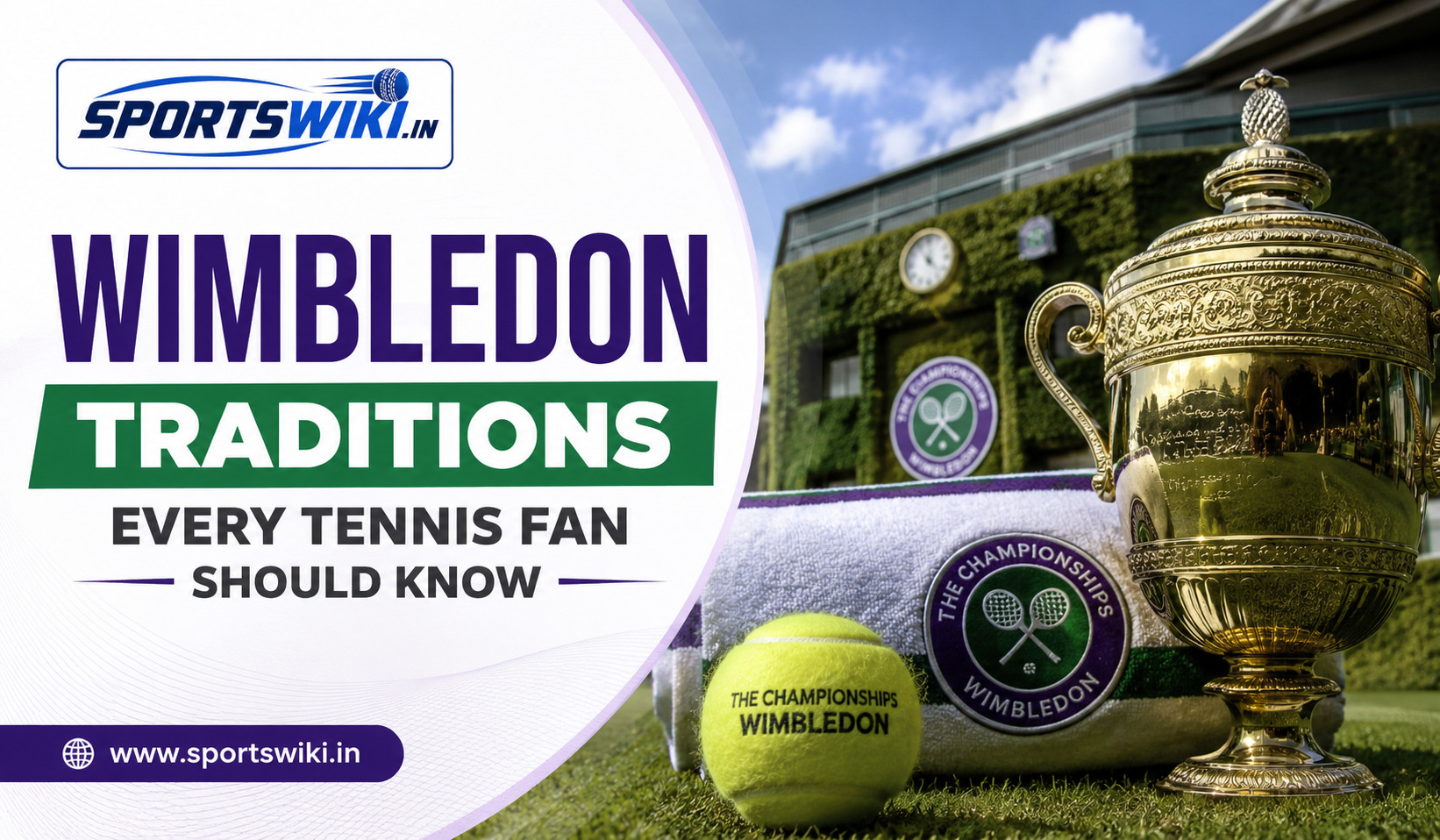
For nearly 150 years, Wimbledon has offered something no other tennis tournament quite matches. Players walk onto grass courts dressed almost entirely in white, spectators settle in with strawberries and cream, and thousands still embrace the famous Queue for the chance to buy tickets on the day.
Those rituals are a huge part of what makes Wimbledon traditions so memorable. The Championships began in 1877, yet many of its best-known customs remain central to the event today. Some traditions have changed with time, while others have become even more closely tied to Wimbledon’s identity.
From the strict dress code to the Royal Box and the famous grass courts, here’s a closer look at the Wimbledon traditions every tennis fan should know.
The All-White Dress Code Remains a Wimbledon Classic
Walk around most modern tennis tournaments and colour is everywhere. Bright shirts, bold shoes, patterned outfits and sponsor-heavy designs are part of the sport’s look.
At Wimbledon, things are very different.
Players competing at The Championships must wear tennis clothing that is almost entirely white. The rule applies to clothing worn on court for both practice and matches.
Why Do Wimbledon Players Wear White?
The tradition dates back to the early years of lawn tennis and the Victorian era.
White clothing became closely associated with the sport, partly because visible sweat stains were considered inappropriate at the time. While tennis fashion has changed dramatically over the decades, Wimbledon has held onto its distinctive visual identity.
The modern regulations are also stricter than simply asking players to wear something mostly white.
According to Wimbledon’s clothing rules:
- Off-white and cream are not considered white.
- Large coloured panels are not permitted.
- Colour around areas such as necklines and sleeve cuffs is tightly restricted.
- The requirements apply to clothing worn when players enter the court area.
That attention to detail is why Wimbledon whites remain one of the first things fans notice each summer.
A Tradition That Has Survived Changing Tennis Fashion
Tennis entered a far more colourful era during the Open Era, but Wimbledon chose a different path.
That’s part of the appeal. A player can arrive at SW19 as a reigning champion, a qualifier, or a teenager making a Grand Slam debut. Once they step onto the court, they all share the same dominant colour.
The all-white rule remains one of the strongest visual symbols of Wimbledon.
It isn’t always easy for players or clothing manufacturers, but it gives The Championships a look that is instantly recognisable.
Strawberries and Cream Are Part of the Wimbledon Experience
Few sporting events have a food tradition as famous as this one.
Mention Wimbledon to a tennis fan, and there’s a good chance strawberries and cream will enter the conversation almost immediately.
The connection goes back to the early days of The Championships. Strawberries were already part of the Wimbledon experience when the tournament began in 1877, and the combination has remained a familiar sight around the Grounds.
Why Are Strawberries and Cream Associated With Wimbledon?
Timing plays a major role.
Wimbledon takes place during the British summer, when strawberries are in season. That seasonal connection helped turn a simple serving of fruit and cream into a lasting tournament ritual.
Over time, it became much more than a snack.
For many visitors, watching tennis while eating strawberries and cream feels like part of the full Wimbledon experience. The food is now as closely linked with SW19 as the grass courts and white clothing.
Wimbledon has also adapted the tradition for modern visitors, with recent Championships offering plant-based cream alongside the traditional option.
Strawberries and cream have been part of Wimbledon since the tournament’s earliest years.
That’s remarkable when you consider how much professional tennis has changed since 1877.
The Queue Is One of the Most Famous Wimbledon Traditions
Buying tickets for major sporting events can often feel like a race against online demand.
Wimbledon still offers something different.
The Championships remain one of the few major sporting events where fans can join The Queue for the chance to purchase certain tickets on the day of play.
What Makes the Wimbledon Queue Special?
The Queue is more than a line of people waiting for tickets.
It has become part of the tournament’s culture.
Fans can wait for limited Show Court and Grounds tickets, with tickets sold on a one-per-person basis. The process has long attracted dedicated tennis supporters who want the experience of earning their place through patience and preparation.
For the 2026 Championships, Wimbledon states that guests joining The Queue need to use the Wimbledon app and create a myWIMBLEDON account.
The system has evolved, but the basic idea remains familiar.
People arrive early. Some wait for long periods. Others plan overnight stays where permitted under the event’s rules.
The Queue Has Its Own Personality
There’s something distinctly Wimbledon about The Queue.
It reflects the idea that attending The Championships isn’t always limited to hospitality areas or advance ticket holders. A fan prepared to wait can still take part in one of the tournament’s most famous customs.
The experience also brings strangers together.
Conversations about tennis, predictions for the day’s matches and stories from previous visits can become part of the wait.
The Queue turns buying a ticket into a Wimbledon experience of its own.
Not every major sporting event has a tradition quite like it.
Centre Court and the Royal Box Carry a Special Sense of Occasion
Centre Court is the heart of Wimbledon.
Some of tennis’s biggest matches have taken place there, but the court also carries another major tradition: the Royal Box.
A Royal Box has existed at the south end of Centre Court since the current Grounds opened in 1922.
Who Sits in the Royal Box?
The Royal Box is used for guests from the Royal Family, the tennis world and other areas of public life.
Invitations are issued by the Chairman of the Club and the Committee of Management.
The presence of the Royal Box gives Centre Court a different atmosphere from other Grand Slam venues. Tennis legends, political figures, entertainers and members of the Royal Family have all watched matches from this famous section.
The Bowing and Curtseying Tradition
For many years, players traditionally bowed or curtseyed when entering and leaving Centre Court in the presence of the Royal Box.
The custom later changed.
The modern practice applies when the King or the Prince of Wales is present, rather than being an automatic requirement for every Royal Box occasion.
That change shows how Wimbledon traditions can evolve without disappearing completely.
The Royal Box has been part of Centre Court since the Grounds opened in 1922.
It remains one of the clearest examples of the tournament’s connection with British history and ceremony.
Wimbledon Still Belongs to the Grass Courts
The grass is not simply part of Wimbledon’s appearance. It shapes the tennis itself.
The Championships are the best-known grass-court tournament in the world, and the surface has played a major role in the event’s sporting identity.
Grass can produce a different style of tennis from clay and hard courts. Movement, ball bounce and court conditions all influence how matches develop.
Why Wimbledon Grass Matters
Every tennis fan understands the difference between the Grand Slam tournaments.
The Australian Open and US Open are played on hard courts. Roland-Garros is played on clay.
Wimbledon stands alone as the Grand Slam played on grass.
That makes the tournament feel different before a ball is even struck.
Players have a limited grass-court season to prepare. Some adapt quickly. Others need time to find their footing.
The surface has also helped create certain images that fans associate with Wimbledon: players sliding into shots, serving aggressively and testing their reactions at the net.
The Courts Change During the Tournament
A grass court also tells the story of the fortnight.
Early in the tournament, the surface looks fresh and carefully maintained. As two weeks of elite tennis pass, the areas around the baseline and service boxes can show the physical impact of repeated play.
That visual change is part of the drama.
By the final weekend, Centre Court has hosted another chapter of tennis history.
Grass remains the surface that gives Wimbledon its unique sporting character.
The traditions may attract attention, but the court itself still decides everything.
The Hill Has Become a Fan Favourite
Not every memorable Wimbledon moment happens inside Centre Court.
One of the best-known spectator areas is The Hill, where fans gather to watch matches on a large screen.
Over the years, the spot has been known by several popular names, including Henman Hill and Murray Mound.
From Henman Hill to Murray Mound
The nickname Henman Hill became popular during the years when British player Tim Henman regularly carried home hopes at Wimbledon.
Later, as Andy Murray became Britain’s leading men’s tennis star, many fans began calling it Murray Mound.
The official name remains The Hill, but the unofficial names tell their own story.
They reflect the players who captured the imagination of British tennis fans during different eras.
Why The Hill Feels Different
The Hill offers a more relaxed way to experience Wimbledon.
Fans can sit together, follow the action on the big screen and enjoy the atmosphere around the Grounds.
It also reminds people that Wimbledon isn’t only about the seats inside the main stadiums.
The Hill represents the shared spectator experience at Wimbledon.
A tense point can produce cheers across the grass, even when the match itself is happening elsewhere.
Ball Boys and Ball Girls Are a Vital Part of the Show
The speed and order of a Wimbledon match depend on more people than the two players holding rackets.
Ball boys and ball girls play an important role in keeping the action moving.
Their work often goes unnoticed when everything runs smoothly, which is exactly the point.
Precision Is Part of the Job
Ball boys and ball girls must react quickly and work as a coordinated team.
They collect balls, provide balls to players and move around the court with discipline and timing.
The role requires training and concentration.
At the highest level of tennis, even small delays can interrupt a match’s rhythm. Wimbledon ball crews help maintain the pace without becoming the focus.
Another Part of Wimbledon’s Visual Identity
Their uniforms and carefully organised movements have become familiar parts of watching The Championships.
Like the all-white clothing rule, the presence of ball boys and ball girls adds to the visual order that fans associate with Wimbledon.
Ball crews help keep matches moving with speed and precision.
It’s a tradition built around preparation rather than ceremony, but it remains an essential part of the tournament.
Why Wimbledon Traditions Continue to Matter
Here’s the interesting thing about Wimbledon.
The tournament isn’t frozen in time.
Technology has changed. The players have changed. Ticketing systems have developed, and modern tennis is faster and more physical than it was generations ago.
Yet Wimbledon still protects many of the traditions that separate it from every other Grand Slam.
Tradition and Modern Tennis Can Coexist
The Queue now includes modern digital requirements.
Strawberries and cream can be served with plant-based options.
The rules around bowing to the Royal Box have changed.
Those adjustments prove that tradition doesn’t always mean refusing to move forward.
Instead, Wimbledon keeps the parts of its identity that still matter while changing practical details when necessary.
Why Fans Still Love the Rituals
Sports are built on moments, but they’re also built on memory.
Fans remember the matches they watched. They also remember what the tournament looked and felt like.
The white clothing.
The green grass.
The strawberries and cream.
The long wait in The Queue.
The sound of a Centre Court crowd.
Wimbledon traditions give the tournament an identity beyond the scoreline.
That’s why they continue to matter, even in a sport that changes every season.
Key Takeaways
- All-white clothing: Wimbledon requires competitors to wear tennis attire that is almost entirely white.
- Strawberries and cream: The famous food tradition has been connected with Wimbledon since the tournament’s early years.
- The Queue: Fans can still join a daily Queue for the chance to purchase limited tickets on the day of play.
- Royal Box: Centre Court has featured a Royal Box since the current Grounds opened in 1922.
- Grass courts: Wimbledon remains the only Grand Slam played on grass.
- The Hill: This popular spectator area has also been known as Henman Hill and Murray Mound.
- Ball crews: Ball boys and ball girls play a key role in keeping matches organised and moving quickly.
FAQs
Why do players wear white at Wimbledon?
Players wear almost entirely white clothing because Wimbledon has preserved a dress tradition linked to the early history of lawn tennis.
Why are strawberries and cream famous at Wimbledon?
Strawberries and cream became associated with Wimbledon because the seasonal fruit was served at the tournament from its early years.
Can fans still buy Wimbledon tickets through The Queue?
Yes, Wimbledon continues to offer limited Show Court and Grounds tickets through its daily Queue system.
Why is Wimbledon played on grass?
Wimbledon is played on grass because the tournament has maintained its historic connection to the original lawn tennis surface.
What is the Royal Box at Wimbledon?
The Royal Box is a special seating area on Centre Court used for invited guests from the Royal Family, tennis and other walks of life.
Conclusion
The greatest matches eventually end, champions lift their trophies, and a new Wimbledon arrives the following summer. The customs surrounding the tournament, however, continue to connect one generation of fans with the next.
From the strict all-white dress code to strawberries and cream, The Queue and the famous grass courts, Wimbledon traditions remain a major part of what makes The Championships different. They aren’t just old rituals preserved for appearance. They give Wimbledon a personality that few sporting events can match.