Dressage Rules and Scoring Explained in Simple Words
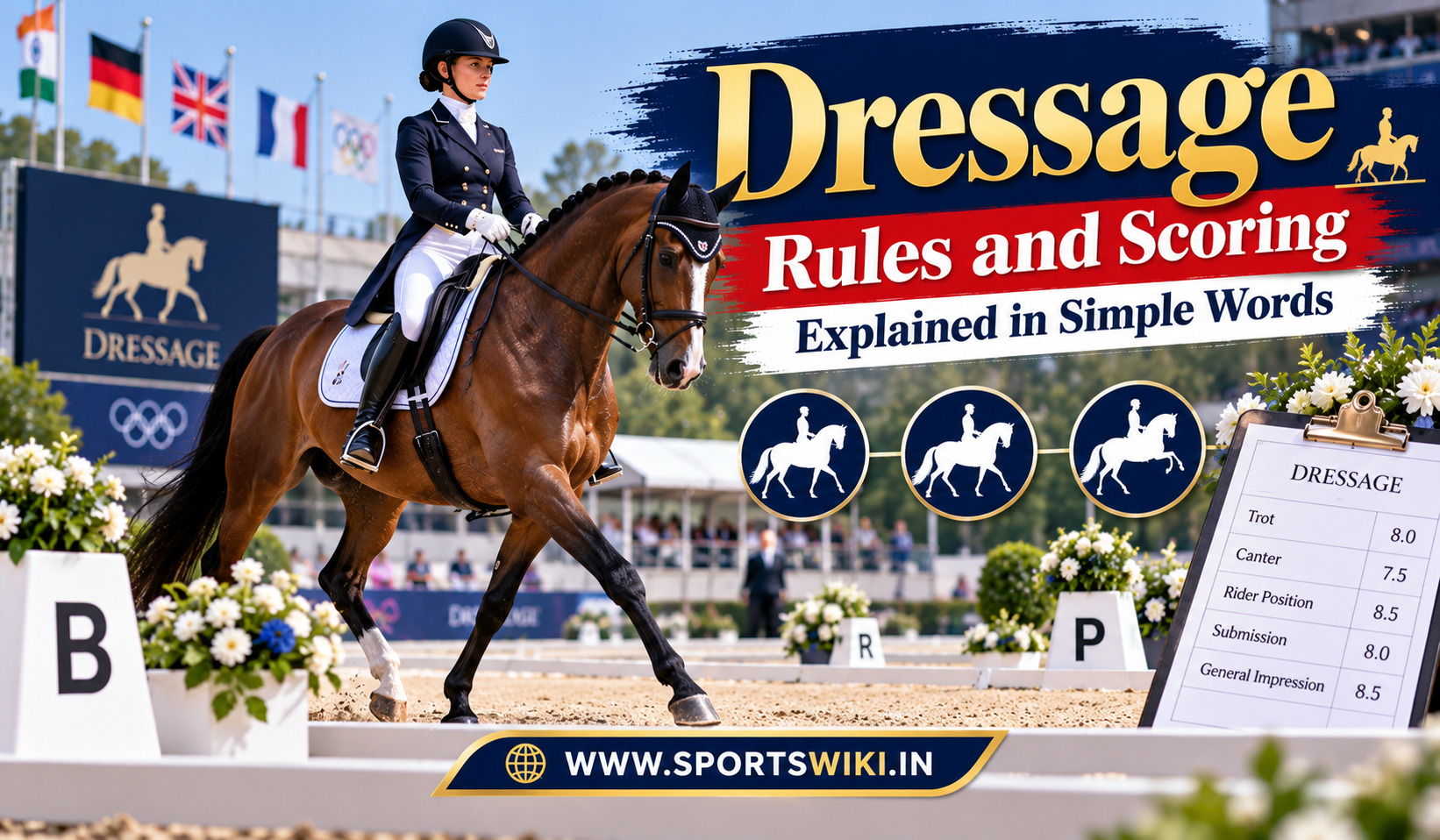
Every single movement in a dressage test gets its own mark. That mark runs from 0 to 10, and a 10 means perfect. It sounds easy, but the dressage rules and scoring system hide plenty of detail. Judges watch rhythm, balance, and obedience, and they add everything into a final percentage. This guide explains it all in simple words, so a dressage test never feels like a mystery again.
Dressage is the discipline where the horse performs a planned pattern of movements in an arena. There are no jumps and no clocks. Instead, the focus is on harmony between horse and rider. Because of this, scoring takes a careful eye. Here’s how it all works, from the arena letters to the final percentage on the scoreboard.
What Is Dressage?
The word “dressage” comes from a French term that means training. The sport tests how well a horse has been schooled over time. A good dressage horse stays relaxed, moves with rhythm, and answers light signals from the rider. At its best, the pair looks like one body moving to a quiet beat.
The sport has deep roots in military riding. Cavalry horses needed to be obedient and balanced under pressure. Over the centuries, those skills became an art form. Today, dressage riders spend years building strength and suppleness in their horses. So when you watch a calm, flowing test, you’re seeing the result of thousands of hours of quiet work.
The Three Paces
Every test is built on three basic paces: walk, trot, and canter. Each has its own rhythm, and the horse must keep it steady. Beyond that, riders add harder movements as the levels rise. Their aim is to show control, balance, and willingness. If you’re new to the sport, our guide to what is equestrian sport and how dressage, eventing and show jumping work is a helpful starting point.
The Dressage Arena and Its Letters
A standard dressage arena measures 20 meters by 60 meters. Letters are placed around the edge and down the middle. They aren’t in alphabetical order, which surprises most newcomers. Riders memorize them, because every movement in a test is tied to a letter.
Some tests use a smaller arena, which measures 20 meters by 40 meters. Lower-level classes often use it, since the patterns are simpler. Either way, the idea is the same. The letters act as invisible road signs, telling riders when and where to change pace, shape, or direction.
How the Letters Guide the Test
A test might say “at C, medium trot to A.” That means the horse must be in the right pace at exactly that point. The letters give judges clear markers to check accuracy. So a circle that drifts off its line loses marks. In fact, accuracy to the letter is one of the first things beginners learn. Without these markers, no two judges could compare rides fairly.
How Judges Score a Dressage Test
Dressage rules say judges give each movement a mark from 0 to 10. A 10 is excellent, while a 0 means the movement wasn’t shown at all. Most marks fall between 5 and 8. Some movements count double, because the test designers consider them extra important.
Judges sit at set points around the arena, often at the end where the letter C is placed. From there, they can see straightness, bend, and rhythm clearly. A scribe sits beside each judge and writes down every mark and comment. That teamwork keeps the process smooth and accurate, even when the pace is fast.
Movement Marks and Collective Marks
Besides individual movement marks, judges give collective marks at the end. These cover areas like paces, impulsion, submission, and the rider’s position. They look at the whole performance, not just single moments. Meanwhile, judges often write short comments next to each mark. These notes help riders learn what to fix. At the top level, a panel of several judges watches from different sides of the arena. That’s how the sport guards against one-sided opinions.
Turning Marks into a Percentage
Once the test ends, all marks are added together. The total is divided by the maximum possible score, and the result becomes a percentage. The highest percentage wins. This makes comparing different tests easy, since every test has a different number of movements.
For example, a rider who earns 70 percent has collected 70 out of every 100 available points. That’s a strong score at many levels. At major championships, the best pairs push the numbers higher still. In contrast to show jumping, there’s no clock and no pole to knock down. So the entire result rests on how well the judges rate the ride. To see the faults-and-time model, check out our guide on show jumping rules: faults, time penalties and jump-offs.
Types of Dressage Tests
Dressage offers a ladder of tests, from simple to very hard. Lower levels use basic paces and simple shapes. Higher levels add advanced movements like the piaffe and the passage. The most famous test is the Grand Prix, which sits at the top of the sport.
Each test has a printed list of movements, which riders learn by heart. Many riders ride without any help, while others have a caller in lower levels where allowed. Either way, the pattern is fixed. Because of this, the same test can be compared fairly across many riders, countries, and judges.
Test Formats at the Top Level
At the Olympics, teams ride the Grand Prix and the Grand Prix Special. Then the best individuals ride the Freestyle, which is also called the Kür. In the Freestyle, the rider designs a routine and performs it to music. However, the routine must still include required movements. As a result, riders must balance creativity with accuracy. Judges give marks for both the technical side and the artistic side of the performance.
Key Movements Judges Look For
Several famous movements appear in higher-level tests. Each one shows a different skill, and judges mark each one on its own. Knowing them makes watching far more fun.
Movements in Plain Words
- Piaffe: a trot performed almost on the spot, with powerful steps.
- Passage: a slow, floating trot with a clear pause in each stride.
- Pirouette: a tight turn in canter, with the horse pivoting around its hind legs.
- Flying change: a switch of leading leg in canter, done in mid-stride.
These movements demand strength and balance. A horse must carry more weight on its hind legs, which takes years to build. So when you see a smooth piaffe, you’re seeing patient training in action. In short, the harder the movement, the more marks it can win or lose.
Common Mistakes That Cost Marks
Even great riders lose marks in small ways. Most errors fall into a few familiar groups. Knowing these helps you watch tests with a sharper eye.
What Judges Notice First
- Loss of rhythm: the horse speeds up, slows down, or loses the beat.
- Tension: a stiff neck, swishing tail, or open mouth shows stress.
- Off the line: a movement that strays from the correct path costs marks.
- Errors of course: forgetting the pattern or riding movements in the wrong order costs points.
Calm and relaxed horses almost always score higher. Because of this, the best dressage rules reward quiet strength, not showy tricks. For readers curious about how dressage fits into a bigger event, our explainer on eventing rules: dressage, cross-country and jumping phases is worth a read.
Rider Position and Aids
Judges also watch the rider. A good rider sits tall, stays balanced, and keeps the hands soft. The aids, which are the signals given to the horse, should be nearly invisible. Legs, seat, and hands all send messages, and they must work in harmony.
Beyond that, the rider’s position affects the horse’s movement. A rider who leans or grips can block the horse’s back and spoil its rhythm. So the rider’s quiet stillness is part of the score. Meanwhile, strong riders often look like they’re doing nothing, which is exactly the point. The best aids are the ones nobody can see.
How to Watch a Dressage Test
Watching your first test can feel odd, since there’s no obvious action. Start by following the horse’s rhythm. A steady beat in each pace is a good sign. Then watch the transitions, which are the moments when the horse changes pace. Smooth transitions earn strong marks.
Next, look at the horse’s mood. A relaxed horse chews quietly, carries its tail softly, and keeps its ears gently moving. Finally, check the scoreboard after each rider. Comparing percentages across the class shows who’s pushing for the top. With a little practice, you’ll start spotting the same details the judges notice.
Key Takeaways
- Marks: every movement is scored from 0 to 10.
- Arena: a standard arena is 20 by 60 meters, with letters marking each point.
- Collective marks: judges score overall paces, impulsion, and rider position.
- Final score: total marks become a percentage, and the highest wins.
- Freestyle: the Kür is performed to music chosen by the rider.
- Key quality: calm, rhythmic movement earns the best marks.
FAQs
How are dressage tests scored?
Judges give each movement a mark from 0 to 10, and the total becomes a percentage.
What does a 10 mean in dressage?
It means the movement was judged excellent.
How big is a dressage arena?
A standard arena measures 20 meters by 60 meters.
What is a Freestyle in dressage?
It’s a routine performed to music, designed by the rider, but it must include required movements.
Do dressage horses jump?
No, dressage has no jumps and focuses on set movements.
Conclusion
Dressage rules and scoring may look complicated at first, but the idea is simple. Judges mark each movement from 0 to 10, add the totals, and turn them into a percentage. The highest percentage wins. Once you know what judges look for, such as rhythm, calm, and accuracy, every test becomes easier to follow. Next time you watch a Grand Prix or Freestyle, you’ll see the story behind each mark.